Whether you own a villa, manage an apartment building, or oversee a commercial property, understanding how water tank cleaning works makes it easier to plan maintenance. Professional cleaning can also be particularly useful when a tank has not been serviced for a long period or shows visible signs of contamination.
Why Tank Cleaning Services Matter in the UAE
Water tanks can gradually collect sediment and debris even when the incoming water supply is clean. Dust, mineral deposits, particles from the surrounding environment, and biological growth can accumulate at the bottom or along the tank walls.
Regular maintenance helps property owners identify these issues before they become more difficult to manage. Our guide to water tank cleaning in the UAE provides additional information about maintaining storage tanks in local residential and commercial settings.
For properties that depend heavily on stored water, professional water tank cleaning services can form an important part of routine property maintenance.
How Often Should a Water Tank Be Cleaned?
Cleaning frequency depends on the tank type, property usage, surrounding conditions, water quality, and the condition of the storage system. A regular schedule is preferable to waiting until the water becomes visibly dirty.
Property owners can review our detailed guide on how often water tanks should be cleaned to understand the factors that influence cleaning intervals.
You should also pay attention to visible warning signs. Changes in water appearance, unusual smells, sediment, or recurring contamination may indicate that the tank requires attention. See the signs your water tank needs cleaning for a practical checklist.
What Is Included in Professional Tank Cleaning?
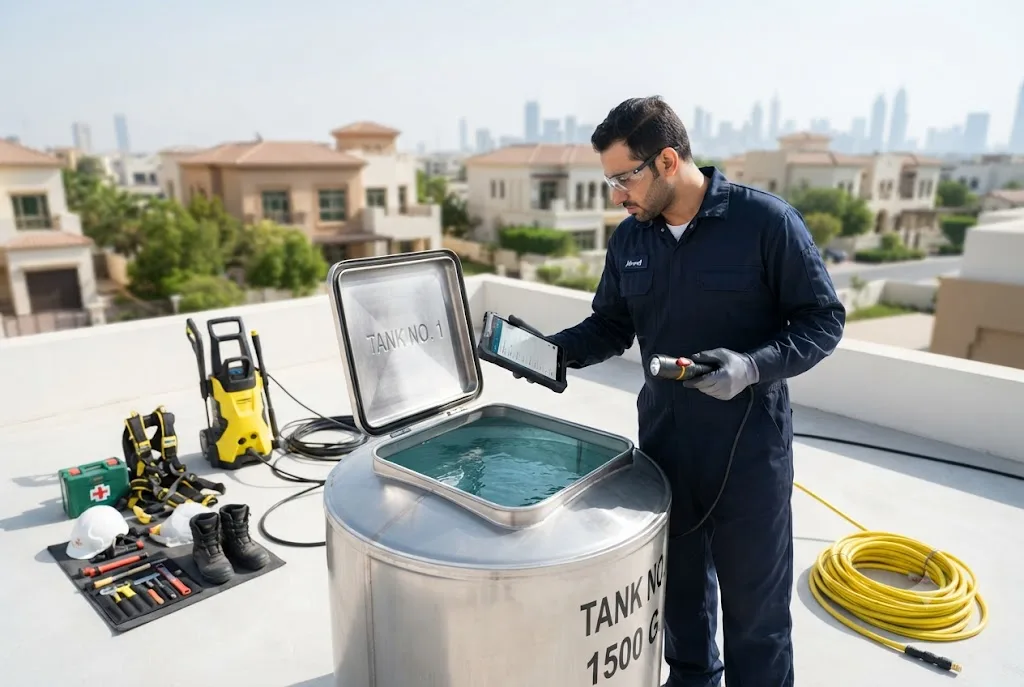
A professional cleaning service normally begins with an inspection of the tank and its accessible components. Depending on the tank design and condition, the service may involve draining the tank, removing accumulated sediment, cleaning internal surfaces, rinsing the tank, and carrying out appropriate disinfection.
The complete sequence can vary according to the property and tank configuration. Our guide to the water tank cleaning process in Dubai explains the typical stages in greater detail.
1. Inspection and Preparation
The tank should first be inspected for dirt, sediment, visible growth, leaks, damaged components, and other maintenance concerns. The water supply and access arrangements should also be considered before cleaning begins.
2. Draining the Tank
Where appropriate, the stored water is removed so that accumulated material at the bottom of the tank can be accessed. Proper preparation helps prevent unnecessary disruption to the property.
3. Removal of Sediment and Debris
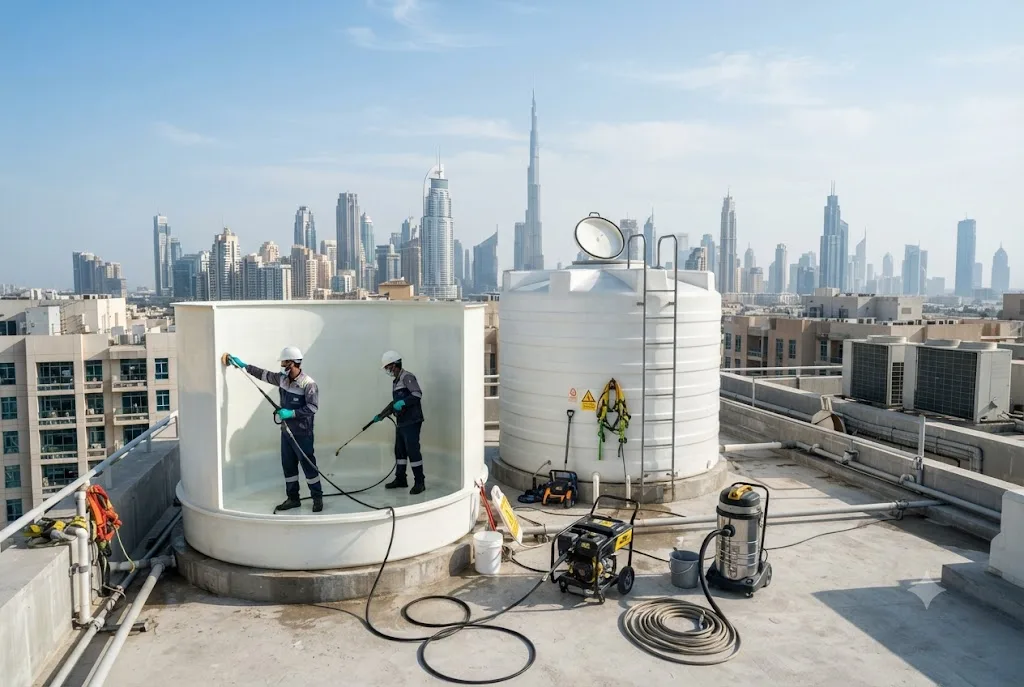
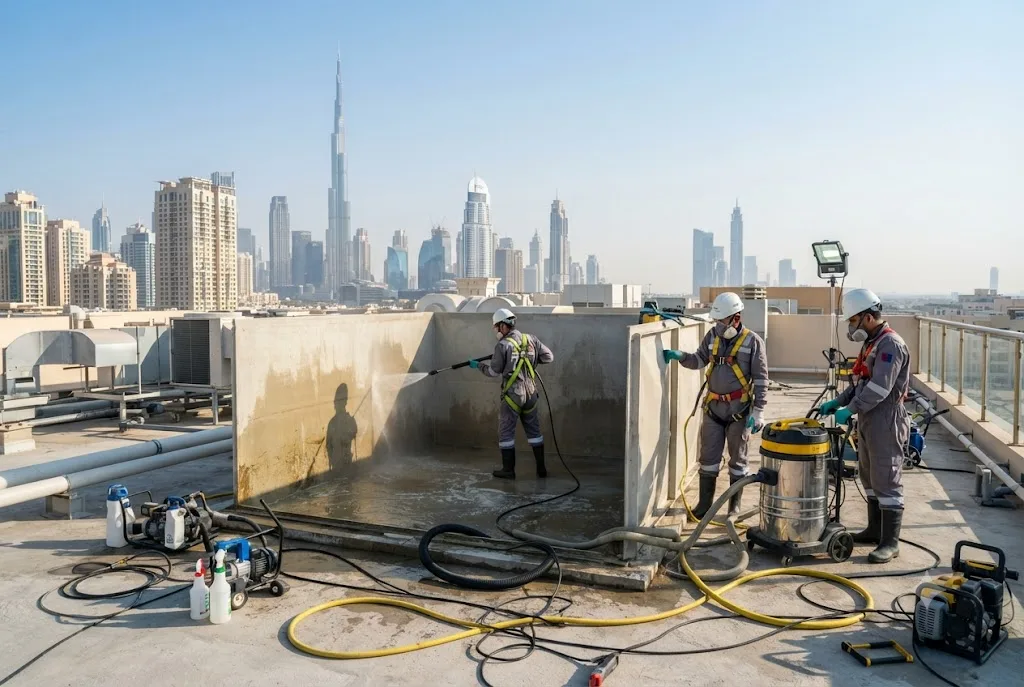
Deposits can accumulate over time, particularly in tanks that have not been cleaned regularly. The cleaning method should be suitable for the tank material and condition.
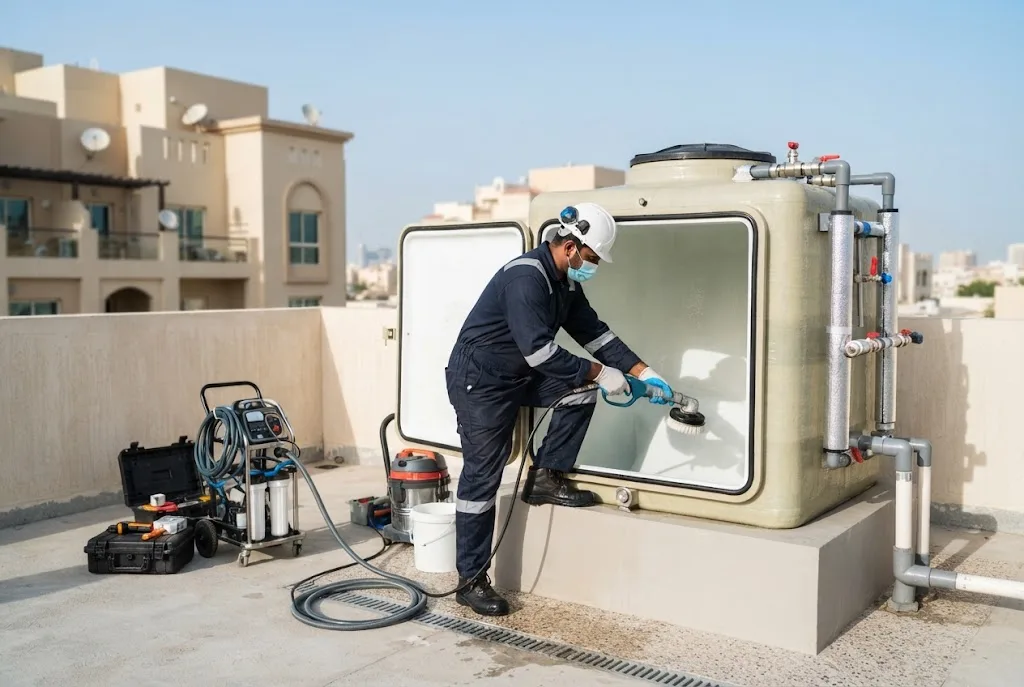
For homeowners interested in the equipment involved, our water tank cleaning equipment guide explains common tools and their purposes.
4. Internal Cleaning
The interior surfaces are cleaned to remove remaining deposits and contamination. Care should be taken to avoid damaging the tank lining, fittings, pipes, or other components.
5. Disinfection
Cleaning and disinfection are related but different steps. Physical cleaning removes dirt and deposits, while an appropriate disinfection procedure is intended to address microorganisms that may remain after cleaning.
Learn more about water tank disinfection in Dubai and why this stage should be handled carefully.
Residential Tank Cleaning Services
Homes and villas can benefit from a planned tank maintenance schedule. Residential tanks may serve kitchens, bathrooms, laundry areas, and other household requirements, making clean storage an important part of overall home maintenance.
Our dedicated guide to residential water tank cleaning covers considerations specific to homes and villas.
Tank cleaning should also be considered alongside broader home maintenance services in the UAE. Regular inspections can help identify related plumbing or water-storage problems before they become larger repair issues.
Commercial Water Tank Cleaning
Commercial properties can have larger tanks, higher water demand, and more complex storage systems. Offices, residential buildings, retail properties, and other facilities may therefore require a structured maintenance plan.
Our guide to commercial water tank cleaning explains some of the considerations involved in maintaining tanks in commercial environments.
Property managers can also combine tank maintenance with broader property maintenance services to keep plumbing, water storage, and other building systems under regular review.
Drinking Water Tank Cleaning
Tanks used for water intended for household consumption require particular attention. Cleaning procedures should be appropriate for potable-water storage, and any chemicals or disinfectants used should be selected and handled according to applicable requirements.
For more specific information, see our guide to drinking water tank cleaning.
It is also useful to distinguish drinking-water storage from other water-storage applications. Our resource on water storage tank cleaning provides broader guidance for storage systems.
Health Risks of a Dirty Water Tank
A poorly maintained tank can accumulate sediment, organic material, and microorganisms. While the exact risk depends on the source and condition of the water system, visible contamination or unusual changes in water quality should not be ignored.
Our detailed resource on dirty water tank health risks explains why regular inspection and cleaning are important.
If you notice an unusual smell, discoloration, floating particles, or other changes, avoid assuming that the issue will resolve itself. A professional inspection can help determine whether the tank, plumbing, or another part of the water system requires attention.
Professional Cleaning vs. DIY Tank Cleaning
Some property owners may consider cleaning a tank themselves, particularly when the tank is small and easily accessible. However, tank access, confined spaces, cleaning chemicals, equipment, and water-supply interruption can create practical and safety considerations.
Our comparison of DIY vs. professional water tank cleaning can help property owners understand the differences between the two approaches.
Professional services may be more appropriate when the tank is difficult to access, heavily contaminated, large, or connected to a complex building water system.
Should You Use Tank Cleaning Chemicals?
Chemical use should never be based simply on choosing the strongest available product. The chemical, concentration, application method, contact time, rinsing requirements, and tank material all matter.
For this reason, property owners should review the guidance on water tank cleaning chemicals before attempting chemical treatment.
Incorrect chemical use can create additional problems, especially where the tank supplies water for household use. When in doubt, professional cleaning is a safer way to handle complicated contamination or disinfection requirements.
Can Self-Cleaning Water Tanks Replace Professional Cleaning?
Some modern storage systems are designed with features intended to reduce sediment accumulation or simplify maintenance. However, a self-cleaning design does not necessarily mean that the tank can be ignored indefinitely.
Our article on self-cleaning water tanks explains how these systems work and what property owners should still consider.
Tank Cleaning Checklist
A simple checklist can make scheduled maintenance easier. Before arranging a service, consider:
- When the tank was last cleaned.
- Whether sediment or debris is visible.
- Whether the water has changed in color, taste, or smell.
- Whether the tank has visible cracks, leaks, or damaged fittings.
- Whether the tank supplies drinking or general household water.
- Whether disinfection is required after physical cleaning.
- Whether the cleaning provider has suitable equipment.
- Whether the property needs temporary water-supply arrangements during cleaning.
For a more detailed maintenance reference, use our water tank cleaning checklist.
Water Tank Cleaning Procedure and Documentation
Property managers and maintenance teams may need a written record of cleaning activities. Documenting the date, tank location, cleaning work, inspection findings, and any follow-up maintenance can make future servicing easier to organize.
Our water tank cleaning procedure PDF resource can be useful for teams that want a structured reference for the cleaning process.
Before and After Tank Cleaning
The difference between a neglected tank and a properly maintained tank can often be seen through accumulated sediment, surface deposits, and general cleanliness. Visual documentation can also help property owners understand why routine maintenance matters.
See our water tank cleaning before-and-after guide for a closer look at what cleaning can address.
Frequently Asked Questions About Tank Cleaning Services
How often should tank cleaning services be scheduled?
The appropriate schedule depends on the tank, property, usage, water system, and local maintenance requirements. A regular inspection and cleaning plan is preferable to waiting for visible contamination.
Can I clean my water tank myself?
Some accessible residential tanks may be suitable for basic owner maintenance, but professional cleaning can be more appropriate for large, difficult-to-access, heavily contaminated, or complex systems. Safety and correct disinfection procedures should always be considered.
What are the signs that a water tank needs cleaning?
Possible signs include visible sediment, unusual odors, discoloration, floating particles, or changes in water quality. These signs should be investigated rather than ignored.
Does tank cleaning include disinfection?
Not necessarily. Cleaning removes physical deposits, while disinfection is a separate treatment intended to reduce microorganisms. The exact service should be confirmed with the provider.
For additional answers, see our water tank cleaning FAQ.
Keep Water Storage Part of Your Home Maintenance Plan
Water tanks are an important part of many UAE properties, so their maintenance should not be treated as an occasional emergency task. Regular inspection, appropriate cleaning, careful disinfection, and proper documentation can help property owners maintain the condition of their water-storage systems.
For homeowners managing several maintenance needs at once, tank cleaning can also be coordinated with plumbing inspections and other property services. For example, plumbing maintenance can help identify leaks, damaged connections, or related issues that may affect the water-storage system.
Ultimately, the right tank cleaning services plan depends on the type of property, tank condition, water usage, and maintenance requirements. A consistent schedule is generally more practical than waiting until water quality problems become obvious.