Knowing the signs your water tank needs cleaning can help protect your household or business from poor water quality and costly maintenance issues. Although water supplied across the UAE is treated before distribution, contaminants can gradually build up inside storage tanks over time. Dust, sediment, algae, and bacteria may affect the quality of stored water if tanks are not cleaned regularly.
Whether you own a villa, apartment, office, hotel, or commercial property, recognizing early warning signs allows you to schedule professional cleaning before water quality deteriorates further.
Why Water Tanks Become Dirty
Water storage tanks are constantly exposed to environmental conditions. Even sealed tanks can collect fine sediment, mineral deposits, and organic matter over months of use. Small cracks, damaged lids, or poorly maintained vents may also allow dust, insects, and debris to enter.
Without regular maintenance, these contaminants can create favorable conditions for microbial growth and reduce overall water quality.
If you’re unsure about the recommended cleaning schedule, read our guide on how often should water tanks be cleaned.
1. Cloudy Water Coming From the Tank
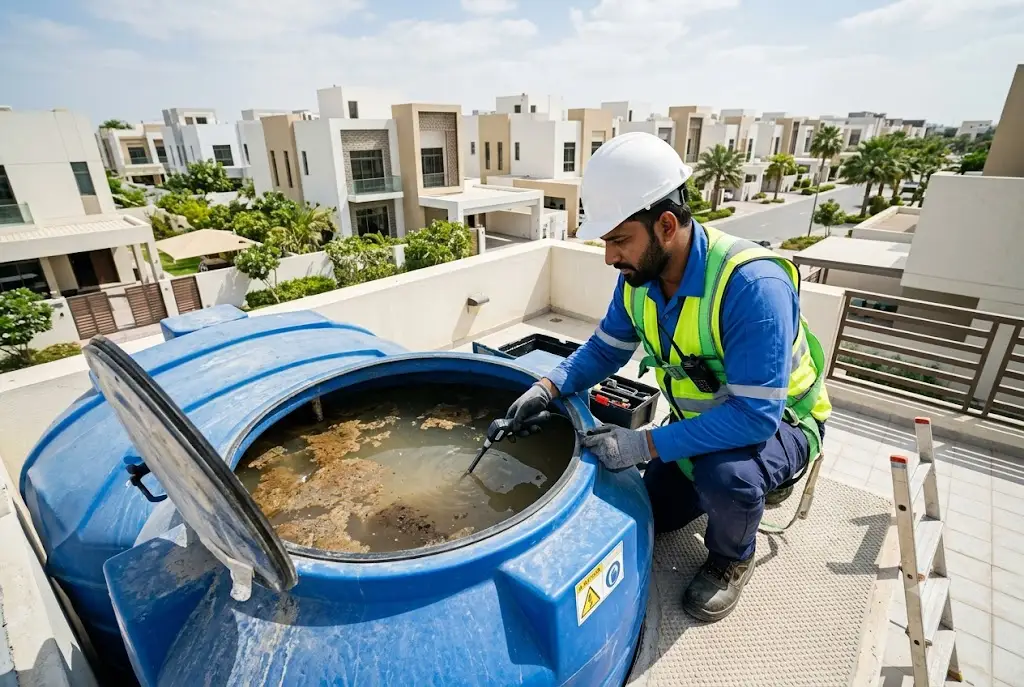
One of the clearest signs your water tank needs cleaning is cloudy or discolored water. Water should normally appear clear. If it looks murky, contains floating particles, or has a brown or yellow tint, sediment may have accumulated inside the tank.
Cloudy water from tank systems may indicate:
- Mineral deposits
- Sand or dust accumulation
- Rust particles
- Organic debris
This issue should be investigated promptly to prevent further contamination.
2. Unpleasant Smells From the Water Tank
Clean water should have little or no noticeable odor. If you detect unpleasant smells while using taps or showers, the storage tank could be contributing to the problem.
Common water smells from tank systems include:
- Musty odor
- Earthy smell
- Rotten odor
- Stale water smell
These odors may result from bacteria, algae growth, or organic matter trapped inside the tank.
3. Visible Sediment Inside the Tank
Over time, fine sand, dust, and mineral particles naturally settle at the bottom of water tanks. While small amounts are common, thick layers of sediment reduce storage efficiency and may affect water quality.
If you inspect the tank and notice excessive buildup, it’s time to arrange professional cleaning.
4. Dirty Water Tank Symptoms Around the Property
Several dirty water tank symptoms may appear throughout your home or commercial building, including:
- Stained sinks
- Blocked shower heads
- Reduced water pressure
- Discolored laundry
- Residue in kettles or water filters
Although plumbing issues can have multiple causes, a neglected storage tank should always be considered during inspections.
5. Slime or Algae Growth
Moist conditions inside poorly maintained tanks may encourage algae or biofilm formation, particularly if sunlight enters through damaged covers or translucent tank materials.
Visible slime on tank walls indicates that cleaning should not be delayed.
6. Signs of a Contaminated Water Tank
A contaminated water tank may not always show obvious warning signs, but common indicators include:
- Water changing color
- Persistent unpleasant taste
- Floating debris
- Visible insect activity
- Organic buildup inside the tank
Professional inspection helps determine whether contamination is present and whether cleaning is required.
7. Water Tank Bacteria May Be Increasing
Although bacteria cannot usually be seen with the naked eye, neglected tanks may create conditions that allow microorganisms to multiply.
Water tank bacteria are more likely to develop when:
- Cleaning has been neglected for long periods
- Sediment accumulates
- The tank remains poorly sealed
- Standing water remains unused for extended periods
Routine cleaning significantly reduces these risks.
8. Increased Dust and Sand After Storms
Dust storms are common in many parts of the UAE. If your tank lid or ventilation system is damaged, fine sand can enter the storage system.
After periods of heavy dust, it is advisable to inspect the tank for debris, even if your regular maintenance schedule has not yet arrived.
9. It’s Been More Than Six Months
Sometimes the biggest warning sign is simply time. If your tank has not been professionally cleaned for over six months, it should be inspected regardless of whether visible symptoms are present.
Most experts recommend cleaning residential and commercial water tanks at least twice each year to maintain good water quality.
Residential vs Commercial Water Tank Inspections
Residential Properties
Villas, apartments, and private homes should inspect water storage tanks during routine property maintenance. Families rely on stored water every day, making preventive care especially important.
Learn more in our complete guide to residential water tank cleaning.
Commercial Buildings
Hotels, hospitals, schools, restaurants, offices, and warehouses often require stricter maintenance schedules because they serve larger numbers of occupants.
Businesses should also review our article on commercial water tank cleaning for maintenance best practices.
What Happens If You Ignore These Warning Signs?
Ignoring early warning signs may lead to:
- Poor water quality
- Greater sediment accumulation
- Reduced plumbing efficiency
- Higher maintenance costs
- Potential hygiene concerns
Routine cleaning is generally more cost-effective than addressing problems after significant contamination has developed.
Professional Water Tank Cleaning
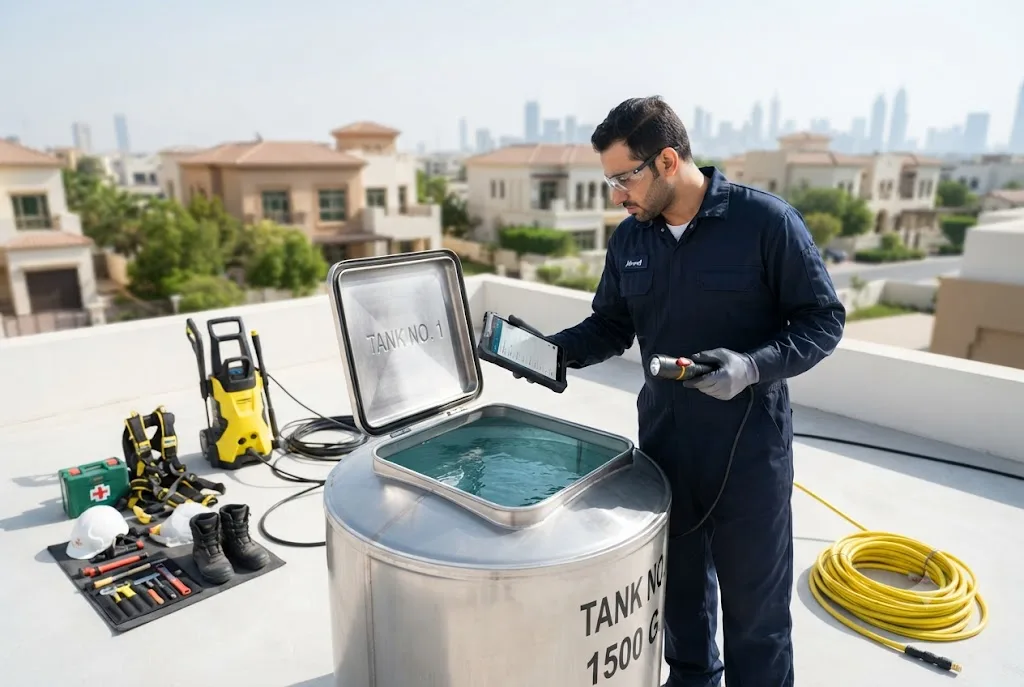
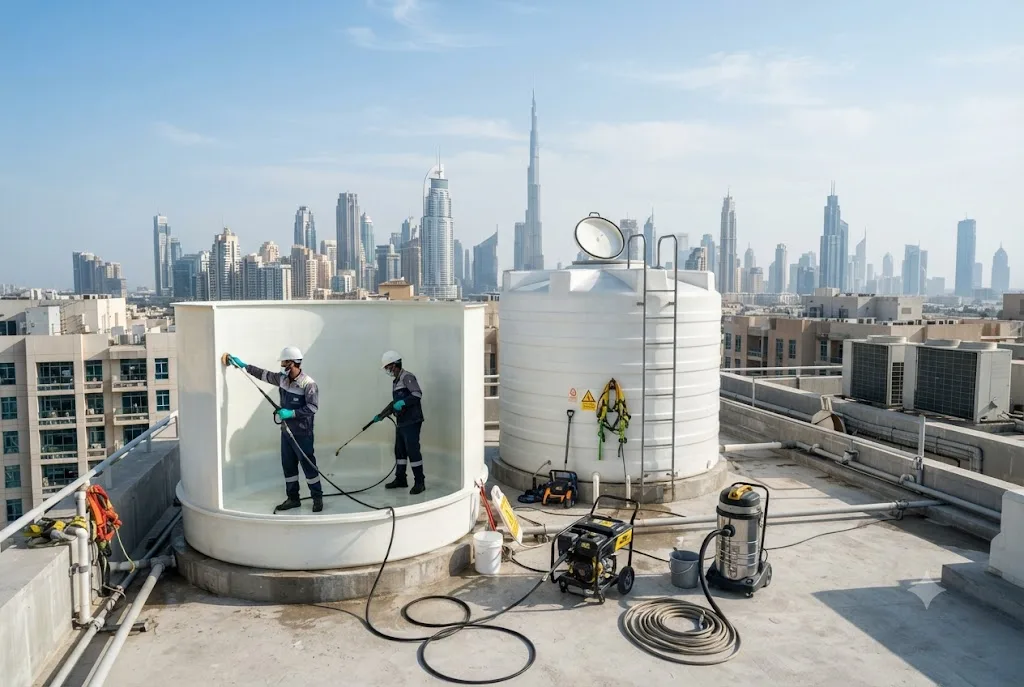
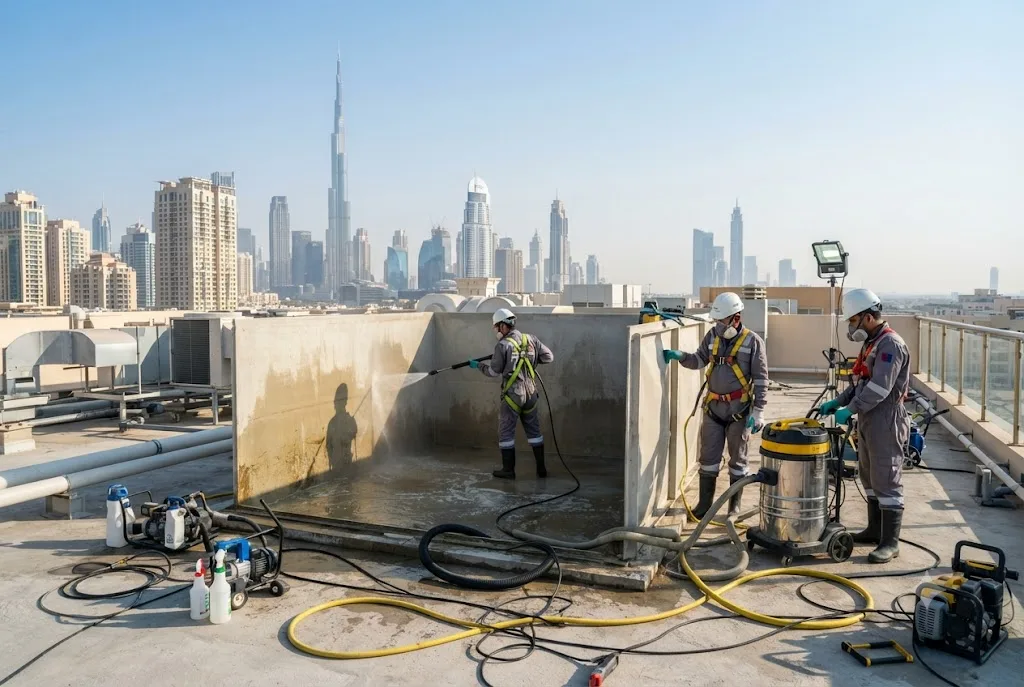
Professional technicians use specialized equipment to drain the tank, remove sediment, clean internal surfaces, inspect for damage, and disinfect the tank when appropriate. This process helps restore water storage conditions and supports safer water use throughout the property.
Final Thoughts
Recognizing the signs your water tank needs cleaning allows homeowners and businesses to act before water quality declines. Cloudy water, unpleasant odors, sediment buildup, visible algae, and overdue maintenance are all strong indicators that professional cleaning should be scheduled.
Regular inspections, preventive maintenance, and timely cleaning help ensure cleaner water storage and longer-lasting water tank performance.
For additional guidance on safe drinking water and water storage practices, visit the World Health Organization (WHO).