Residential water tank cleaning is one of the most important home maintenance services for ensuring clean and safe water throughout your property. In the UAE, most villas, townhouses, and apartment buildings rely on water storage tanks to provide a continuous water supply. While municipal water is treated before distribution, stored water can gradually collect sediment, dust, and other contaminants if the tank is not cleaned regularly.
Whether you own a villa, live in an apartment, or manage a residential property, keeping your water tank clean helps maintain water quality, supports household hygiene, and protects your plumbing system. This guide explains why residential water tank cleaning is essential, how often it should be performed, and what homeowners can expect during a professional cleaning service.
Why Residential Water Tank Cleaning Is Important
Water storage tanks continuously hold water for daily household activities such as drinking, cooking, bathing, laundry, and cleaning. Over time, fine particles like sand, dust, and mineral deposits naturally settle at the bottom of the tank. If maintenance is neglected, these deposits may contribute to poor water quality and create an environment where microorganisms can develop.
Professional residential water tank cleaning helps:
- Maintain cleaner stored water
- Reduce sediment accumulation
- Support household hygiene
- Protect plumbing fixtures and appliances
- Improve the efficiency of the water storage system
- Extend the lifespan of the water tank
How Often Should Residential Water Tanks Be Cleaned?
Many homeowners ask how frequently they should schedule professional cleaning. In most UAE homes, experts recommend cleaning residential water tanks at least every six months.
However, the ideal schedule depends on several factors, including:
- Household water consumption
- Tank size
- Environmental conditions
- Age of the tank
- Previous maintenance history
For more detailed recommendations, read our guide on how often should water tanks be cleaned.
Types of Residential Water Tanks
Villa Water Tank Cleaning
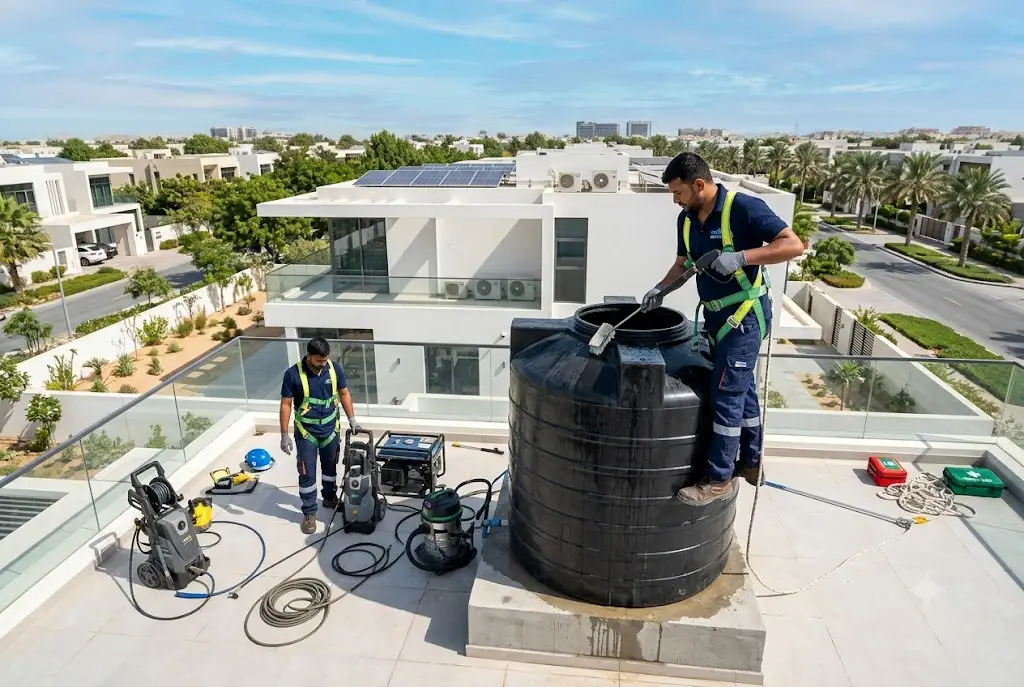
Villa water tank cleaning often involves both rooftop and underground storage tanks. Larger homes usually store more water, making routine inspections and professional cleaning especially important.
Apartment Water Tank Cleaning
Apartment water tank cleaning is typically managed by building management or maintenance companies. Residents should confirm that shared water tanks are cleaned according to a regular maintenance schedule.
Home Water Tank Cleaning
Home water tank cleaning applies to all residential properties, regardless of size. Even smaller tanks benefit from routine inspections and preventive maintenance.
Common Signs Your Tank Needs Cleaning
Even before your next scheduled maintenance, your water tank may show warning signs that indicate immediate cleaning is necessary.
- Cloudy or discolored water
- Unpleasant odor
- Visible sediment
- Reduced water quality
- Slime inside the tank
- Particles coming from taps
If you notice these issues, read our detailed article on signs your water tank needs cleaning.
What Happens During Professional Residential Water Tank Cleaning?
Professional technicians follow a structured cleaning process to restore the cleanliness of the storage system.
1. Tank Inspection
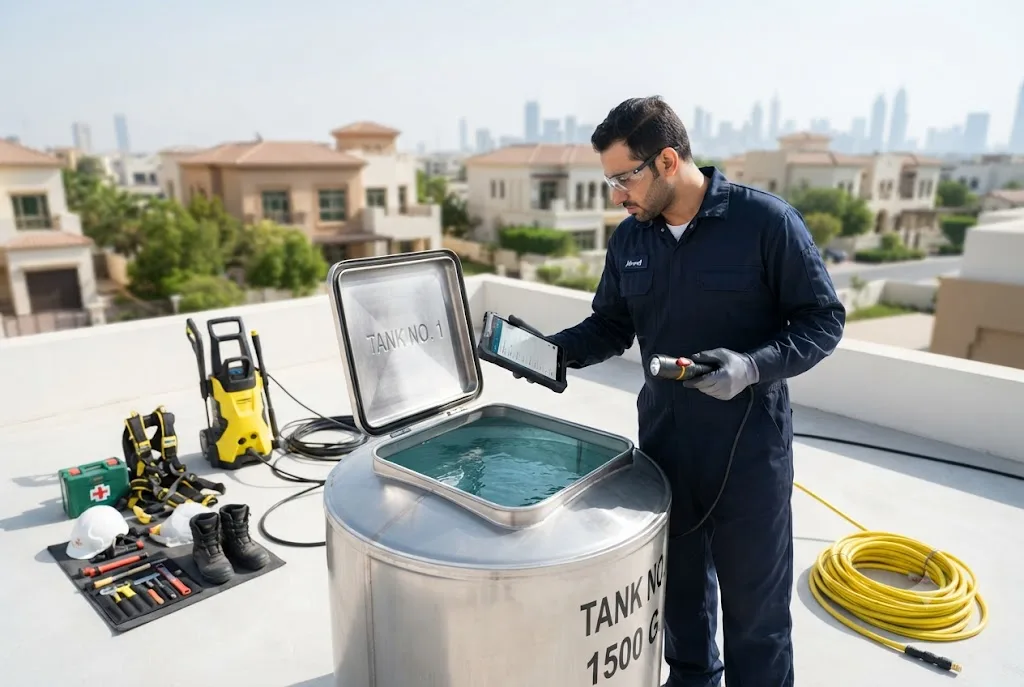
The technician first inspects the tank for sediment, damage, leaks, and overall condition.
2. Water Drainage
The stored water is safely drained before cleaning begins.
3. Sediment Removal
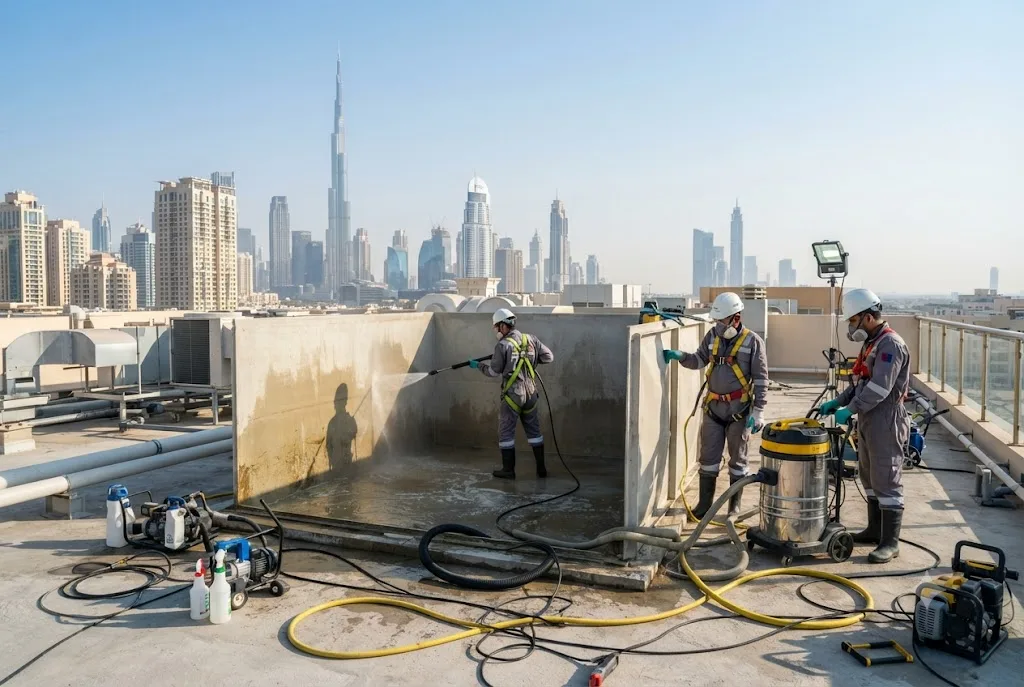
Accumulated dirt, sand, mineral deposits, and debris are removed from the bottom of the tank.
4. Internal Surface Cleaning
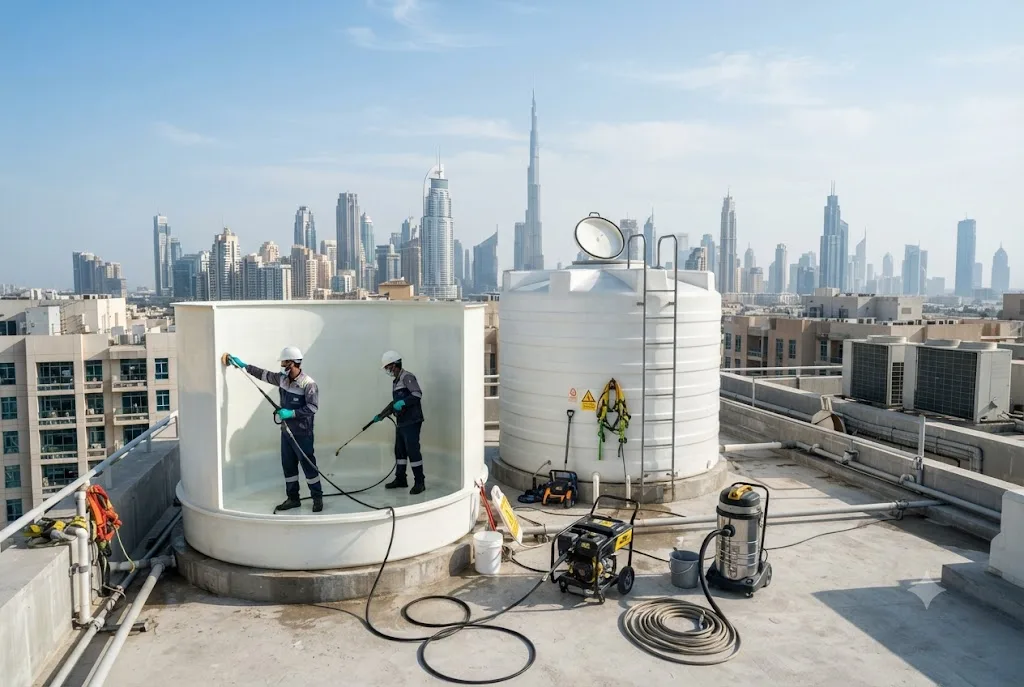
The interior walls and floor of the tank are cleaned using professional equipment and approved cleaning methods.
5. Disinfection
Where appropriate, the tank is disinfected following recommended cleaning procedures.
6. Final Inspection and Refilling
Once cleaning is complete, technicians inspect the tank again before restoring the water supply.
Benefits of Professional Residential Water Tank Cleaning
- Cleaner water for daily household use
- Reduced sediment buildup
- Improved water storage hygiene
- Better plumbing performance
- Longer tank lifespan
- Greater peace of mind for homeowners
DIY vs Professional Cleaning
Some homeowners consider cleaning their own water tanks. While simple visual inspections are useful, complete tank cleaning usually requires specialized equipment, proper drainage procedures, and safe cleaning techniques.
Professional technicians can thoroughly clean difficult-to-access areas while inspecting the tank for signs of wear or damage that may otherwise go unnoticed.
Maintaining Your Water Tank Between Professional Cleanings
Regular maintenance between scheduled cleanings helps preserve water quality.
- Keep the tank lid tightly sealed.
- Inspect vents for damage.
- Check for leaks regularly.
- Remove nearby debris around the tank.
- Monitor water color, taste, and odor.
- Schedule inspections every six months.
Residential vs Commercial Water Tank Cleaning
Although both require routine maintenance, residential systems typically serve individual families, while commercial tanks support offices, hotels, hospitals, schools, and other facilities with significantly higher water demand.
If you manage a business property, read our guide to commercial water tank cleaning for maintenance recommendations specific to commercial facilities.
Why Routine Cleaning Should Never Be Delayed
Delaying maintenance allows sediment and contaminants to accumulate over time, making cleaning more difficult and potentially affecting water quality. Preventive maintenance is generally more effective and less disruptive than waiting until problems develop.
You can also learn about potential dirty water tank health risks associated with neglected water storage systems.
Conclusion
Residential water tank cleaning is an essential part of maintaining a healthy home in the UAE. Routine professional cleaning helps preserve water quality, supports better household hygiene, protects plumbing systems, and extends the life of your storage tank.
Scheduling inspections every six months and responding promptly to warning signs ensures your family continues to enjoy clean and reliable water throughout the year.
For additional information on drinking water safety and storage practices, visit the World Health Organization (WHO).