Choosing the right water tank cleaning chemical is essential for maintaining safe, hygienic water storage in homes, commercial buildings, and industrial facilities. Over time, water tanks can accumulate sediment, algae, bacteria, and biofilm that cannot always be removed through rinsing alone. Using approved cleaning chemicals alongside proper cleaning procedures helps restore water quality while protecting the tank’s structure.
In the UAE, where stored water is widely used due to the climate and building infrastructure, understanding which cleaning solutions are safe—and how they should be used—is an important part of responsible water tank maintenance.
Why Are Water Tank Cleaning Chemicals Used?
Physical cleaning removes visible dirt and sludge, but microscopic bacteria and microorganisms may remain on the tank’s surfaces. A suitable water tank cleaning chemical helps disinfect the interior and reduce microbial contamination.
Professional cleaning chemicals are typically used to:
- Disinfect water storage tanks
- Eliminate bacteria and algae
- Break down biofilm buildup
- Reduce unpleasant odors
- Improve water hygiene
- Support potable water safety after proper rinsing
Types of Water Tank Cleaning Chemicals
Several products are commonly used by trained professionals depending on the tank material, contamination level, and intended water use.
Chlorine-Based Disinfectants
Chlorine is one of the most widely used disinfectants for potable water systems. When applied in appropriate concentrations and followed by thorough rinsing, it effectively reduces bacteria and viruses.
Hydrogen Peroxide Solutions
Some professional cleaning services use hydrogen peroxide-based products because they break down into water and oxygen after use. These products are often selected for specialized cleaning applications.
Food-Grade Disinfectants
Professional contractors may also use food-safe disinfectants that are approved for drinking water storage systems and designed to minimize residue after cleaning.
Water Tank Cleaning Chemicals Name: Common Options
When searching for water tank cleaning chemicals name, you may encounter different categories rather than specific consumer products.
Examples include:
- Chlorine-based disinfectants
- Food-grade sanitizers
- Hydrogen peroxide disinfectants
- Biofilm removal solutions
- Scale and mineral deposit removers
The exact product should always be selected according to the manufacturer’s instructions and local regulations.
Chemical Used to Clean Water Tank Safely
The chemical used to clean water tank systems should always be compatible with:
- Concrete tanks
- Plastic (HDPE) tanks
- Fiberglass tanks
- Stainless steel tanks
- Potable water storage systems
Using the wrong chemical can damage tank surfaces, leave harmful residues, or affect water quality. For this reason, professional cleaning companies carefully select products based on the tank material and intended use.
Water Tank Cleaning Liquid vs. Cleaning Solution
The terms water tank cleaning liquid and water tank cleaning solution are often used interchangeably, but they may refer to different formulations.
Cleaning Liquid
A ready-to-use liquid product that requires little or no dilution before application.
Cleaning Solution
A concentrated product that is diluted with water according to the manufacturer’s instructions before use.
Professional technicians prepare the correct concentration to ensure effective cleaning while protecting the tank and water system.
How Professionals Use Water Tank Cleaning Chemicals
Professional water tank cleaning follows a structured process to ensure chemicals are used safely and effectively.
1. Tank Inspection
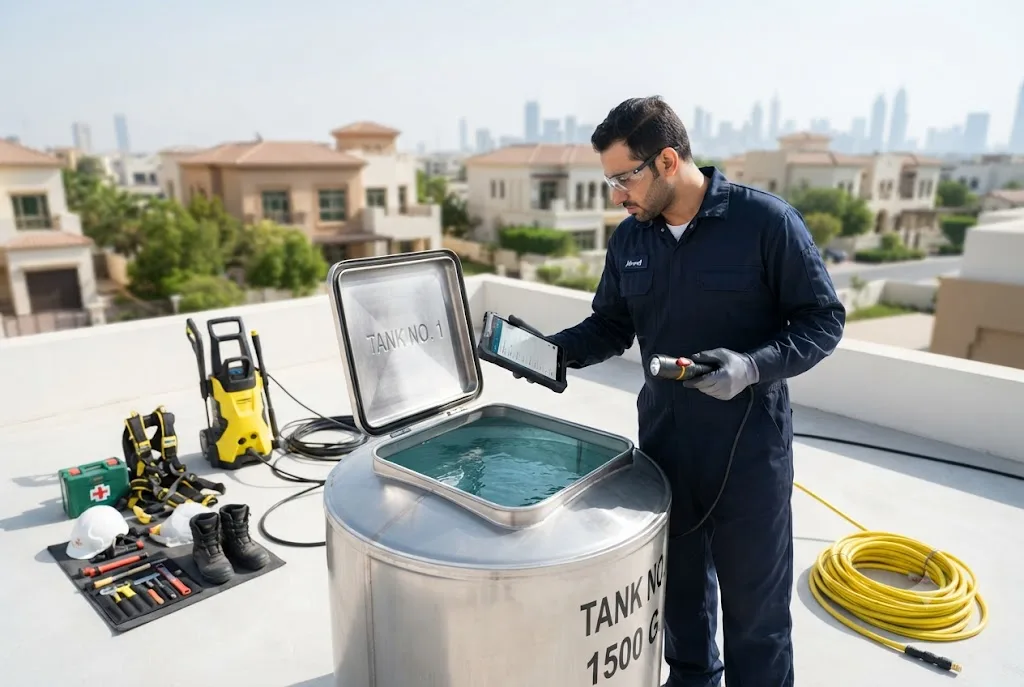
The tank is inspected for contamination, sediment, algae, structural damage, and access points.
2. Water Drainage
All remaining water is removed before cleaning begins.
3. Manual Cleaning
Sludge, dirt, and debris are physically removed from the tank.
4. Chemical Application
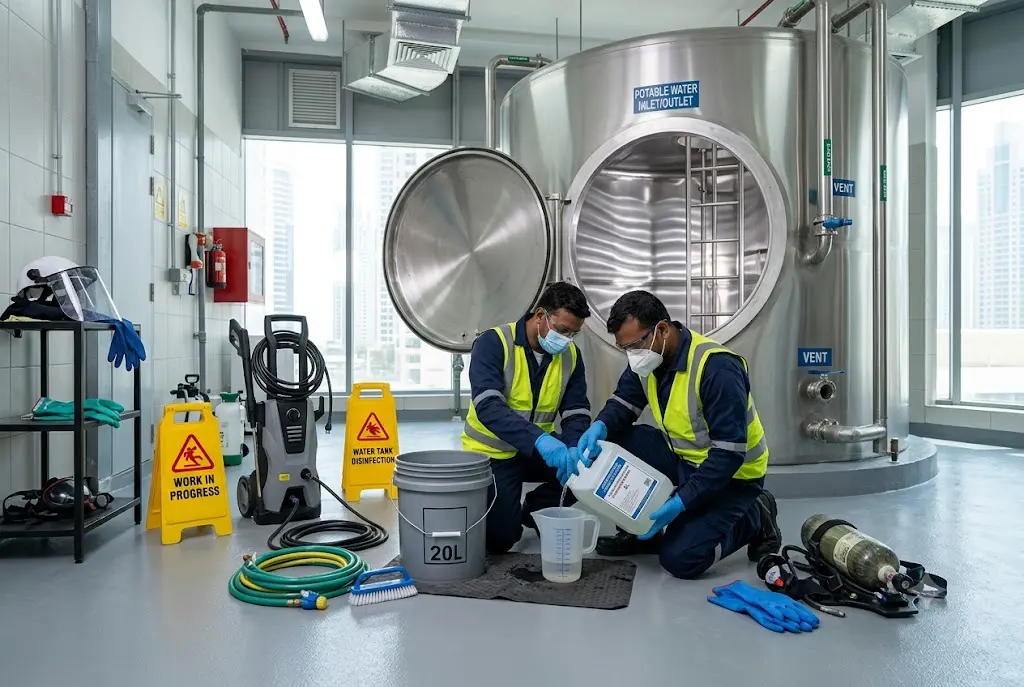
The selected disinfectant is applied according to the manufacturer’s recommended concentration and contact time.
5. Surface Cleaning
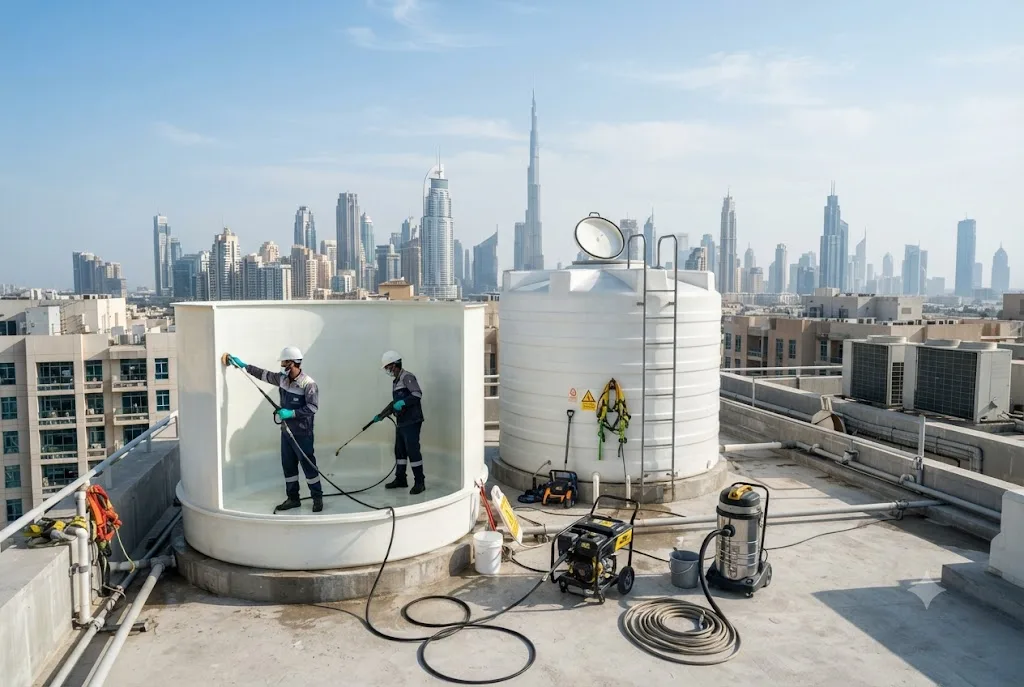
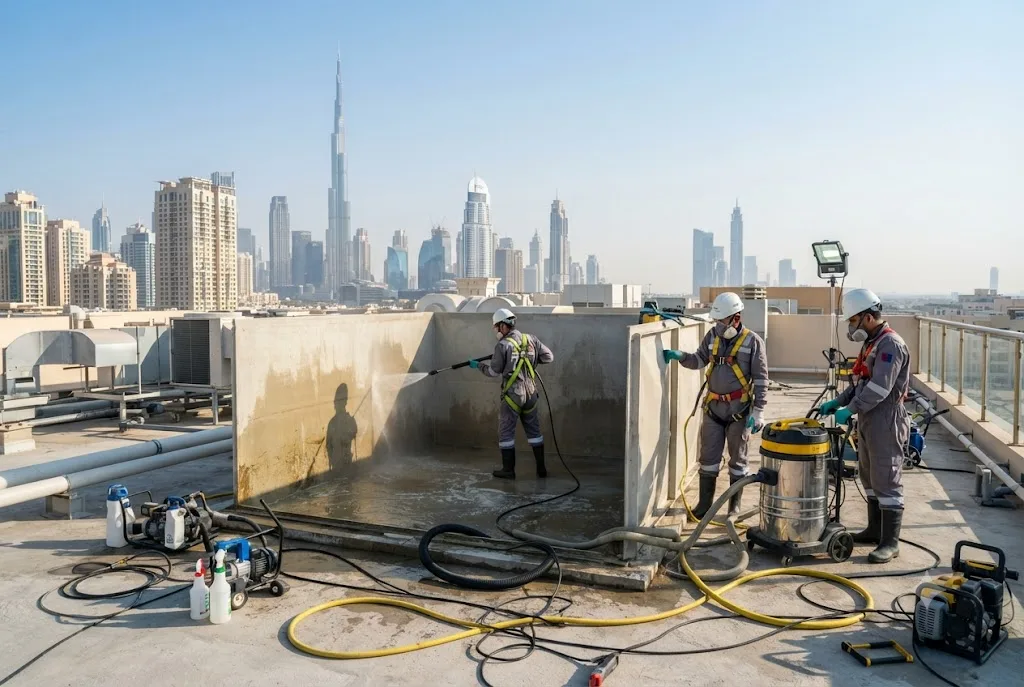
Tank walls, floor, and corners are thoroughly scrubbed or pressure washed.
6. Thorough Rinsing
After disinfection, the tank is rinsed carefully to remove any remaining cleaning solution.
7. Final Inspection
The cleaned tank is inspected before it is returned to service.
Can You Use Household Cleaning Chemicals?
Household cleaners are generally not recommended for drinking water storage tanks. Many domestic cleaning products contain fragrances, detergents, or other ingredients that are not suitable for potable water systems.
Only products specifically intended for water tank disinfection should be considered, and they should always be used according to the manufacturer’s instructions.
Safety Precautions When Using Water Tank Cleaning Chemicals
- Wear appropriate personal protective equipment.
- Ensure adequate ventilation when working inside enclosed spaces.
- Never mix different chemicals unless specifically instructed by the manufacturer.
- Follow the recommended dilution ratio.
- Allow the required contact time for effective disinfection.
- Rinse the tank thoroughly before refilling.
- Dispose of wastewater responsibly in accordance with local regulations.
Professional Cleaning Is Still the Safest Option
Although some property owners consider cleaning their own tanks, professional services provide several important advantages:
- Correct chemical selection
- Safe handling procedures
- Professional cleaning equipment
- Proper disinfection techniques
- Compliance with hygiene best practices
- Reduced risk of accidental contamination
This is especially important for potable water systems serving homes, schools, healthcare facilities, and commercial buildings.
Related Water Tank Maintenance Resources
If you’re planning routine maintenance, our guide to water tank cleaning services explains what professional cleaning companies typically include in their service.
For a step-by-step overview of the maintenance process, see our water tank cleaning procedure PDF article.
You can also simplify ongoing maintenance using our practical water tank cleaning checklist for residential and commercial properties.
Final Thoughts
Selecting the appropriate water tank cleaning chemical is essential for maintaining hygienic water storage and protecting the quality of drinking water. Whether you’re researching water tank cleaning chemicals name, looking for the right chemical used to clean water tank systems, or comparing different water tank cleaning liquid and water tank cleaning solution options, safety should always be the top priority.
For most residential and commercial properties in the UAE, professional tank cleaning remains the most reliable way to ensure chemicals are used correctly, tanks are thoroughly disinfected, and water quality is maintained.
For internationally recognized guidance on drinking water safety, visit the World Health Organization (WHO).