Understanding dirty water tank health risks is essential for every homeowner, tenant, and business owner in the UAE. Water storage tanks supply water for drinking, cooking, bathing, and cleaning, making their condition a critical part of overall hygiene. While municipal water is treated before distribution, stored water can become contaminated if tanks are not inspected and cleaned regularly.
Dust, sediment, algae, and bacteria may gradually accumulate inside neglected tanks, reducing water quality and increasing the possibility of health concerns. In this guide, we’ll explain the risks associated with dirty water tanks, common causes of contamination, and how regular maintenance helps protect your property and the people who use it.
Why Clean Water Storage Matters
Water storage tanks are designed to keep water safe until it is needed. However, once water enters the tank, its quality depends on proper maintenance. Over time, environmental factors such as dust, sand, insects, and organic debris may enter poorly sealed or aging tanks.
Without regular cleaning, these materials can settle inside the tank and create conditions where microorganisms may multiply.
To reduce these risks, it’s important to follow the recommended schedule explained in our guide on how often should water tanks be cleaned.
How Water Tanks Become Contaminated
A variety of factors can contribute to unsafe water storage, including:
- Dust and sand entering through damaged lids or vents
- Sediment accumulating over time
- Standing water that is rarely circulated
- Cracked or deteriorating tank interiors
- Organic matter such as leaves or insects entering the tank
- Delayed cleaning and maintenance
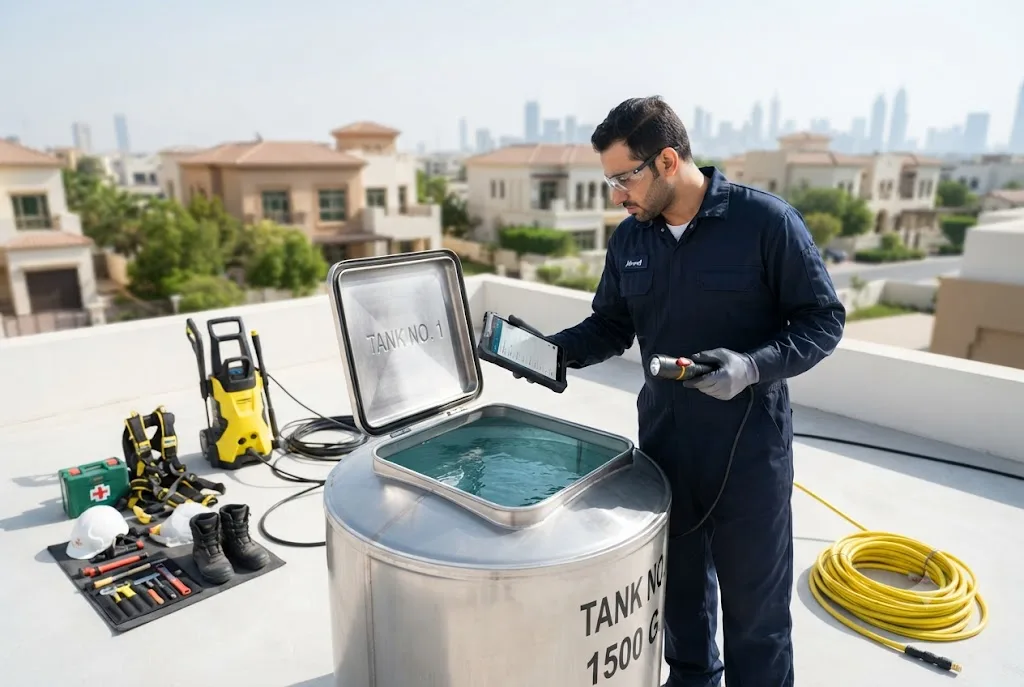
These issues may not always be visible from the outside, which is why periodic inspections are recommended.
Common Dirty Water Tank Health Risks
1. Bacteria in Water Tank Systems
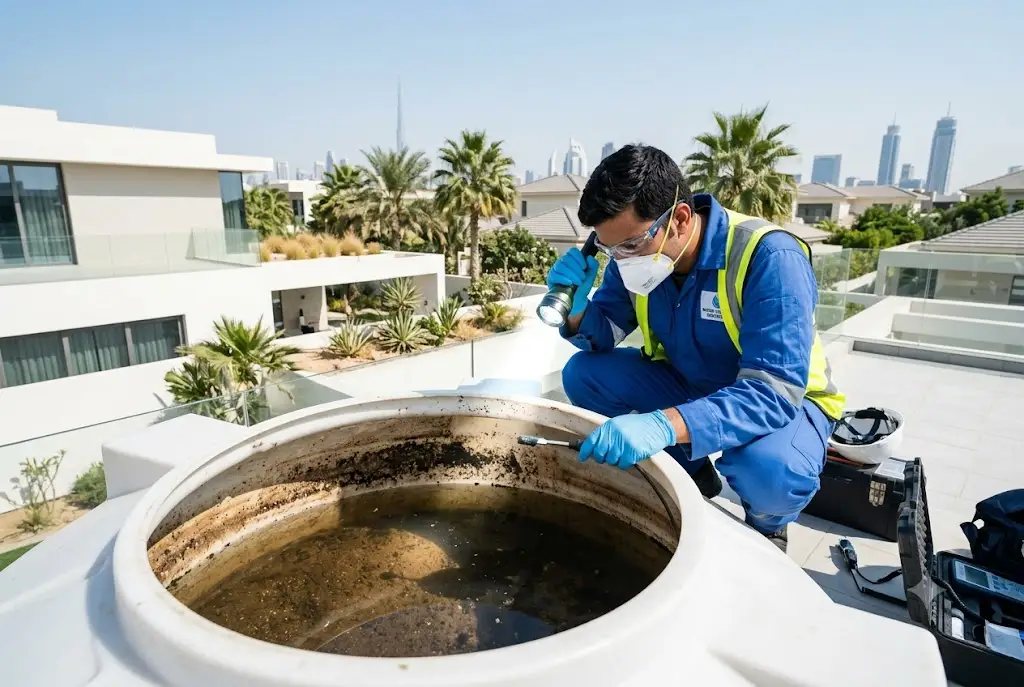
One of the primary concerns with neglected storage tanks is the potential growth of bacteria in water tank systems. Bacteria can multiply when sediment and organic matter remain inside the tank for extended periods.
Regular cleaning removes these deposits and helps maintain better water quality.
2. Contaminated Drinking Water
Although treated municipal water is generally safe when supplied, poor storage conditions can lead to contaminated drinking water. Water used for drinking, food preparation, or making beverages should come from properly maintained storage systems.
If water appears cloudy, has an unusual smell, or tastes different than normal, the storage tank should be inspected promptly.
3. Waterborne Diseases
Contaminated water has the potential to contribute to the spread of certain waterborne diseases when harmful microorganisms are present. Proper storage, regular cleaning, and safe maintenance practices help reduce this risk.
If occupants experience ongoing concerns about water quality, professional inspection and laboratory water testing may also be considered.
4. Skin and Eye Irritation
Water used for bathing should also be clean. Poor-quality stored water containing excessive sediment or contaminants may contribute to skin discomfort or eye irritation in some individuals.
Maintaining a clean storage system supports better hygiene throughout the property.
Signs Your Water Tank May Be Unsafe
Several warning signs may indicate that your water storage tank requires immediate attention.
- Cloudy or discolored water
- Unpleasant taste or odor
- Visible sediment in water
- Slime inside the tank
- Rust-colored water
- Floating debris
These symptoms should not be ignored. Learn more in our guide to signs your water tank needs cleaning.
Residential Water Tanks and Family Health
Families rely on stored water every day for drinking, cooking, laundry, and personal hygiene. Regular maintenance helps ensure that water remains clean and suitable for everyday household use.
Homeowners should include tank inspections as part of their routine property maintenance plan, particularly in villas and buildings with rooftop or underground tanks.
Read our complete guide to residential water tank cleaning for maintenance recommendations.
Commercial Buildings Face Greater Responsibility
Commercial facilities often serve hundreds or even thousands of occupants every day. Hotels, schools, hospitals, office buildings, shopping centers, and warehouses depend on reliable water storage systems.
Because of higher water demand and stricter hygiene standards, routine inspections and documented cleaning schedules are especially important.
Businesses can learn more in our article on commercial water tank cleaning.
How Professional Cleaning Helps Reduce Risks
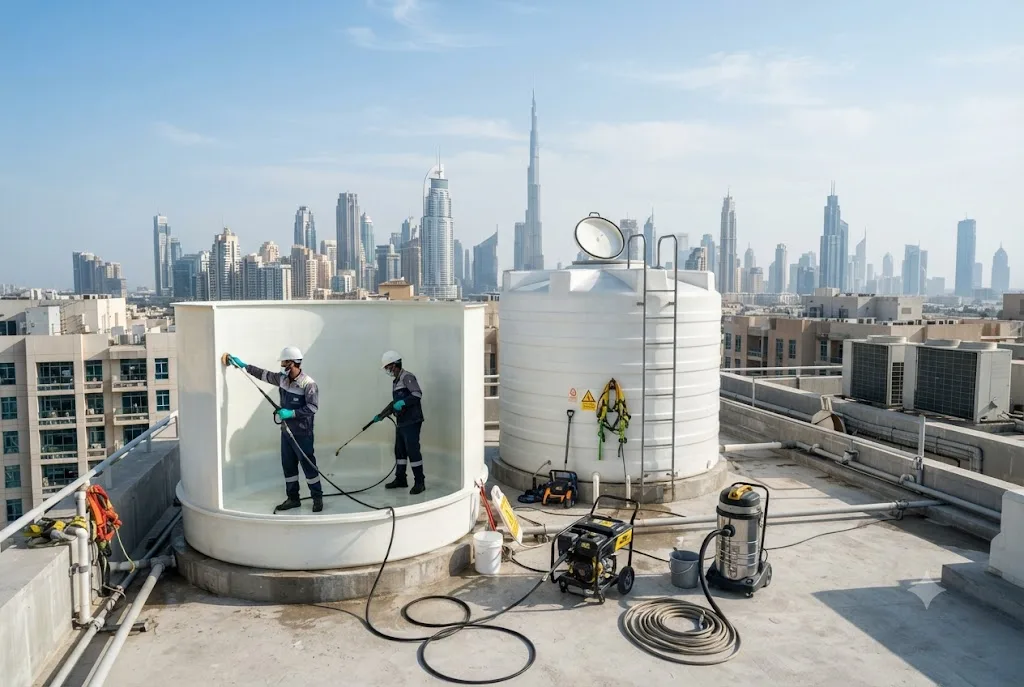
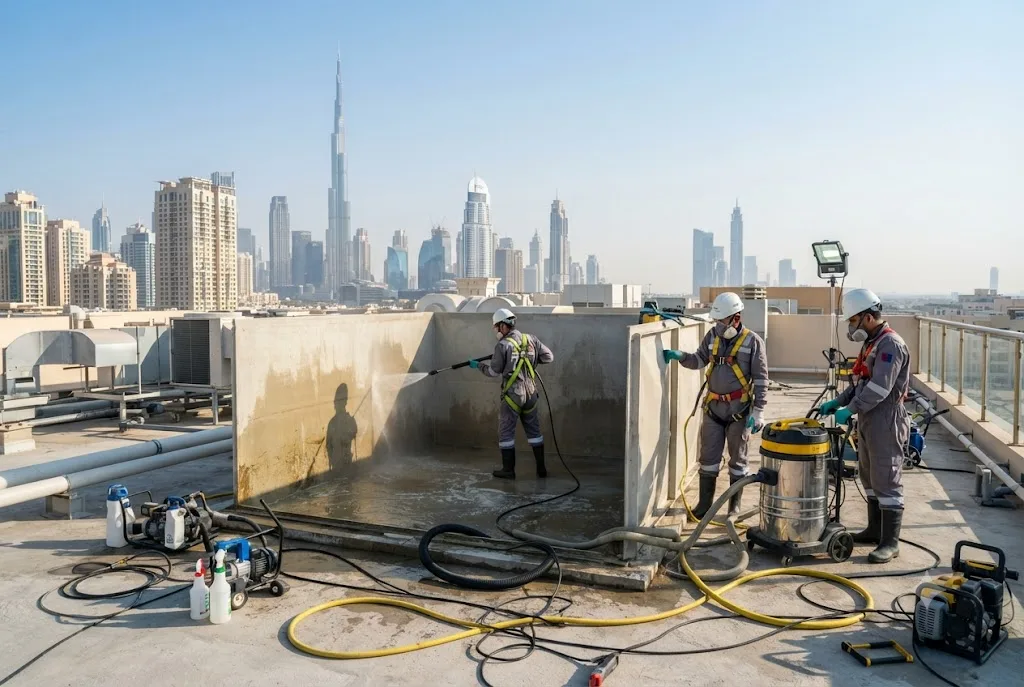
Professional water tank cleaning typically includes:
- Complete drainage of stored water
- Removal of accumulated sediment
- Cleaning internal tank surfaces
- Inspection for cracks or damage
- Appropriate disinfection procedures
- Safe refilling and operational checks
This process helps restore cleaner storage conditions while reducing the buildup of contaminants.
How Often Should Tanks Be Cleaned?
For many UAE properties, professional cleaning every six months provides an effective maintenance schedule. However, tanks exposed to higher dust levels, heavy water consumption, or aging infrastructure may require more frequent inspections.
Property owners should also arrange cleaning whenever contamination or poor water quality is suspected.
Simple Tips for Safer Water Storage
- Inspect tank lids regularly.
- Repair damaged vents promptly.
- Keep surrounding areas clean.
- Schedule professional inspections twice a year.
- Watch for changes in water appearance or odor.
- Never ignore visible sediment inside the tank.
Conclusion
Understanding dirty water tank health risks helps homeowners and businesses make informed decisions about water storage maintenance. Clean tanks support better water quality, reduce contamination risks, and contribute to healthier living and working environments.
Routine inspections, professional cleaning, and preventive maintenance remain the most effective ways to protect stored water throughout the year.
For internationally recognized guidance on drinking water safety and storage, visit the World Health Organization (WHO).