Choosing between professional water tank cleaning and a do-it-yourself approach is a common question for homeowners and property managers in the UAE. While cleaning a water tank yourself may appear to save money, it often lacks the specialized equipment, proper disinfection methods, and safety procedures required to achieve hygienic results. Understanding the differences can help you make the right decision for your family’s health and water quality.
Water tanks naturally collect sediment, dust, algae, and bacteria over time. Without proper cleaning, these contaminants can affect the quality of stored water. This guide explains whether you should clean your own water tank or rely on professional services.
Why Professional Water Tank Cleaning Matters
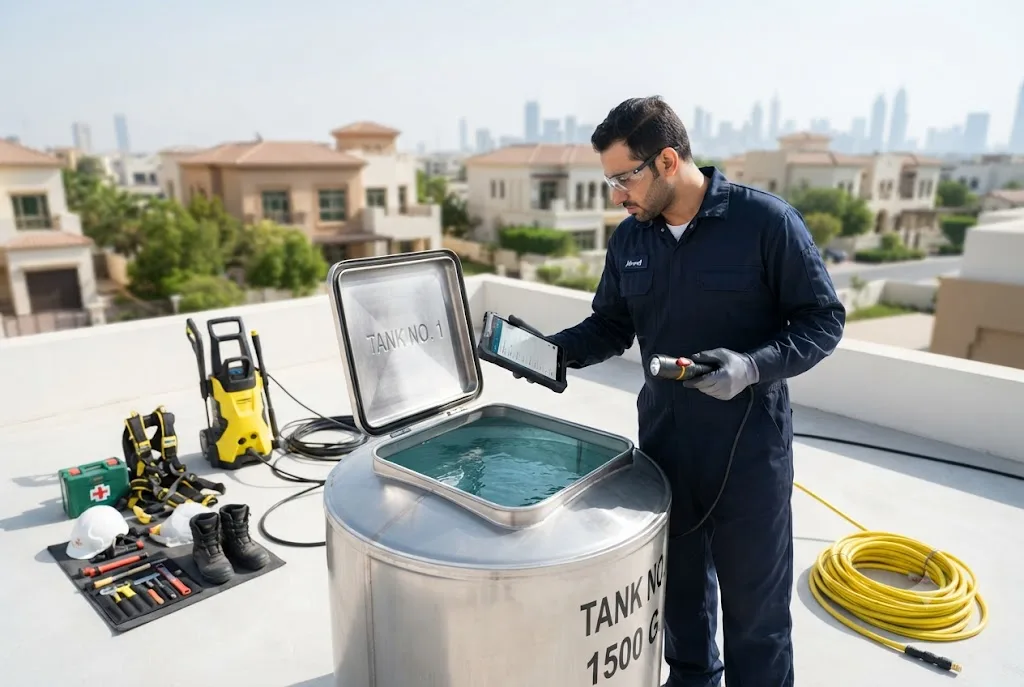
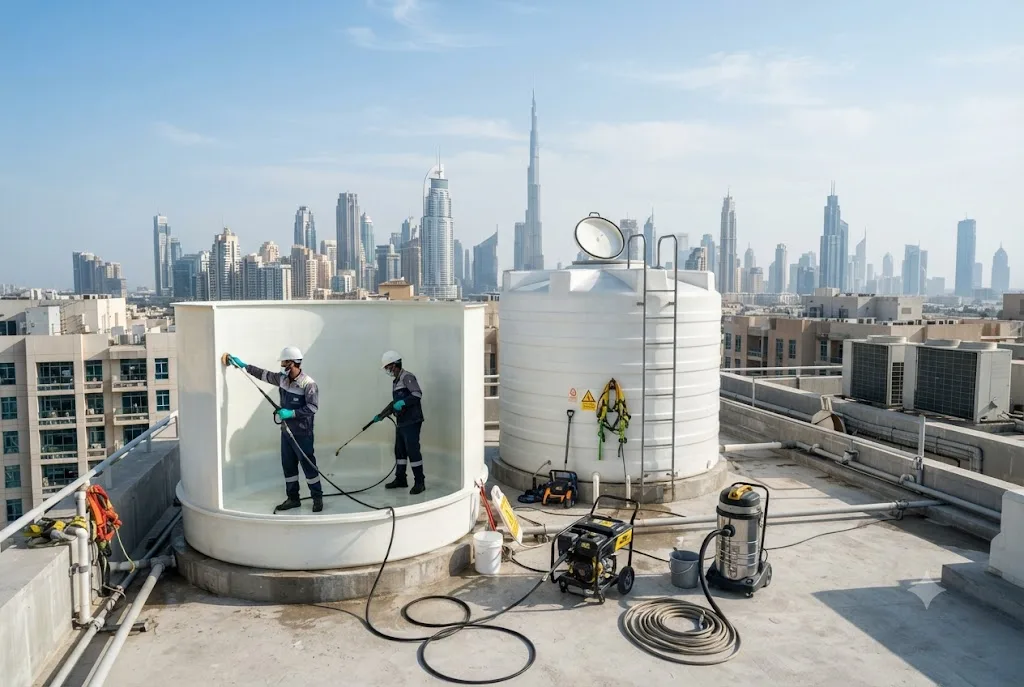
Professional water tank cleaning involves more than simply washing the inside of a tank. Certified technicians follow a structured cleaning and sanitization process using commercial-grade equipment and approved disinfectants designed for potable water systems.
The goal is to remove visible dirt as well as invisible contaminants such as bacteria, biofilm, and algae that household cleaning methods often fail to eliminate.
DIY Water Tank Cleaning: What Does It Involve?
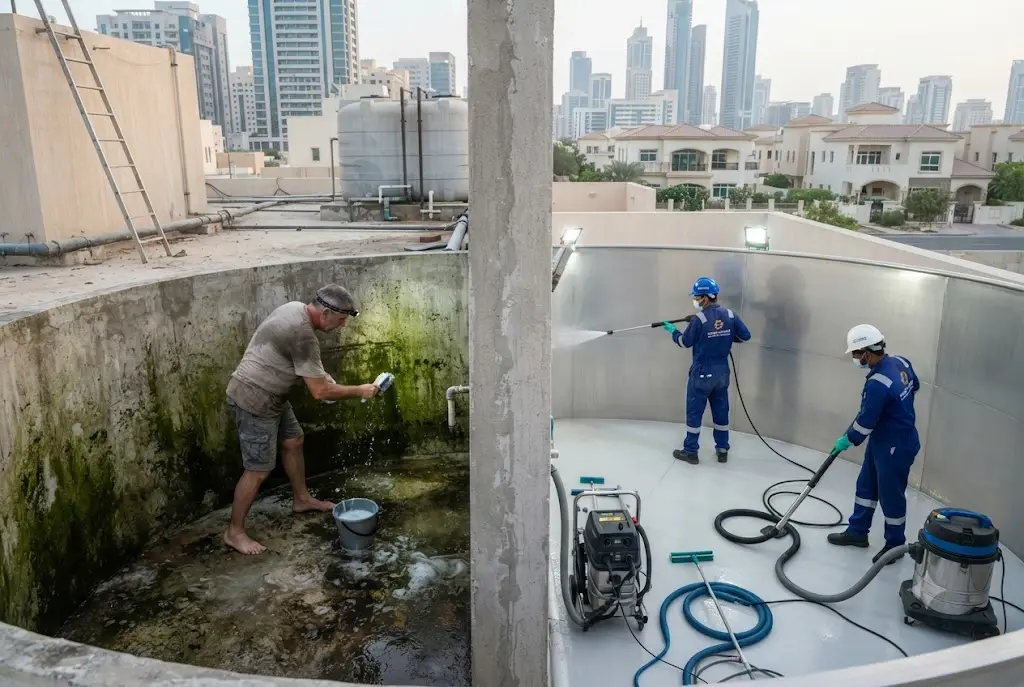
DIY water tank cleaning generally includes draining the tank, manually scrubbing interior surfaces, rinsing the tank, and refilling it with fresh water.
Although this may remove some visible dirt, homeowners often face several limitations.
- Limited access to deep areas of the tank
- No commercial sanitization equipment
- Difficulty removing stubborn biofilm
- Lack of approved disinfectants
- Potential contamination during cleaning
- Safety risks when entering confined spaces
For small, easily accessible tanks, basic maintenance may help temporarily. However, thorough sanitization usually requires professional expertise.
Should You Clean Your Own Water Tank?
Many people ask, should you clean your own water tank? The answer depends on several factors, including the tank size, accessibility, and intended use of the stored water.
DIY Cleaning May Be Suitable If:
- The tank is small and easily accessible.
- You are performing a light inspection.
- There is minimal sediment buildup.
- You understand proper hygiene practices.
Professional Cleaning Is Recommended If:
- The tank stores drinking water.
- The tank has not been cleaned for several months.
- You notice algae, sludge, or unpleasant odors.
- The tank serves an apartment, villa, or commercial building.
- You want complete disinfection and sanitation.
Benefits of Professional Cleaning
The benefits of professional cleaning go beyond appearance. Experienced technicians follow industry best practices to ensure both cleanliness and water safety.
1. Thorough Removal of Contaminants
Professionals remove sediment, rust particles, algae, biofilm, and accumulated debris that may remain after basic manual cleaning.
2. Proper Water Tank Disinfection
After cleaning, the tank is disinfected using approved sanitizing agents suitable for potable water systems, helping reduce bacteria and other microorganisms.
3. Specialized Equipment
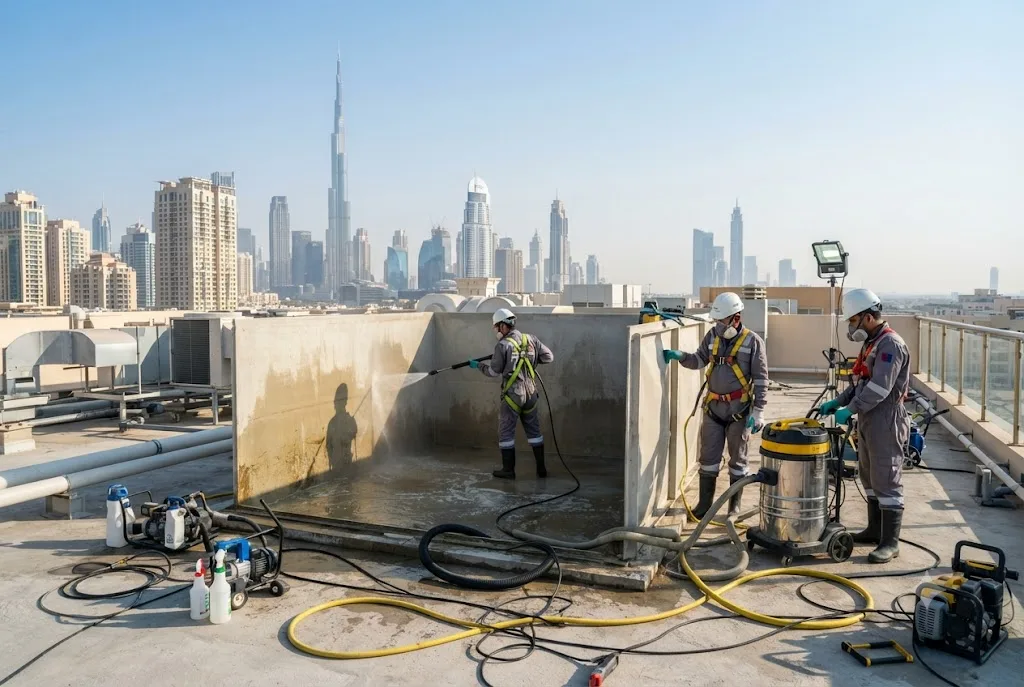
Professional companies use high-pressure cleaning systems, industrial pumps, wet vacuums, and specialized brushes that produce far better results than household tools.
4. Improved Water Quality
Clean tanks contribute to clearer, fresher water and reduce the likelihood of contamination within the storage system.
5. Early Detection of Problems
Technicians often identify cracks, leaks, damaged lids, or structural issues before they become costly repairs.
DIY vs Professional Water Tank Cleaning Comparison
Cleaning Effectiveness
Professional services typically achieve a deeper clean because they combine mechanical cleaning with proper sanitization procedures.
Safety
Entering confined water tanks without appropriate training can present safety hazards. Professional technicians follow established safety protocols during the cleaning process.
Time
A homeowner may spend several hours attempting to clean a tank, whereas an experienced team can complete the work efficiently using specialized equipment.
Long-Term Results
Professional cleaning generally provides more consistent and longer-lasting hygiene because the entire system is cleaned systematically.
When Should You Hire Expert Water Tank Cleaning?
Expert water tank cleaning is particularly valuable in situations where water quality directly affects occupants.
- Residential villas
- Apartment buildings
- Commercial offices
- Schools
- Hotels
- Restaurants
- Healthcare facilities
These properties often have larger storage systems that require specialized maintenance.
How Professionals Clean a Water Tank
A professional cleaning service usually follows these stages:
- Initial inspection
- Complete water drainage
- Sludge and sediment removal
- Mechanical scrubbing
- High-pressure cleaning where appropriate
- Potable water tank disinfection
- Final rinse
- Quality inspection before refilling
If you’re interested in seeing the results of this process, read our guide on Water Tank Cleaning Before and After, where we explain the visible transformation after professional cleaning.
Equipment Makes a Difference
One of the biggest differences between DIY and professional cleaning is the equipment used. Commercial-grade tools remove stubborn deposits far more effectively than household brushes or garden hoses.
Our detailed Water Tank Cleaning Equipment Guide explains the machines, tools, and technology professionals use to achieve better cleaning results.
How Often Should Professional Cleaning Be Scheduled?
The ideal cleaning frequency depends on water usage, tank size, environmental conditions, and local recommendations. Many residential and commercial properties in the UAE arrange professional cleaning approximately every six months to maintain safe water quality.
Tips for Maintaining a Clean Water Tank
- Inspect the tank regularly.
- Keep access covers tightly sealed.
- Repair leaks immediately.
- Remove visible debris promptly.
- Schedule routine professional inspections.
- Clean the tank before contamination becomes severe.
Conclusion
While DIY water tank cleaning may be suitable for minor maintenance, it cannot usually match the hygiene standards achieved through professional water tank cleaning. Professional services provide deeper cleaning, effective disinfection, specialized equipment, and greater confidence in your property’s water quality. For homes and businesses across the UAE, investing in expert cleaning helps protect both the water system and the people who rely on it every day.
For additional guidance on safe drinking water management, visit the World Health Organization (WHO).