When people think about water tank cleaning before and after, they often expect a simple visual difference. However, the biggest improvements go far beyond appearance. A professionally cleaned water tank helps provide cleaner drinking water, reduces harmful bacteria, removes accumulated sludge, and improves overall water quality for homes, apartments, villas, and commercial buildings across the UAE.
Water storage tanks naturally collect sediment, sand, rust particles, algae, and biofilm over time. Even if your tap water looks clear, contaminants may still be present inside the tank. Understanding the difference between a dirty and properly cleaned tank can help property owners appreciate the importance of regular maintenance.
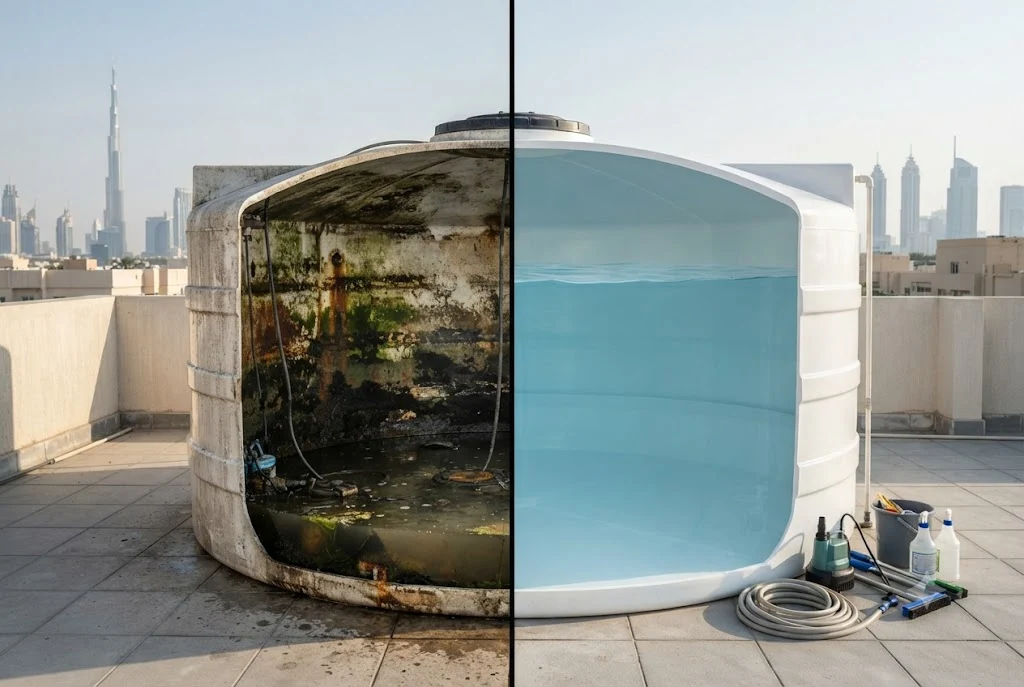
Water Tank Cleaning Before and After: What Changes?
The transformation after professional cleaning is usually significant. While the outside of the tank may look unchanged, the interior often undergoes a complete restoration.
Before Cleaning
- Layers of dirt and sediment settle at the bottom.
- Algae may begin forming on damp surfaces.
- Biofilm develops along tank walls.
- Rust particles accumulate in older tanks.
- Bacteria can multiply in stagnant water.
- Water quality gradually declines.
- Unpleasant odors may develop.
After Cleaning
- Sludge and debris are completely removed.
- Interior walls are thoroughly scrubbed.
- Disinfection eliminates harmful microorganisms.
- Fresh potable water is safely restored.
- Improved hygiene throughout the storage system.
- Better tasting and cleaner water.
- Reduced risk of contamination.
These clean water tank results demonstrate why routine maintenance is recommended instead of waiting until visible problems appear.
Dirty vs Clean Water Tank
The contrast between a dirty vs clean water tank is much greater than many homeowners expect.
A Dirty Water Tank Often Contains
- Sand and dust carried through supply lines
- Organic matter
- Algae growth
- Bacterial colonies
- Rust flakes
- Biofilm buildup
- Insect debris in poorly sealed tanks
A Professionally Cleaned Tank Features
- Sanitized internal surfaces
- Clean storage environment
- Reduced microbial contamination
- Improved water clarity
- Safer conditions for drinking and household use
Why Water Tanks Become Dirty
Even sealed water tanks are not immune to contamination. Several environmental factors contribute to gradual buildup.
- Fine desert dust common across the UAE
- Mineral deposits from water supply
- Warm temperatures encouraging microbial growth
- Long periods without maintenance
- Poorly sealed tank lids
- Aging plumbing systems
Without periodic cleaning, these contaminants continue accumulating and may eventually affect water quality.
Water Tank Cleaning Process Photos: What They Usually Show
Many cleaning companies publish water tank cleaning process photos to demonstrate the condition of tanks before, during, and after cleaning. Although every tank is different, the cleaning process generally includes several important stages.
Initial Inspection
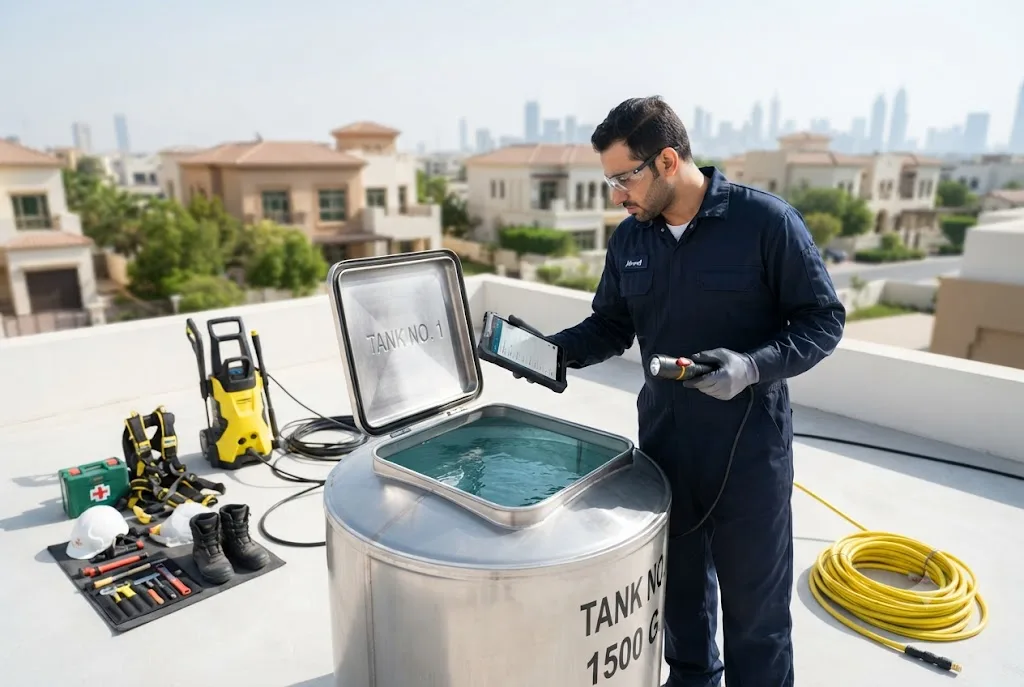
The tank is inspected for sludge, algae, sediment, structural damage, and contamination.
Water Drainage
Existing water is safely drained to expose all interior surfaces.
Sludge Removal
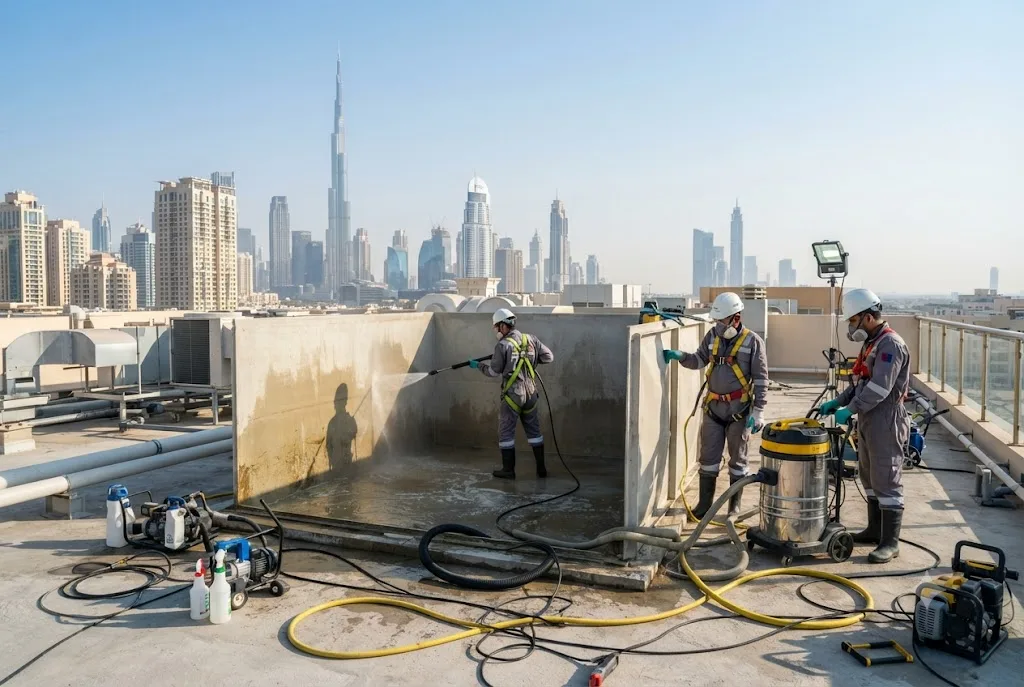
Heavy sediment and debris are manually removed before deep cleaning begins.
Scrubbing and Washing
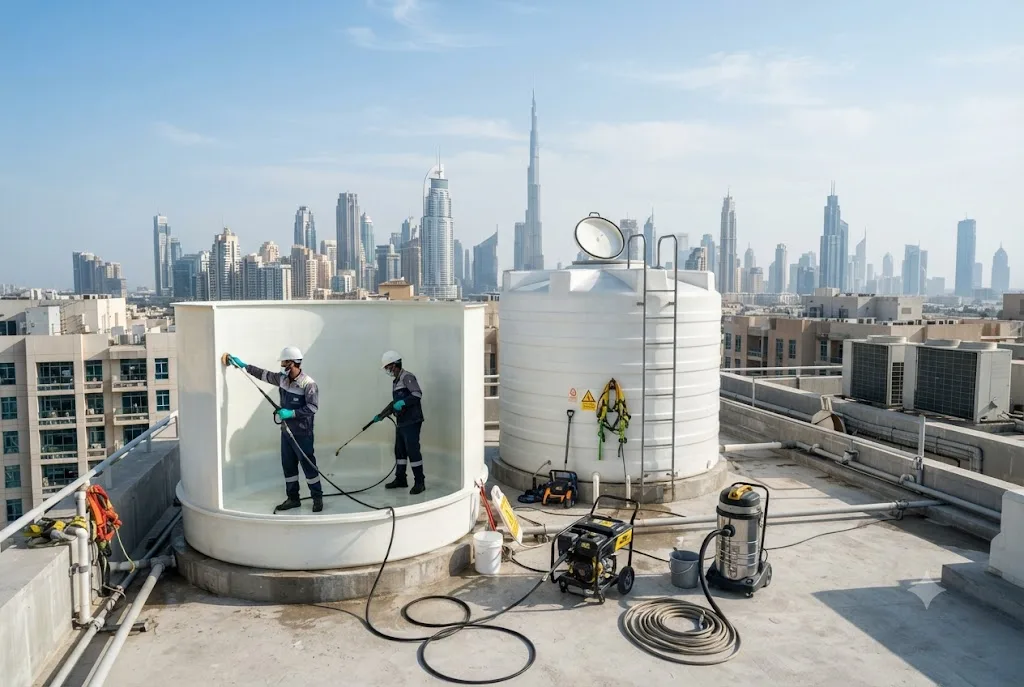
The tank walls, floor, corners, and access points are cleaned using appropriate brushes and professional equipment.
Disinfection
Approved disinfectants are applied to eliminate bacteria and microorganisms.
Final Rinse
All cleaning residues are thoroughly removed before refilling.
Inspection Before Refilling
Technicians perform a final quality check to ensure the tank is clean and ready for use.
Benefits You Notice After Professional Cleaning
Many property owners notice improvements immediately after cleaning.
- Cleaner-looking water
- Improved taste
- Reduced unpleasant odors
- Healthier water storage conditions
- Greater confidence in household water quality
- Reduced buildup inside plumbing fixtures
How Often Should Water Tanks Be Cleaned?
Cleaning frequency depends on tank size, building occupancy, water usage, and local regulations. In the UAE, many residential and commercial properties schedule professional water tank cleaning every six months to help maintain safe water quality.
If you are unsure about the recommended schedule, our complete Water Tank Cleaning FAQs explains common maintenance questions and best practices.
Why Professional Cleaning Makes a Difference
While some property owners consider cleaning tanks themselves, professional technicians have specialized equipment and follow structured sanitization procedures that are difficult to replicate using household tools.
You can learn more about the differences in our guide to DIY vs Professional Water Tank Cleaning, where we compare cleaning methods, safety considerations, and long-term results.
Maintaining a Clean Water Tank
Keeping your tank clean between scheduled services helps preserve water quality.
- Inspect tank lids regularly.
- Repair leaks promptly.
- Prevent insects from entering.
- Monitor unusual odors or discoloration.
- Schedule routine inspections.
- Arrange periodic professional cleaning.
For additional public health guidance on safe drinking water storage, refer to the World Health Organization (WHO).
Conclusion
The difference in water tank cleaning before and after extends far beyond cleaner-looking walls. Proper cleaning removes sediment, algae, bacteria, and biofilm while improving water quality and supporting healthier living conditions. Whether you own a villa, apartment, office, or commercial facility in the UAE, routine professional water tank maintenance is an important investment in safe and reliable water storage.