Drinking Water Tank Cleaning is one of the most important maintenance practices for ensuring clean, safe, and healthy water in residential and commercial properties. Although municipal water is treated before distribution, contaminants such as sediment, dust, algae, rust particles, and biofilm can gradually accumulate inside storage tanks. Regular professional cleaning helps maintain potable water quality and reduces the risk of contamination.
Whether you own a villa, apartment, office, hotel, or commercial building in the UAE, routine cleaning of drinking water storage tanks should be part of your preventive maintenance schedule.
Why Drinking Water Tank Cleaning Is Important
Water stored inside tanks is used daily for drinking, cooking, food preparation, and other household activities. Over time, even well-maintained tanks can collect contaminants that affect water hygiene.
Professional Drinking Water Tank Cleaning helps remove these contaminants before they compromise water quality.
- Sediment and mineral deposits
- Dust and sand particles
- Biofilm buildup
- Algae growth
- Rust particles
- Organic debris
- Microbial contamination
What Is Potable Water Tank Cleaning?
Potable water tank cleaning refers to cleaning water storage systems that hold water intended for human consumption. Unlike general cleaning, potable water systems require approved cleaning methods and disinfectants that are suitable for drinking water storage.
The objective is to restore hygienic storage conditions while protecting the safety of the water supply.
Types of Drinking Water Tanks
Professional cleaning services are suitable for many different types of drinking water storage systems.
Residential Tanks
- Villa rooftop tanks
- Apartment water tanks
- Underground household reservoirs
Commercial Tanks
- Hotels
- Restaurants
- Office buildings
- Schools
- Healthcare facilities
Industrial Potable Water Storage
Factories and industrial sites that maintain potable water systems also require scheduled cleaning and sanitization.
Domestic Drinking Water Tank Cleaning Process
The domestic drinking water tank cleaning process follows a structured approach to ensure safe and hygienic water storage.
1. Inspection
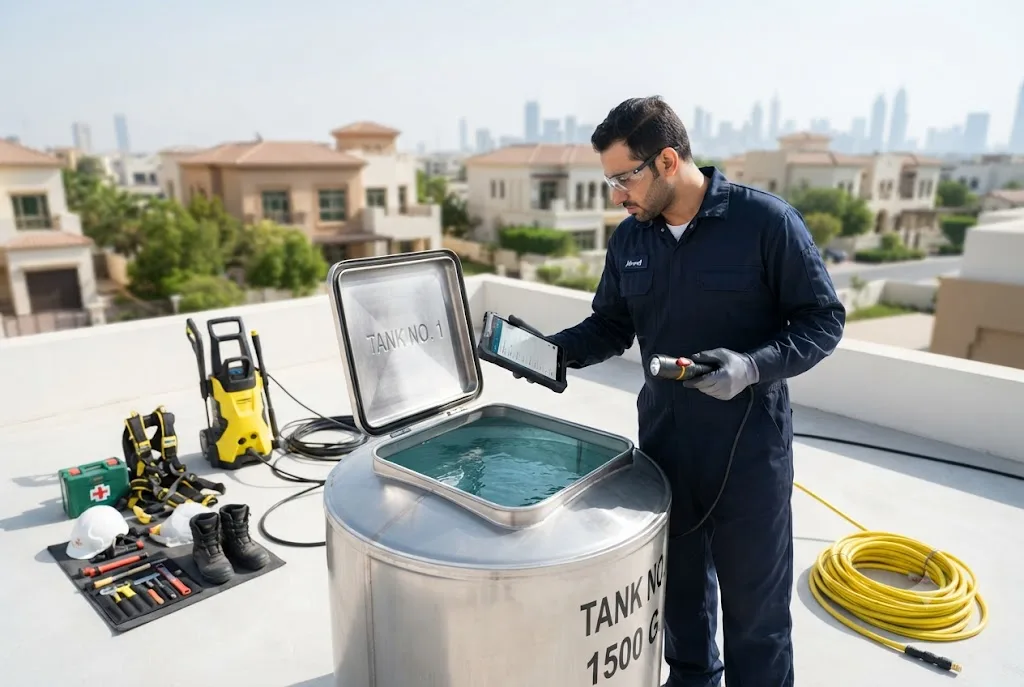
Technicians inspect the tank for sediment, algae, rust, leaks, and structural issues before cleaning begins.
2. Water Drainage
All stored water is safely drained to expose the interior surfaces.
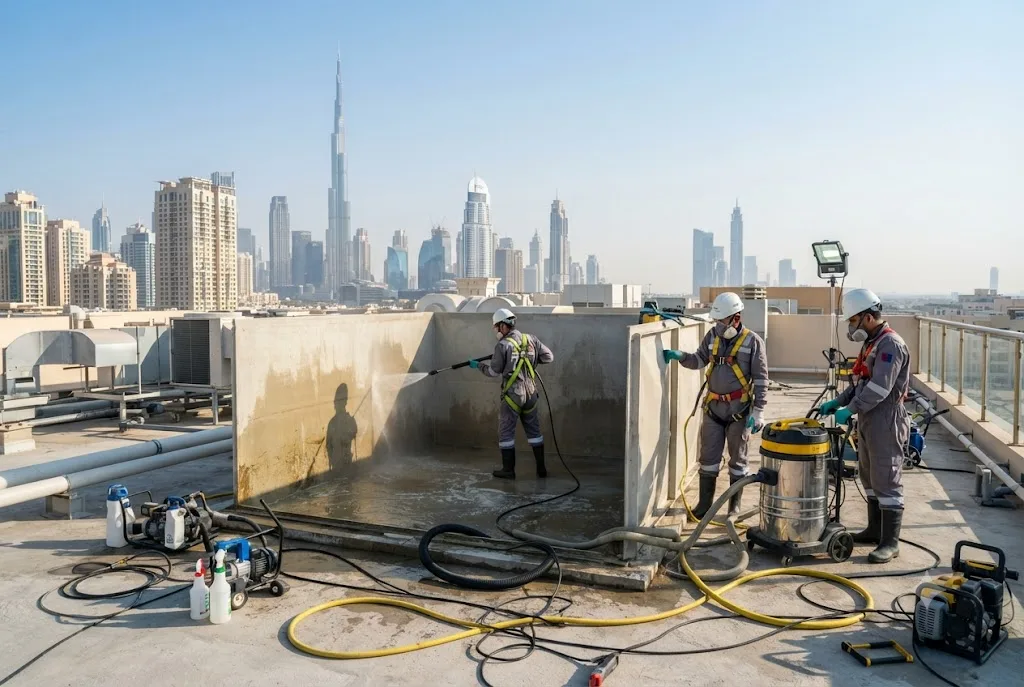
3. Sludge Removal
Loose sediment, dirt, and debris are removed manually or using industrial vacuum systems.
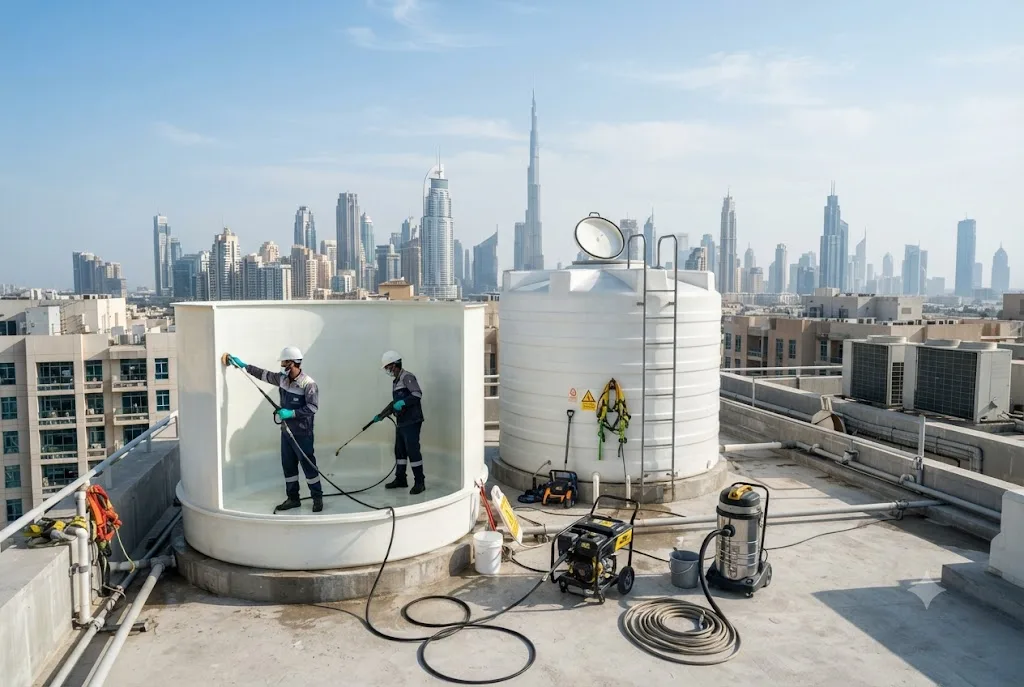
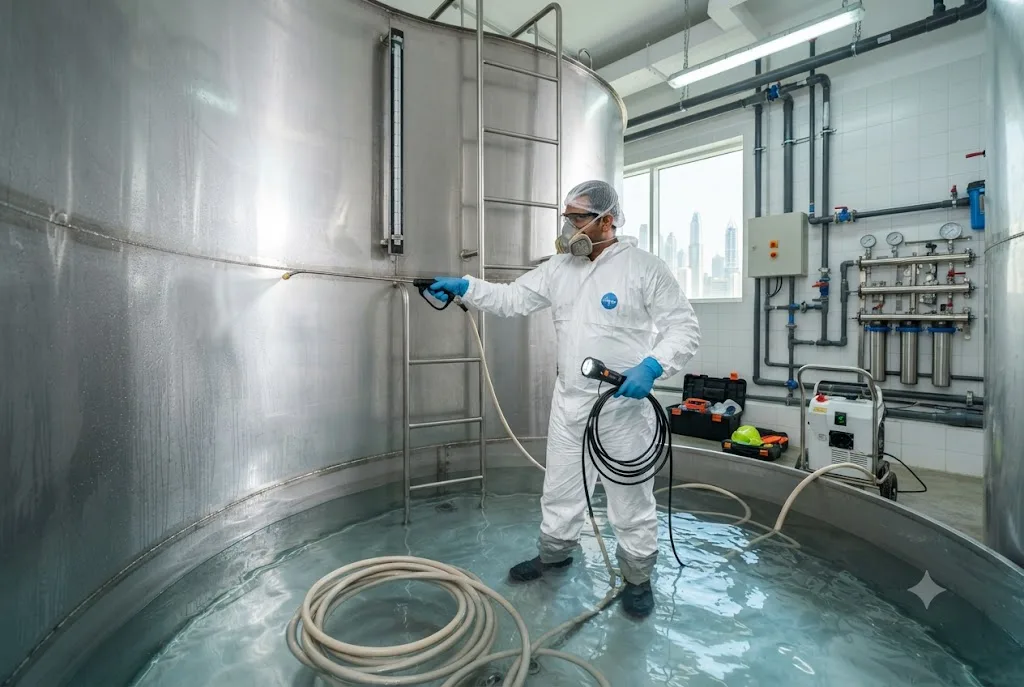
4. Mechanical Cleaning
Professional brushes and specialized equipment remove biofilm, algae, and stubborn deposits from the tank walls and floor.
5. Potable Water Disinfection
Approved disinfectants designed for drinking water systems are applied to sanitize the entire tank.
6. Final Rinse
The tank is thoroughly rinsed with clean water before being returned to service.
7. Quality Inspection
A final inspection confirms that the tank is clean, sanitized, and ready for refilling.
Benefits of Professional Drinking Water Tank Cleaning
- Improved drinking water quality.
- Removal of sediment and sludge.
- Reduction of bacteria and microorganisms.
- Cleaner storage conditions.
- Longer water tank lifespan.
- Improved overall hygiene.
- Early identification of maintenance issues.
How Often Should Drinking Water Tanks Be Cleaned?
Cleaning frequency depends on water usage, tank capacity, occupancy, and environmental conditions.
For most residential and commercial properties in the UAE, professional cleaning every six months is commonly recommended as part of a preventive maintenance program. High-demand facilities may require more frequent inspections.
Signs Your Drinking Water Tank Needs Cleaning
- Cloudy water.
- Unpleasant taste.
- Musty odors.
- Visible sediment.
- Algae inside the tank.
- Rust-colored water.
- A long time since the previous cleaning.
Routine inspections help detect these issues before they affect the quality of stored drinking water.
Professional Cleaning vs DIY Maintenance
Although basic inspections can be performed by property owners, thorough cleaning of drinking water storage tanks requires professional equipment, approved disinfectants, and trained technicians.
Learn more in our guide to DIY vs Professional Water Tank Cleaning.
Equipment Used for Potable Water Tank Cleaning
Professional technicians use specialized equipment that is designed for drinking water systems.
- Industrial vacuum systems
- Submersible pumps
- High-pressure cleaning equipment
- Inspection cameras
- Commercial brushes
- Disinfectant spraying equipment
- Protective safety gear
Read more in our Water Tank Cleaning Equipment Guide.
Related Water Tank Cleaning Resources
Explore more articles from our Water Tank Cleaning knowledge hub:
- Water Tank Cleaning UAE
- Water Tank Disinfection Dubai
- Water Tank Cleaning Process Dubai
- Water Tank Cleaning Before and After
Conclusion
Drinking Water Tank Cleaning is essential for maintaining clean, safe, and hygienic potable water storage. Regular professional cleaning removes sediment, algae, biofilm, and other contaminants while supporting better water quality for homes and businesses across the UAE. Combined with proper disinfection and scheduled maintenance, routine cleaning helps protect both your water supply and your storage system for years to come.
For additional guidance on safe drinking water and water storage hygiene, visit the World Health Organization (WHO).