If you’re searching for water tank cleaning FAQs, you’re not alone. Many homeowners, tenants, landlords, and business owners in the UAE have questions about how often water tanks should be cleaned, why professional cleaning is important, and what happens during the cleaning process. This guide answers the most common water tank cleaning questions with practical, easy-to-understand information to help you maintain safe and hygienic water storage.
Whether you have a villa, apartment, office, or commercial property, understanding proper water tank maintenance can improve water quality and extend the life of your storage system.
Why Is Water Tank Cleaning Important?
Water storage tanks naturally accumulate sediment, dust, rust particles, algae, and biofilm over time. Without routine cleaning, these contaminants may affect water quality and create conditions that encourage bacterial growth.
Regular cleaning helps maintain hygienic storage conditions and supports cleaner water for daily household use.
How Often Should a Water Tank Be Cleaned?
One of the most common water tank cleaning questions is about cleaning frequency.
For most residential and commercial properties in the UAE, professional cleaning is generally recommended every six months. However, the ideal schedule depends on factors such as:
- Tank size
- Water consumption
- Building occupancy
- Environmental conditions
- Water source quality
Can I Clean My Water Tank Myself?
Basic maintenance may be possible for small, easily accessible tanks. However, complete cleaning and sanitization usually require specialized equipment and approved disinfectants.
Our detailed guide on DIY vs Professional Water Tank Cleaning explains why professional services generally provide better long-term results.
How Long Does Water Tank Cleaning Take?
The cleaning time varies depending on:
- Tank capacity
- Amount of sediment
- Accessibility
- Cleaning method used
- Number of tanks
Most residential tanks can be cleaned within a few hours, while larger commercial systems may require additional time.
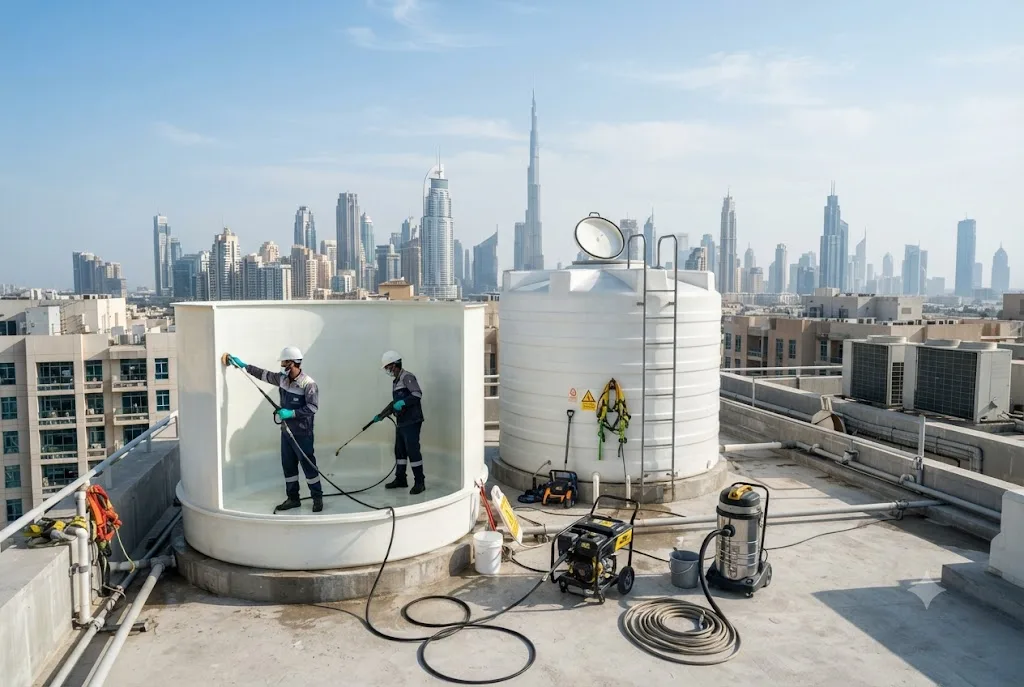
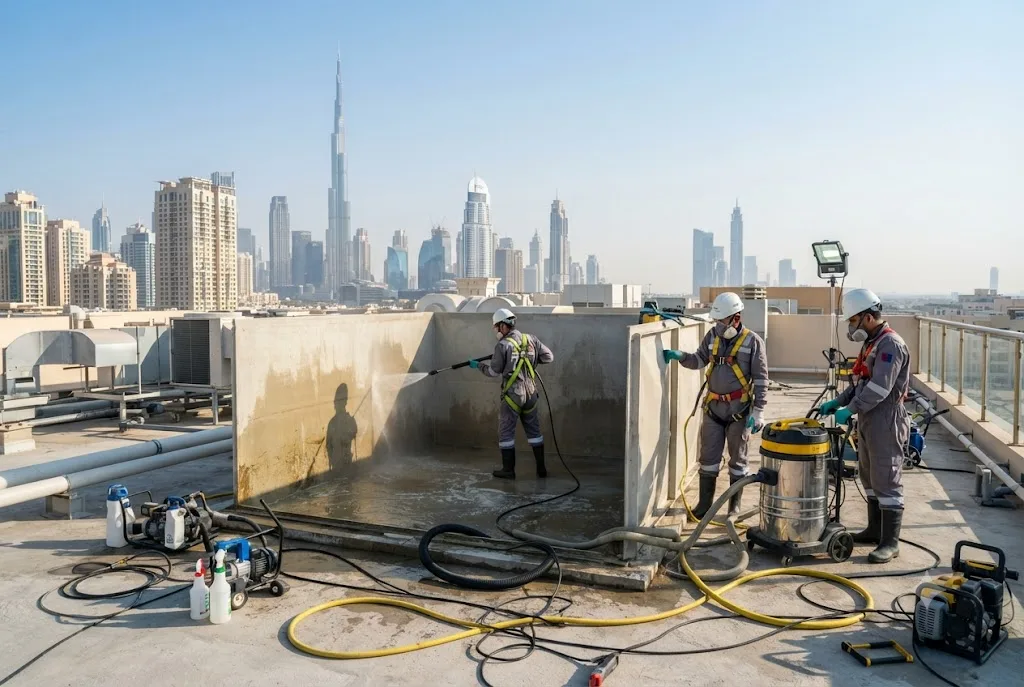
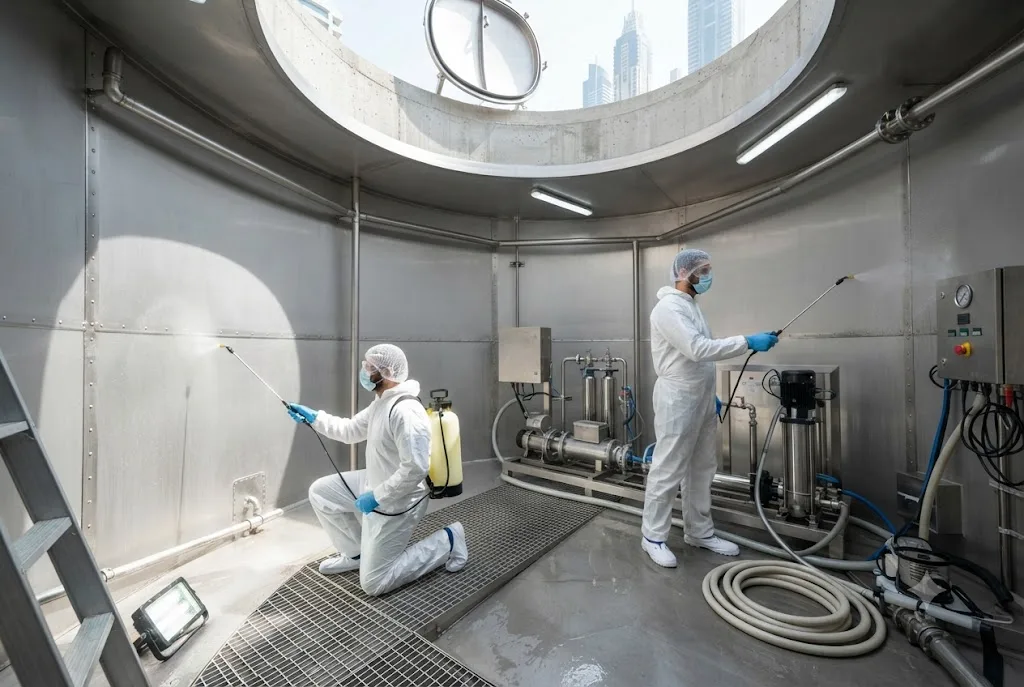
What Happens During Professional Water Tank Cleaning?
A standard professional cleaning process usually includes:
- Tank inspection
- Water drainage
- Sludge removal
- Mechanical scrubbing
- High-pressure cleaning where appropriate
- Potable water disinfection
- Final rinse
- Quality inspection before refilling
You can see the complete transformation in our guide to Water Tank Cleaning Before and After.
Is Water Tank Cleaning Safe?
Yes. When performed by trained professionals using approved cleaning procedures and potable water-safe disinfectants, water tank cleaning is a safe and effective maintenance service.
Professional technicians also follow confined-space safety procedures and use specialized equipment designed for water storage systems.
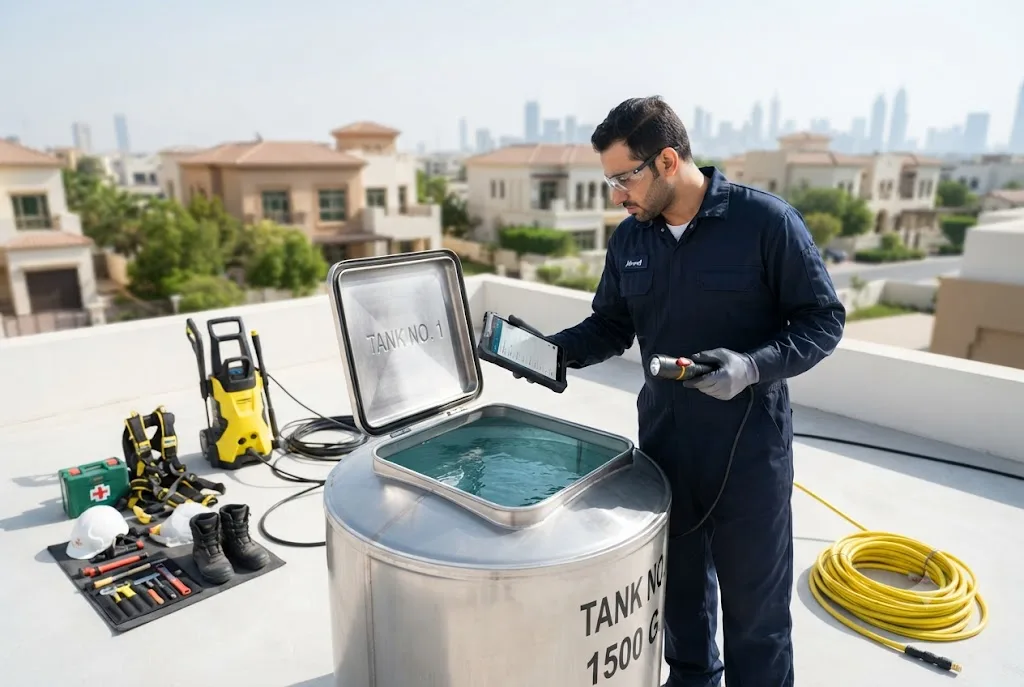
What Equipment Is Used During Cleaning?
Professional companies commonly use:
- Industrial vacuum systems
- High-pressure cleaning machines
- Submersible pumps
- Commercial brushes
- Inspection cameras
- Disinfection equipment
- Protective safety gear
Learn more in our complete Water Tank Cleaning Equipment Guide.
How Do I Know My Water Tank Needs Cleaning?
Some common warning signs include:
- Cloudy water
- Unpleasant taste
- Unusual odors
- Visible sediment
- Discolored water
- Algae growth
- Long period since the last cleaning
Even if none of these signs are visible, preventive maintenance remains important.
Can Dirty Water Tanks Affect Water Quality?
Yes. Over time, accumulated dirt, algae, rust, and biofilm may reduce overall water quality inside the storage system. Regular cleaning helps maintain cleaner storage conditions and minimizes contamination risks.
Does Cleaning Remove Bacteria?
Professional cleaning includes both physical cleaning and sanitization. The cleaning stage removes dirt and sediment, while the disinfection stage helps eliminate bacteria and microorganisms using approved disinfectants suitable for potable water systems.
How Much Does Water Tank Cleaning Cost?
The cost depends on several factors, including:
- Tank size
- Number of tanks
- Accessibility
- Cleaning complexity
- Residential or commercial property
Instead of choosing a provider based only on price, consider experience, equipment, cleaning procedures, and customer reputation.
Can Water Tank Cleaning Prevent Future Problems?
Routine maintenance helps reduce:
- Sediment buildup
- Algae formation
- Biofilm development
- Unpleasant odors
- Water contamination
- Premature wear inside the storage system
Regular inspections also allow technicians to identify leaks or structural issues before they become expensive repairs.
Water Tank Cleaning Tips
Following these simple water tank cleaning tips can help maintain better water quality between professional services.
- Inspect tank covers regularly.
- Keep lids tightly sealed.
- Repair leaks promptly.
- Prevent insects from entering.
- Schedule routine inspections.
- Arrange professional cleaning every six months where appropriate.
Conclusion
These water tank cleaning FAQs answer many of the concerns homeowners and businesses have about maintaining safe water storage systems. Regular inspections, professional cleaning, and proper maintenance help improve water quality, protect storage tanks, and provide greater peace of mind. Whether you manage a residential villa, apartment building, or commercial property in the UAE, following these best practices supports cleaner and safer water for everyday use.
For additional guidance on drinking water safety and storage, visit the World Health Organization (WHO).