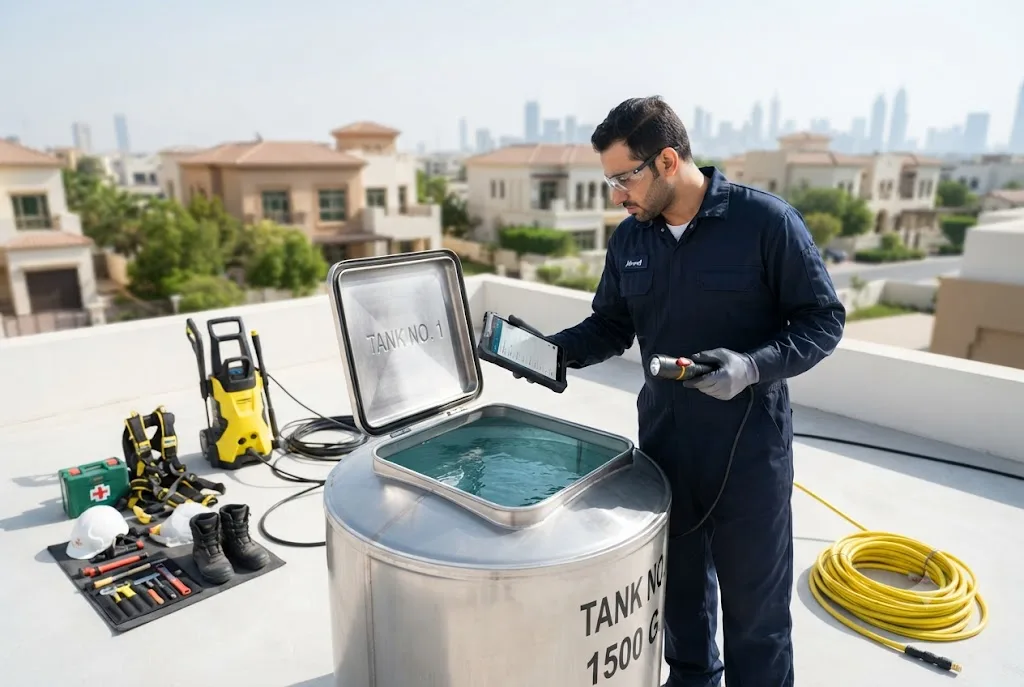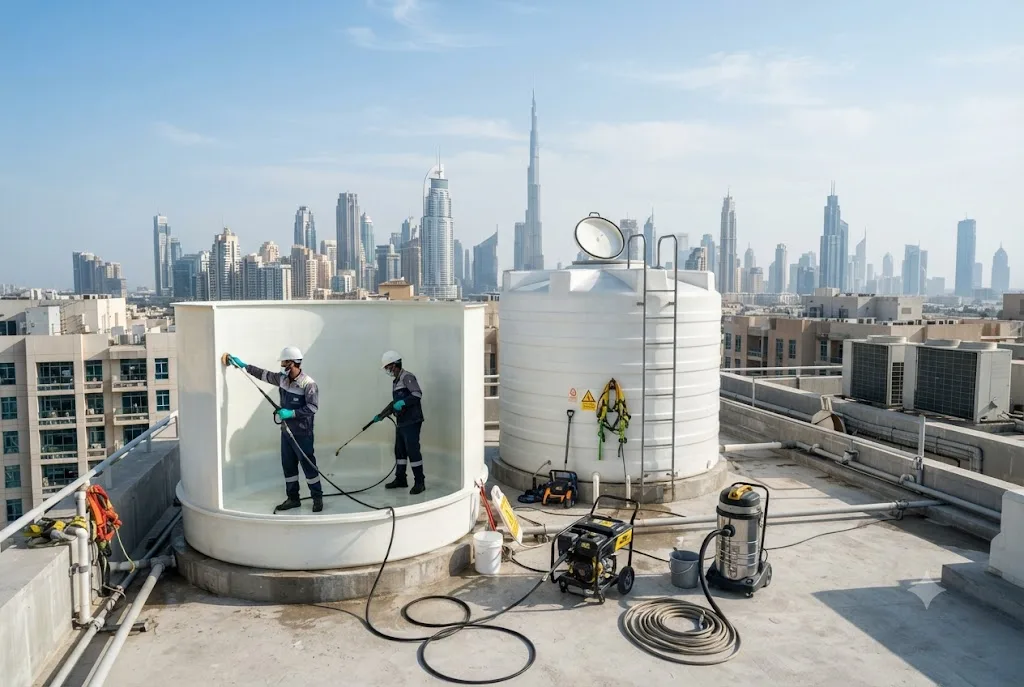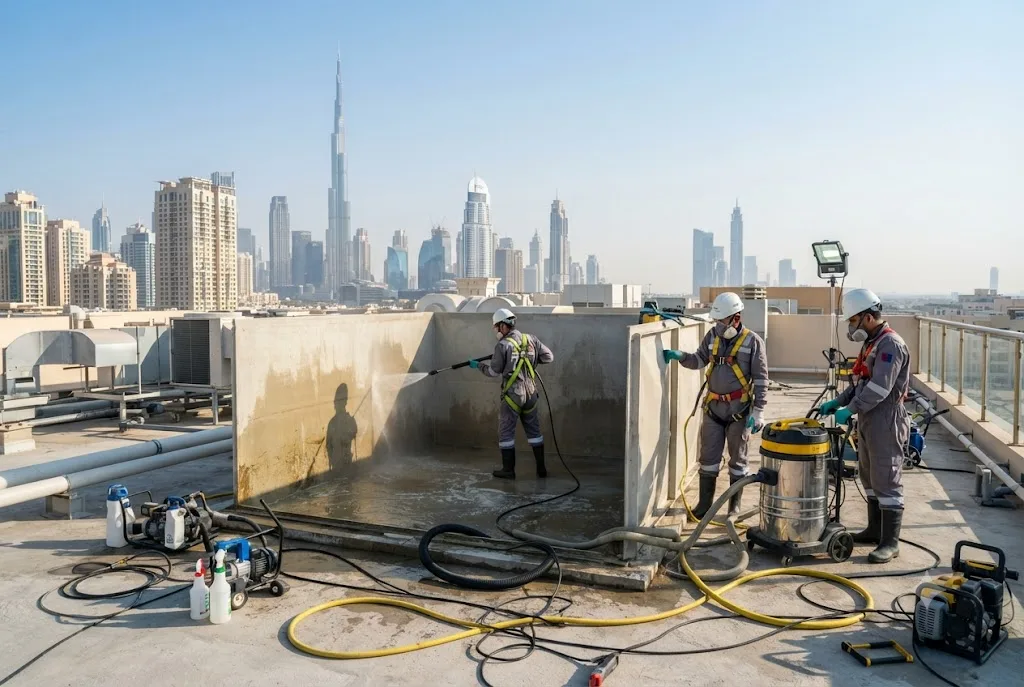
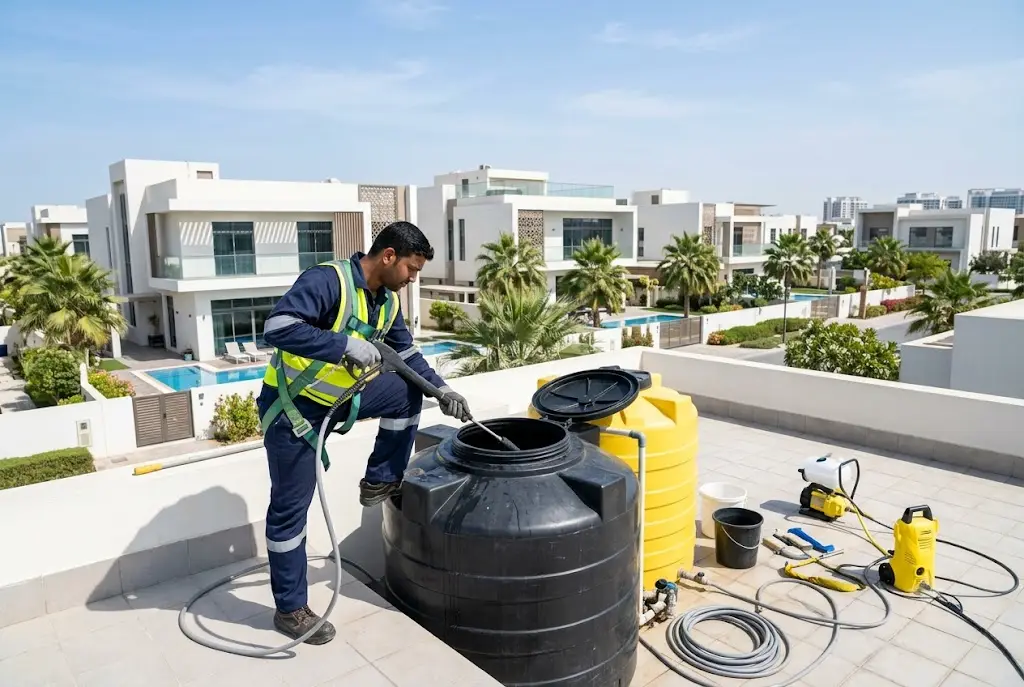
If you’ve ever wondered how often should water tanks be cleaned, you’re not alone. Water tanks play a vital role in supplying clean water to homes, villas, apartments, offices, schools, and commercial buildings across the UAE. However, because water is stored for extended periods, sediment, bacteria, algae, and other contaminants can gradually build up inside the tank. Without routine cleaning, water quality can decline and potentially affect health, plumbing systems, and appliances.
In this guide, we’ll explain the recommended water tank cleaning frequency, the factors that influence cleaning schedules, and how both residential and commercial property owners can maintain safe water storage throughout the year.
Why Water Tank Cleaning Matters
Municipal water supplied across the UAE is treated before distribution, but once it enters a storage tank, its quality depends on how well that tank is maintained. Over time, fine sand, dust, mineral deposits, and organic matter may settle at the bottom of the tank.
These deposits create conditions where bacteria and algae can grow if left unchecked. Regular cleaning helps:
- Maintain clean and safe water storage
- Reduce sediment buildup
- Improve water quality
- Protect plumbing fixtures
- Extend the lifespan of water tanks
- Support better hygiene throughout the property
How Often Should Water Tanks Be Cleaned?
For most residential and commercial properties in the UAE, experts generally recommend cleaning water tanks at least every six months. This schedule helps minimize sediment accumulation and keeps stored water in good condition.
However, the ideal water tank cleaning frequency depends on several factors, including:
- Tank size
- Water usage
- Property type
- Environmental conditions
- Tank material
- Maintenance history
Some properties with higher water consumption or greater exposure to dust may require more frequent inspections and cleaning.
Residential Water Tank Cleaning Schedule
A typical residential water tank cleaning schedule includes cleaning every six months for villas, apartments, and family homes.
Villas
Large villas often have multiple rooftop or underground tanks. These should be inspected regularly and professionally cleaned twice a year.
Apartments
Apartment buildings usually rely on shared storage systems managed by building maintenance teams. Residents should confirm that scheduled cleaning is carried out according to local maintenance requirements.
Private Homes
For individual homes with dedicated storage tanks, homeowners should include tank cleaning as part of their regular home maintenance plan.
Our guide on residential water tank cleaning explains the cleaning process and best practices for homeowners.
Commercial Water Tank Cleaning Frequency
The recommended commercial water tank cleaning frequency may be higher than residential properties because of increased daily water usage and stricter hygiene requirements.
Commercial buildings that often require scheduled maintenance include:
- Hotels
- Hospitals
- Schools
- Office buildings
- Restaurants
- Warehouses
- Shopping centres
Property managers should establish documented maintenance schedules and maintain inspection records where appropriate.
Businesses can also read our guide on commercial water tank cleaning for industry-specific recommendations.
Dubai Water Tank Cleaning Frequency
The recommended Dubai water tank cleaning frequency generally follows the same guidance as the rest of the UAE, with cleaning every six months being suitable for many residential and commercial properties.
Dubai’s hot climate, frequent dust, and occasional sandstorms can increase sediment accumulation in storage tanks. Because of these environmental conditions, periodic inspections between scheduled cleanings are also advisable.
Factors That Affect Cleaning Frequency
Climate
High temperatures encourage microbial growth if tanks are poorly maintained.
Dust and Sand
Airborne dust entering through damaged lids or vents may accumulate over time.
Tank Condition
Older tanks or damaged tanks may require more frequent maintenance.
Water Consumption
Properties with heavy daily usage often benefit from more frequent inspections.
Tank Material
Concrete, plastic, fiberglass, and steel tanks may each require different maintenance approaches.
Signs It’s Time to Clean Your Water Tank
Even if your next scheduled cleaning hasn’t arrived, certain warning signs shouldn’t be ignored.
- Cloudy water
- Unpleasant smell
- Visible sediment
- Discoloured water
- Reduced water quality
- Slime inside the tank
If you notice any of these problems, read our article about signs your water tank needs cleaning to understand when immediate cleaning may be necessary.
Health Benefits of Regular Water Tank Cleaning
Routine maintenance supports better hygiene by reducing the likelihood of contamination inside stored water. Clean tanks also help maintain the quality of water used for drinking, cooking, bathing, and cleaning.
Learn more about the potential dirty water tank health risks associated with neglected water storage systems.
Professional Cleaning vs DIY
While homeowners may inspect visible parts of a tank, complete cleaning usually requires draining the tank, removing accumulated sediment, cleaning internal surfaces, disinfecting where appropriate, and safely restoring the water supply.
Professional technicians use suitable equipment and established cleaning procedures that help achieve more thorough results than basic DIY cleaning.
Simple Tips to Keep Your Water Tank Cleaner Between Services
- Keep the tank lid tightly sealed.
- Repair damaged vents and covers.
- Inspect for leaks regularly.
- Monitor water colour and odour.
- Schedule professional inspections.
- Never delay routine maintenance.
Conclusion
Understanding how often should water tanks be cleaned is an important part of maintaining a safe water supply in the UAE. For most residential and commercial properties, professional cleaning every six months provides a practical maintenance schedule, although environmental conditions and water usage may require more frequent attention.
Regular inspections, preventive maintenance, and timely professional cleaning help preserve water quality, protect plumbing systems, and support healthier living and working environments.
For additional guidance on safe water storage and hygiene, refer to the recommendations published by the World Health Organization (WHO).