Villa gardens in the Emirates fight a losing battle every summer: scorching temperatures, water restrictions and sand that finds its way into everything. That is why artificial grass installation in Dubai has become one of the most popular garden upgrades for homeowners who want a green lawn without the irrigation bills and weekly upkeep. This guide explains where artificial turf works best, how to choose the right product, what the installation involves and how to look after it in the UAE climate.
Why Homeowners Choose Artificial Grass in Dubai
The case for artificial grass starts with water. A natural lawn in Dubai needs heavy, year-round irrigation simply to survive, and even then it browns in the peak heat and turns patchy in shaded corners. Artificial turf needs no watering at all beyond an occasional rinse, which makes it attractive both for household bills and for owners who travel and cannot supervise gardeners. It also stays green and usable in every season — children and pets can play on it the day after a sandstorm with a quick brush-down rather than a week of lawn recovery.
There is a maintenance saving too. Real grass demands mowing, feeding, reseeding and pest treatment; artificial grass removes nearly all of that from your routine. If you currently pay for regular upkeep, compare the turf’s one-off installation cost against the running costs described in our guide to garden maintenance in Dubai — for many villa owners, the numbers level out sooner than expected, and the garden looks consistently tidy in the meantime.
Where Artificial Grass Works Best Around the Home
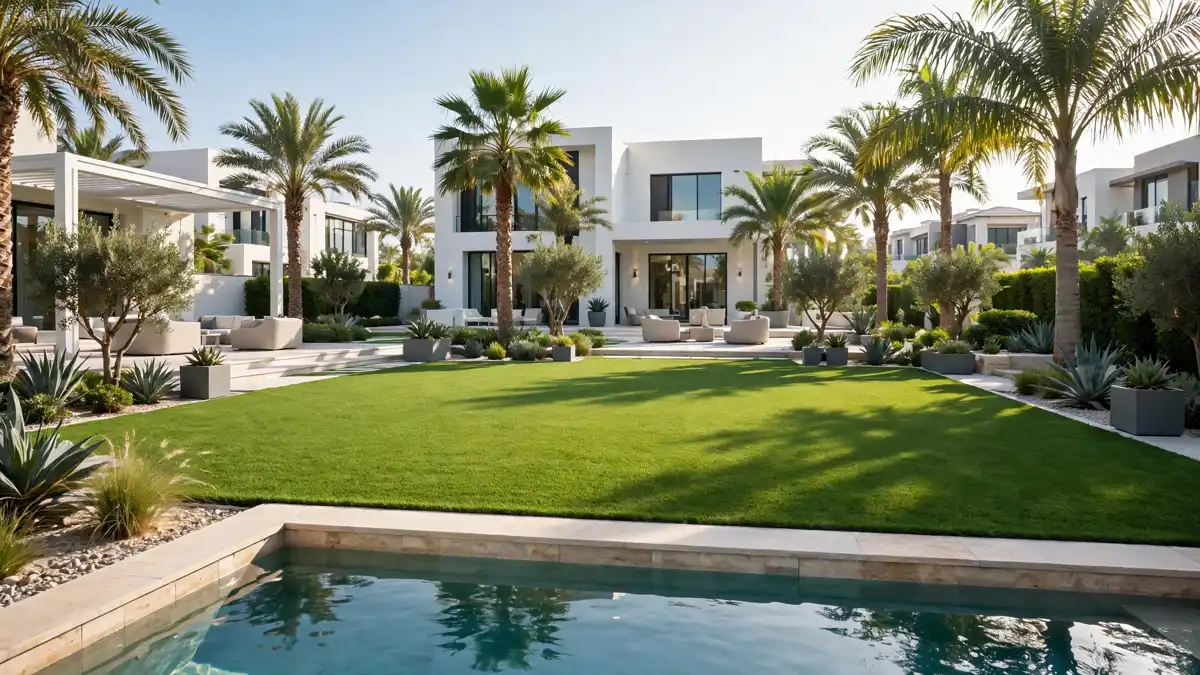
Artificial grass is most often installed in villa front and back gardens, where it replaces thirsty lawn areas while keeping the soft, green look that frames planting beds and pathways. It is equally popular on balconies and roof terraces in apartments, where real grass is impossible and the turf turns a bare slab into a usable outdoor corner. Around swimming pools it provides a non-slip, mud-free surround that will not be killed by splashed chlorinated water — a pairing we touch on in our swimming pool landscaping guide.
Play areas are another strong use case: schools, nurseries and family gardens choose cushioned turf systems with a shock-absorbing layer beneath. Pet owners also favour it because it drains well, does not dig up, and can be hosed clean. When planning a full garden redesign, turf works best as one element in a wider scheme — our garden landscaping in Dubai guide and the ideas in Backyard Dubai show how lawns, planting and seating areas are usually combined.
Types of Artificial Turf and How to Choose
Not all artificial grass is equal, and choosing on price alone usually disappoints. The specification that matters most is pile height and density: short, dense piles suit balconies and heavy foot traffic, while longer piles look plusher in a villa garden but need more brushing to stay upright. Look at the backing quality and drainage holes, the UV-stability rating — essential under the Gulf sun — and whether the yarn has a natural mix of green tones and a brown thatch layer, which makes the difference between a lawn that looks real and one that looks like a carpet.
For areas where heat is a concern, ask about lighter-coloured or heat-reducing ranges; any surface in direct Dubai sun will get warm at midday, but newer yarns reflect more heat than older products. Always request a physical sample and test it at home in full sun before committing. If your garden design mixes surfaces, compare turf with the hard-landscaping options in our WPC decking guide for Dubai to decide which areas should be soft and which should be solid.
How Artificial Grass Installation in Dubai Works
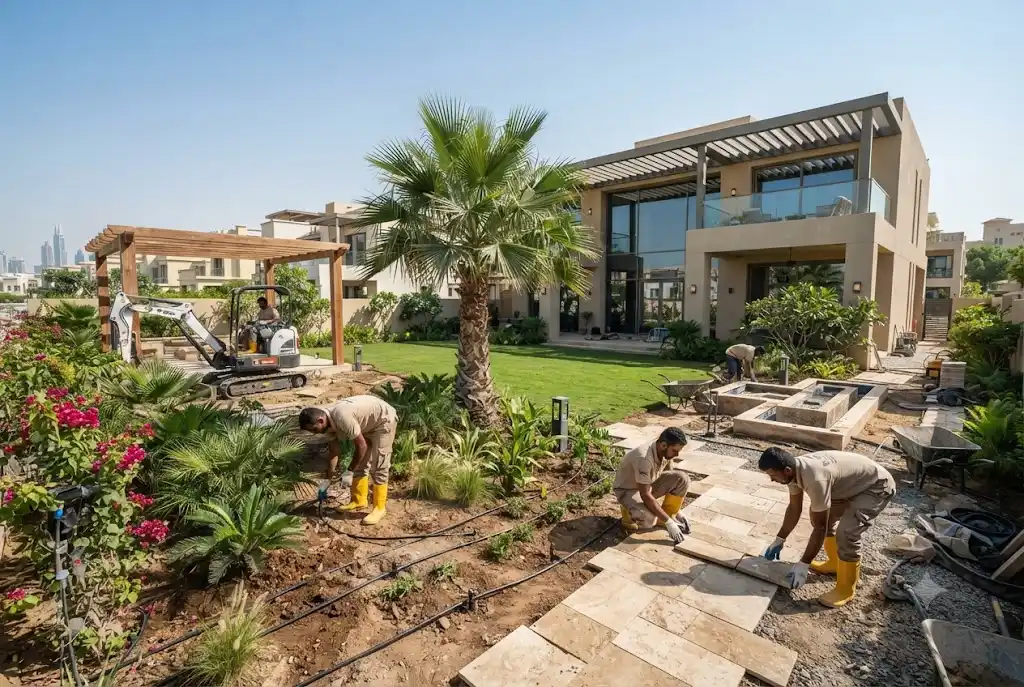
Professional installation follows a consistent sequence. The team first removes the existing surface — old grass, sand or tiles — and levels the ground. A compacted aggregate base is laid and screeded to falls so rainwater drains away from the house, then a weed membrane goes down to stop growth pushing through from below. The turf rolls are laid, cut to shape, joined with seaming tape and adhesive, and the edges are fixed. Finally, sand infill is brushed into the pile: it weighs the turf down, supports the fibres and helps the surface feel firm underfoot.
The base preparation is the part that decides how the lawn looks in three years. A rushed base leads to dips, ripples and drainage puddles, so when comparing quotes, ask each company exactly what base depth and materials they include. One side benefit appears immediately: because the turf needs no irrigation, many owners simplify or cap off parts of the watering system described in our irrigation system installation guide, keeping it only for the planted beds that remain.
What Installation Costs Depend On
Artificial grass in the UAE is priced per square metre, with the total driven by the turf grade you choose, the size and shape of the area, and how much groundwork is needed. Removing an old lawn or levelling uneven ground adds labour; small, awkward areas cost more per metre than one large rectangle because of cutting waste and edging work. Premium, high-density turf with a long warranty costs more upfront but usually outlasts budget products by years, particularly in full sun.
When you compare quotations, make sure each one itemises the same things: groundworks, membrane, infill, edging, waste removal and warranty period. A cheap headline rate that excludes base work is not actually cheaper. Ask also what the installer’s warranty covers — product fade and defects, workmanship, or both — and get it in writing before work begins.
Caring for Artificial Grass in UAE Heat
Day-to-day care is light but not zero. Brush the pile periodically with a stiff broom or power brush to keep fibres upright, especially on walkways, and clear leaves and debris so organic matter does not build up at the base. Rinse the surface with a hose during dusty periods, and wash pet areas with water and a mild, turf-safe cleaner. After shamal winds, a leaf blower quickly gathers the sand that settles on the surface.
In summer, remember the surface can become hot in direct midday sun — a quick spray of water cools it noticeably before children or pets use it, and placing play equipment in shaded zones helps. Keep hot items, mirrors that focus sunlight and barbecue coals away from the turf, as extreme heat can damage the fibres. With these simple habits, a quality installation keeps its colour and shape for many years, and your garden stays the easiest room of the house to look after.