srrigation System Installation Dubai is an important part of maintaining healthy gardens, landscaped villas, commercial outdoor spaces, and other green areas in Dubai. Because the UAE climate is hot and naturally dry for much of the year, relying entirely on manual watering can make landscape maintenance time-consuming and inconsistent.
A properly designed irrigation system can distribute water according to the needs of different planting areas, helping maintain lawns, trees, shrubs, flower beds, and other landscape features. However, installation should be planned around the property’s layout, plant selection, soil conditions, water requirements, and long-term maintenance needs.
For homeowners developing a new garden or upgrading an existing landscape, irrigation should ideally be considered at the same time as the wider outdoor design. This makes it easier to position pipes, irrigation zones, control equipment, and outlets without disturbing established landscaping later.
What Is Irrigation System Installation in Dubai?
Irrigation system installation involves designing and installing equipment that delivers water to landscaped areas in a controlled manner. Depending on the property and landscape requirements, an irrigation system can include pipes, valves, emitters, sprinklers, controllers, filters, pumps, and other components.
The purpose is not simply to distribute water across the garden. A well-planned system delivers appropriate amounts of water to different areas while reducing unnecessary watering of paths, walls, driveways, and other non-planted surfaces.
This is particularly useful for UAE properties where gardens may contain plants with significantly different water requirements.
Why Irrigation System Installation Dubai Needs Careful Planning
Dubai gardens can experience intense sunlight, high temperatures, and long periods with little natural rainfall. These conditions can increase the pressure placed on plants and make irrigation an essential part of landscape maintenance.
However, installing an irrigation system without proper planning can create its own problems. Poorly positioned sprinklers may waste water, while insufficient coverage can leave some plants dry. A system designed without considering future plant growth may also become less effective over time.
Before installation, consider:
- The total landscaped area.
- Types of plants and their water requirements.
- Sun and shade patterns.
- Soil and drainage conditions.
- Available water supply.
- Pressure requirements.
- Garden zones and planting density.
- Future landscaping changes.
- Access for maintenance and repairs.
Types of Irrigation Systems for Dubai Landscapes
Drip Irrigation
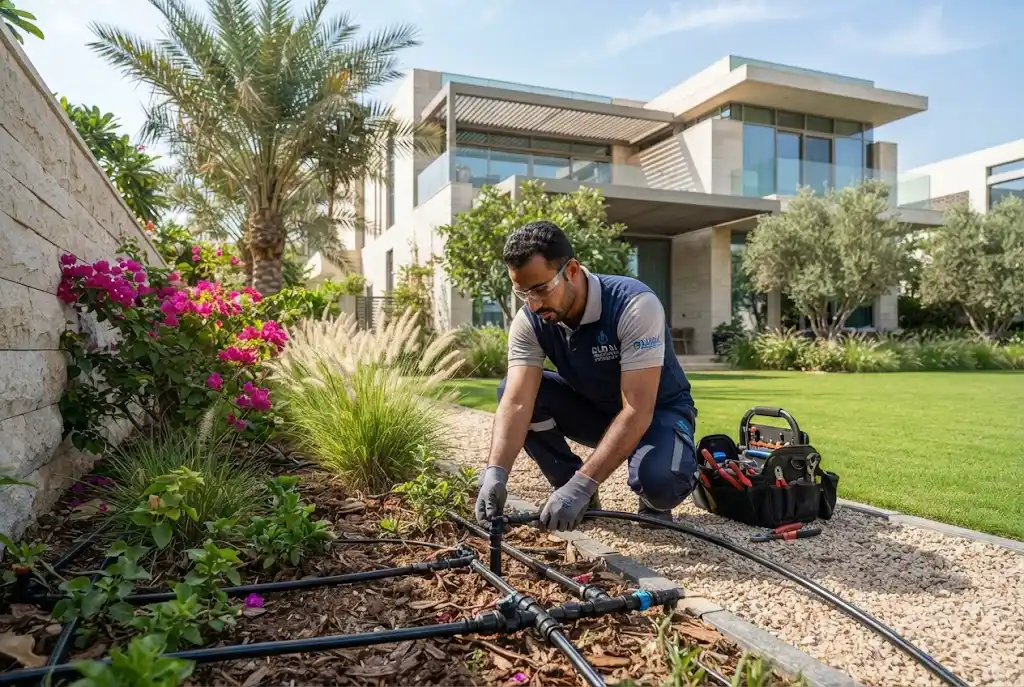
Drip irrigation delivers water gradually near the base or root zone of individual plants. It can be particularly useful for shrubs, trees, planted beds, and other areas where targeted watering is preferred.
Because water is delivered close to the plants, drip systems can reduce unnecessary wetting of surrounding hardscape when properly designed and maintained.
Sprinkler Irrigation
Sprinkler systems distribute water across a defined area and are commonly considered for lawns and larger planted spaces. Also, Sprinkler selection and positioning should match the dimensions and shape of the area being watered.
Sprinklers should be positioned to provide suitable coverage without unnecessarily watering buildings, walkways, or other surfaces.
Micro-Irrigation
Micro-irrigation systems can be useful where plants require controlled watering at a smaller scale. They may be incorporated into landscaped beds containing different types of plants and can be configured according to the layout.
Automated Irrigation
Automated systems use controllers to manage watering schedules. This can make garden maintenance more convenient, especially for larger properties or homeowners who are away from the property regularly.
Automation should still be reviewed periodically because seasonal conditions, plant growth, and landscape changes can affect watering requirements.
Irrigation System Installation Dubai for Villa Gardens
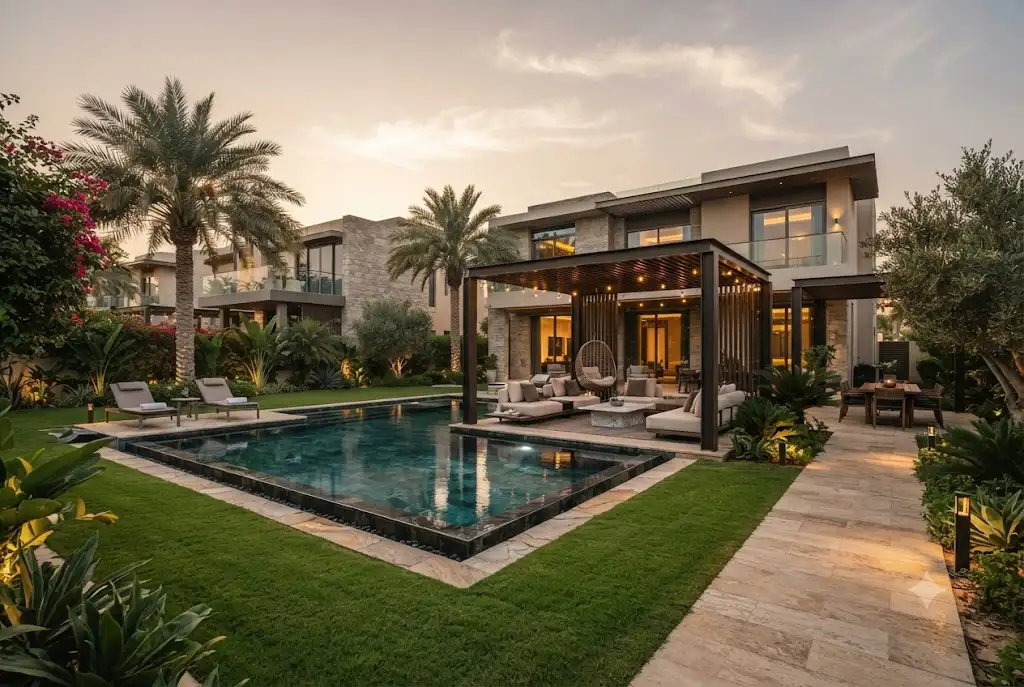
Villa gardens often combine lawns, trees, decorative planting beds, boundary greenery, pathways, and outdoor entertainment areas. A single irrigation setting may therefore be unsuitable for the entire garden.
Dividing the property into irrigation zones allows different sections to receive water according to their needs. For example, lawn areas may require different watering patterns from trees or established shrubs.
Homeowners planning a complete outdoor transformation can coordinate irrigation with garden landscaping in Dubai. Integrating both from the beginning can make the final garden more organized and easier to maintain.
Irrigation for Swimming Pool Landscaping
Poolside landscaping presents additional considerations because plants are located close to water, paving, seating, and other hardscape features. Irrigation should be directed toward planting areas rather than allowing unnecessary water to reach pool decks or walkways.
Plant selection also matters. Landscaping around a swimming pool should account for maintenance, leaf shedding, mature plant size, and the practical conditions around the water.
For properties combining a pool with extensive planting, swimming pool landscaping in the UAE can be planned alongside the irrigation system rather than treating irrigation as a separate project.
How to Design an Efficient Irrigation System
Effective irrigation begins with dividing the garden into logical watering zones. Each zone should contain plants with reasonably similar requirements whenever possible.
For example, a garden might include separate zones for:
- Grass and lawn areas.
- Large trees.
- Decorative shrubs.
- Flower beds.
- Boundary planting.
- Container or feature plants.
Once zones have been established, the irrigation layout can be designed around the coverage required by each section. This approach can make troubleshooting easier and allows watering schedules to be adjusted as landscape conditions change.
Irrigation and Water Efficiency in Dubai
Water efficiency should be considered from the beginning of an irrigation project. An efficient system does not necessarily mean using less water for every plant. Instead, it means delivering water where it is needed and avoiding unnecessary distribution.
Several factors can affect efficiency:
- Correct emitter or sprinkler selection.
- Appropriate irrigation zones.
- Suitable watering schedules.
- Proper water pressure.
- Healthy and well-maintained equipment.
- Regular leak inspections.
- Adjustment for seasonal conditions.
Overwatering can be as problematic as underwatering. Excess water can contribute to drainage problems, plant stress, and unnecessary consumption. Monitoring the landscape helps identify whether the current schedule is actually meeting plant requirements.
How Soil and Drainage Affect Irrigation
Irrigation cannot be designed effectively without considering what happens to water after it reaches the ground. Soil characteristics influence how quickly water moves through the planting area and how long moisture remains available to roots.
Poor drainage can create standing water, while excessively fast drainage may make it difficult for plants to receive enough moisture. The landscape design should therefore consider soil conditions and drainage before selecting irrigation equipment and watering schedules.
If the property is undergoing broader garden improvements, garden maintenance in Dubai can help with ongoing observation of plant health and landscape conditions after installation.
Key Components of an Irrigation System
A complete irrigation system may contain several components working together. The exact configuration depends on the property and irrigation method.
Pipes and Distribution Lines
Pipes transport water from the supply point to different irrigation zones. Their layout should be planned carefully to provide reliable distribution without unnecessarily complicating future maintenance.
Valves
Valves help control different sections of the irrigation network. Zoned control allows one part of the garden to be watered independently from another.
Emitters and Sprinklers
These components distribute water to the landscape. The selection should match the type of planting and coverage required.
Controllers
Controllers manage automated watering schedules. Modern controllers can provide greater control over when different zones operate, although settings should still be reviewed according to actual landscape conditions.
Filters
Filtration can be important for systems that use small irrigation components. Appropriate filtration can help reduce the risk of blockages and support consistent system operation.
Installing Irrigation During Garden Landscaping
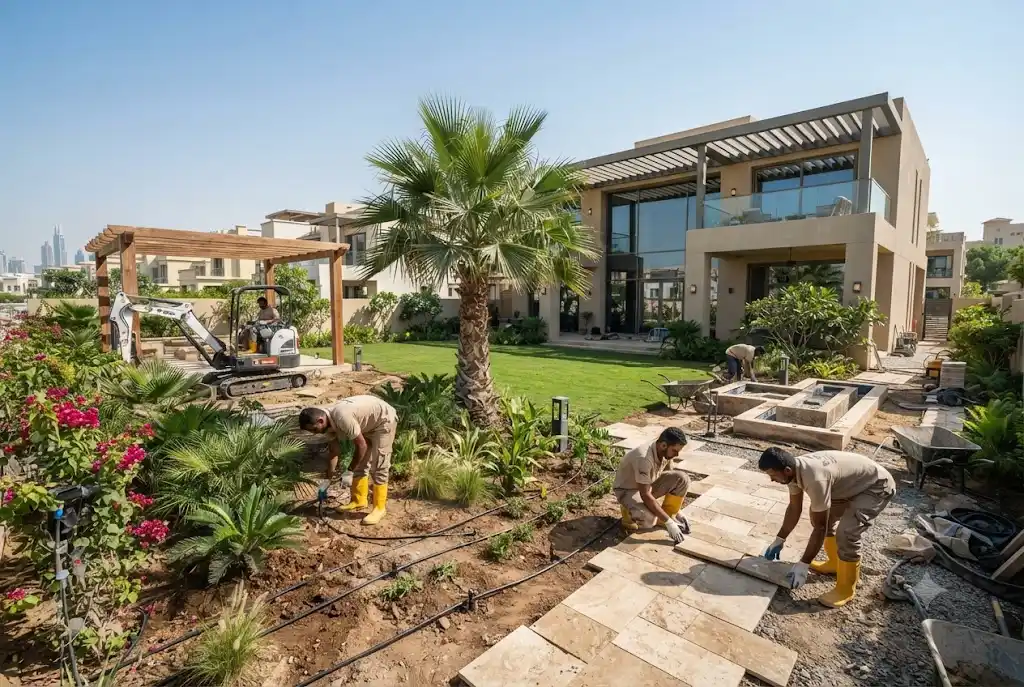
Installing irrigation before completing all landscaping can make the project more efficient. Underground lines can be positioned before planting, paving, or other finished surfaces are installed.
This reduces the likelihood of having to disturb established plants or remove sections of finished landscape later.
For larger outdoor projects, homeowners can also coordinate irrigation with landscaping companies in Dubai so the irrigation layout supports the overall garden design.
Irrigation for Backyards in Dubai
Backyards can have very different irrigation requirements depending on their size and intended use. A small backyard with a few planted beds may need a simple targeted system, while a larger garden with lawn, trees, and ornamental planting may require several separate zones.
When designing a backyard irrigation system, keep seating areas, pathways, outdoor structures, and other non-planted spaces outside the main watering pattern where possible.
Property owners working on a complete backyard transformation can also explore backyard landscaping in Dubai to coordinate planting and outdoor design with irrigation requirements.
Maintenance After Irrigation System Installation
Installation is only the beginning. Irrigation equipment should be inspected regularly to make sure it continues distributing water correctly.
Routine maintenance may include:
- Checking for leaks.
- Inspecting emitters and sprinkler heads.
- Cleaning filters where required.
- Checking valves and connections.
- Testing controllers and schedules.
- Adjusting watering coverage after plant growth.
- Checking for blocked or damaged components.
- Reviewing watering frequency as weather changes.
Plants can grow significantly after installation, changing the amount of water they require and potentially interfering with irrigation equipment. Regular inspection helps identify these changes before they become larger problems.
Common Irrigation Problems in Dubai Gardens
Uneven Water Distribution
If some plants appear healthy while others consistently struggle, the irrigation coverage may not be uniform. Blocked emitters, damaged sprinkler heads, pressure issues, or poor system design can all contribute to uneven watering.
Leaks
A sudden increase in water use or persistently wet areas may indicate a leak. Underground leaks can be difficult to identify visually, making regular monitoring particularly useful.
Blocked Emitters
Small irrigation outlets can become blocked and stop delivering the intended amount of water. Regular inspection and appropriate filtration can help reduce this problem.
Incorrect Watering Schedules
A schedule that worked during one season may not remain appropriate throughout the year. Watering should be reviewed according to weather, plant growth, soil conditions, and actual landscape needs.
How Irrigation Supports Plant Maintenance
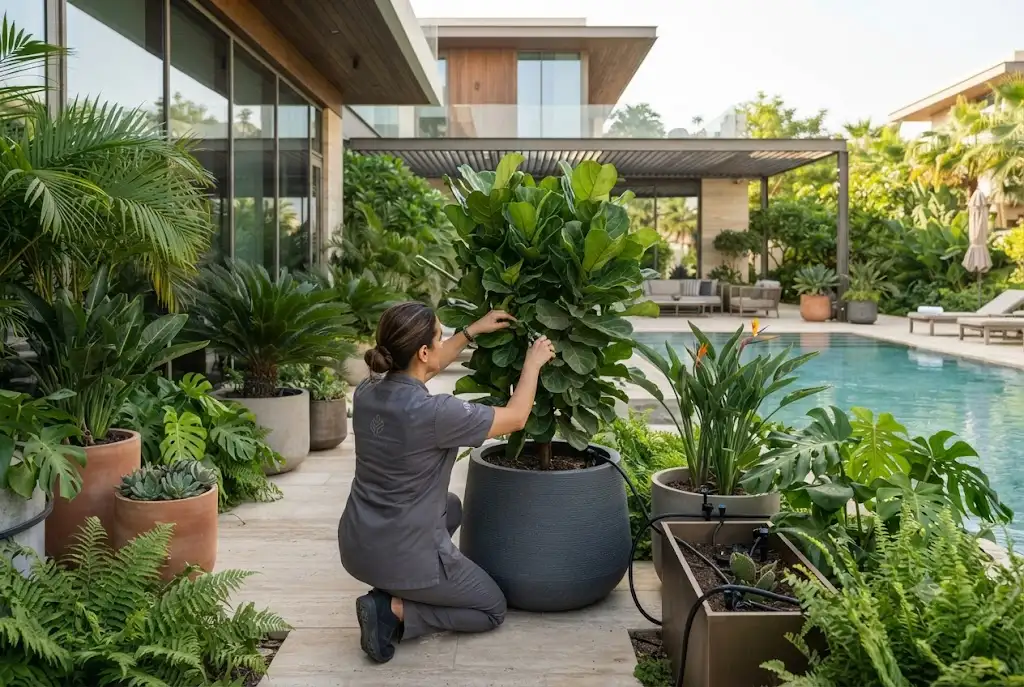
Irrigation is an important tool, but it cannot replace broader plant care. Healthy landscapes also require appropriate pruning, soil management, pest monitoring, weed control, and plant selection.
For properties with extensive greenery, plant maintenance services can complement an irrigation system by addressing the other aspects of ongoing landscape care.
Likewise, properties with dedicated garden areas may benefit from combining irrigation with garden maintenance services so irrigation performance and plant health can be assessed together.
Irrigation and Plant Selection
The irrigation system should follow the landscape rather than forcing every plant into the same watering pattern. When planning a new garden, consider grouping plants with similar water requirements together.
This approach makes zoning easier and can help avoid situations where one plant receives excessive water simply because another plant in the same zone requires more.
Plant selection should also consider mature size, sunlight exposure, root development, maintenance needs, and tolerance for the local climate. This becomes particularly important around structures, paving, swimming pools, and property boundaries.
Should You Upgrade an Existing Irrigation System?
An older irrigation system does not necessarily need complete replacement. In some cases, replacing damaged components, improving zoning, changing emitters, adjusting sprinkler positions, or updating the controller may improve performance.
However, replacement may be worth considering when the existing network has repeated leaks, poor coverage, outdated components, or a layout that no longer matches the current landscape.
The decision should be based on the condition of the system and the cost of ongoing repairs compared with a properly designed upgrade.
Irrigation and Wider Property Maintenance
Outdoor irrigation is one part of a property’s maintenance system. A villa or residential property may also require work on structures, plumbing, electrical systems, painting, air conditioning, and other components.
For broader requirements, home maintenance services in the UAE can provide a wider framework for keeping residential properties in good condition.
Villa owners with several maintenance requirements can also review villa maintenance in Dubai, particularly when landscaping is being handled alongside other property work.
Safety Considerations for Irrigation Installation
Irrigation systems often involve water lines, pumps, electrical controls, underground components, and equipment located near outdoor living spaces. Installation should therefore be planned carefully.
Where irrigation equipment requires electrical connections, use appropriate professional electrical services rather than making unsafe modifications. Homeowners can also review home electrical safety tips in Dubai when planning outdoor electrical equipment.
Keep irrigation components positioned so they do not create unnecessary trip hazards or interfere with normal access around the garden.
Final Thoughts on Irrigation System Installation Dubai
Irrigation System Installation Dubai can make garden care more consistent and manageable when the system is designed around the property’s actual landscape. The most effective approach starts with plant requirements, garden zones, water distribution, soil conditions, and future maintenance rather than simply installing sprinklers across the entire property.
Drip irrigation, sprinklers, micro-irrigation, and automated controls can all have useful applications depending on the landscape. The important factor is choosing the right combination and positioning equipment so water reaches the intended areas without unnecessary waste.
Regular inspections are equally important after installation. Checking for leaks, blocked emitters, damaged components, and outdated watering schedules can help maintain reliable performance as the garden develops.
When irrigation is planned alongside landscaping, plant maintenance, pool landscaping, and wider property improvements, the result can be a healthier and more manageable outdoor environment suited to the conditions of Dubai.