The Water Tank Cleaning Process Dubai is designed to maintain safe, hygienic, and high-quality water storage for residential, commercial, and industrial properties. Due to Dubai’s hot climate, dust, and continuous water usage, storage tanks naturally accumulate sediment, algae, biofilm, and other contaminants over time. Following a professional cleaning process helps ensure that stored water remains suitable for everyday use while extending the lifespan of the tank.
Whether you own a villa, apartment building, hotel, office, or commercial facility, understanding how professional cleaning is performed allows you to choose reliable service providers and appreciate the importance of regular maintenance.
Why the Water Tank Cleaning Process Is Important
Water storage tanks are continuously exposed to fine dust, mineral deposits, and naturally occurring contaminants. Even treated municipal water can leave behind sediment over time.
A professional Dubai water tank cleaning process removes these contaminants before they affect water quality.
- Sediment buildup
- Dust particles
- Algae growth
- Biofilm formation
- Rust deposits
- Bacterial contamination
- Organic debris
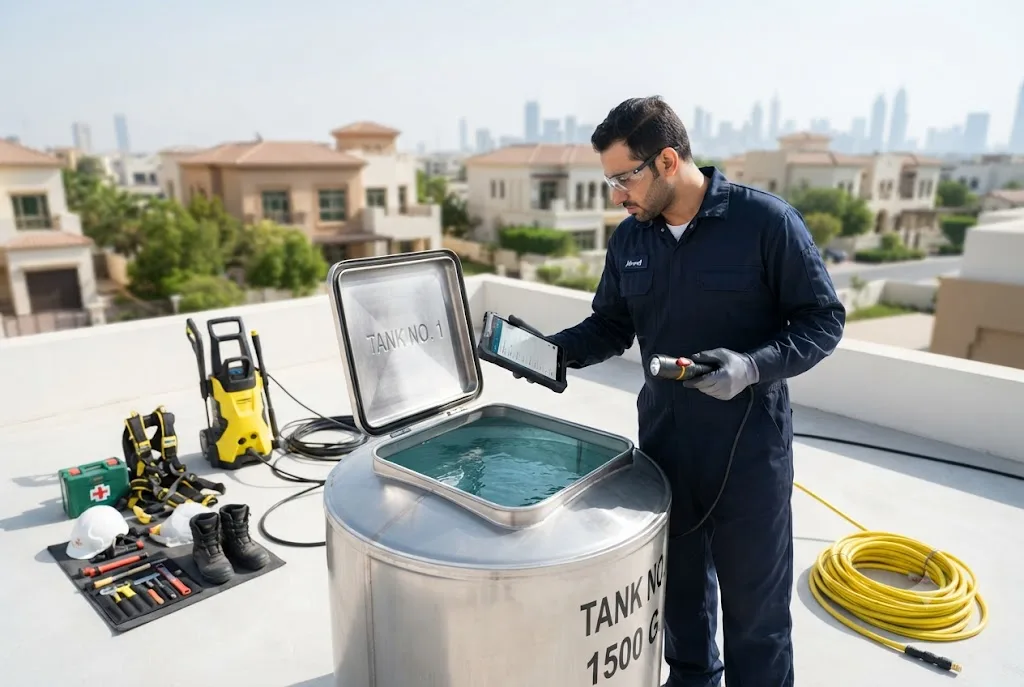
Step 1: Initial Tank Inspection
The cleaning process always begins with a thorough inspection of the water storage tank.
Technicians examine:
- Tank condition
- Sediment levels
- Algae growth
- Visible contamination
- Cracks or leaks
- Tank access points
- Internal surfaces
This inspection helps determine the most suitable cleaning approach.
Step 2: Water Drainage
Before cleaning begins, all stored water is safely drained from the tank. Complete drainage exposes every internal surface so technicians can perform a comprehensive cleaning.
Industrial pumps are commonly used to remove water efficiently while minimizing downtime.
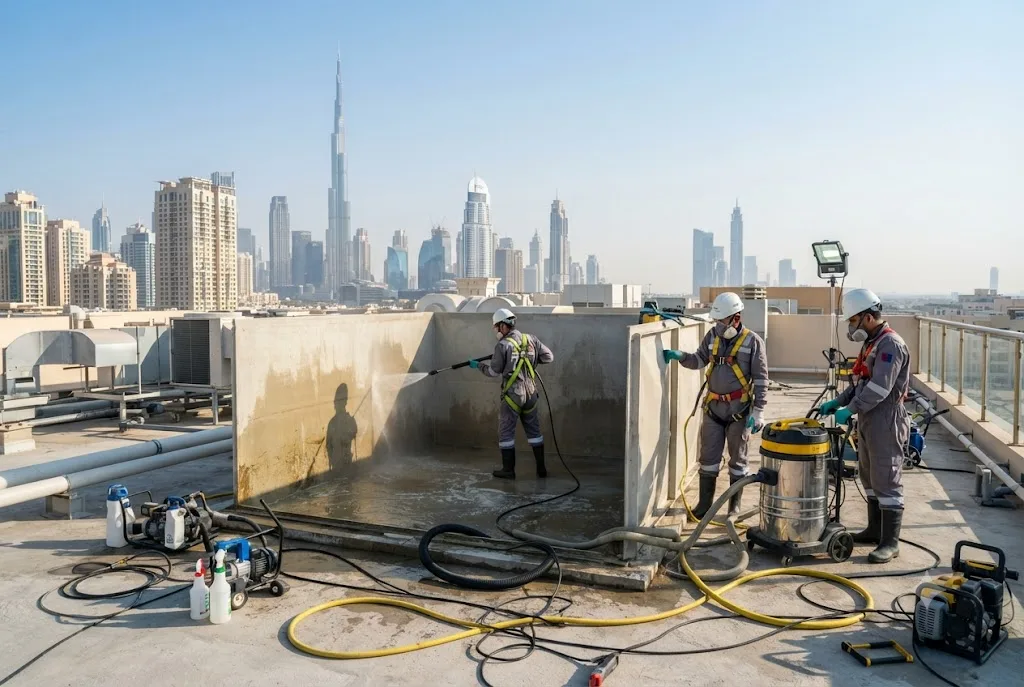
Step 3: Sludge and Sediment Removal
After drainage, accumulated sludge, sand, rust particles, and loose debris are removed manually or with industrial vacuum equipment.
This stage prevents contaminants from spreading during the main cleaning process.
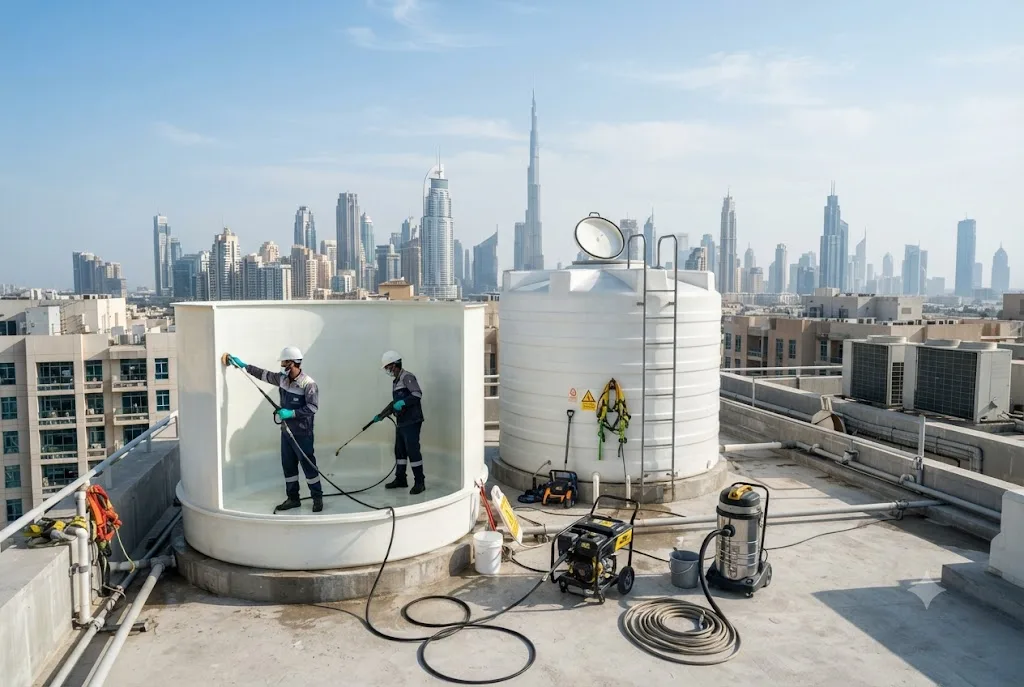
Step 4: Mechanical Cleaning
The interior walls, floor, corners, and access points are scrubbed using professional brushes and commercial cleaning tools.
The goal is to remove:
- Biofilm
- Algae
- Mineral deposits
- Organic buildup
- Surface contamination
Step 5: High-Pressure Cleaning
Where suitable, technicians use high-pressure cleaning equipment to remove stubborn deposits that cannot be eliminated through manual scrubbing alone.
The water pressure is carefully adjusted according to the tank material to avoid damaging protective coatings or internal surfaces.
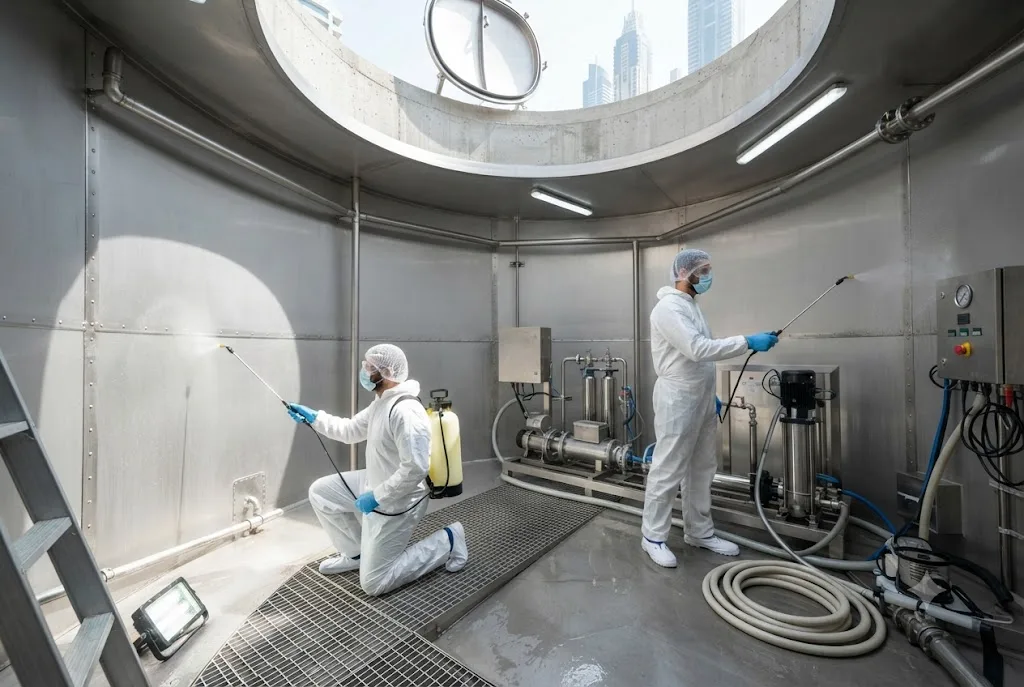
Step 6: DM Water Tank Cleaning Process – Disinfection Stage
An important part of the DM water tank cleaning process is thorough disinfection after physical cleaning has been completed.
Approved disinfectants suitable for potable water systems are applied to:
- Eliminate bacteria
- Reduce microorganisms
- Sanitize internal surfaces
- Improve overall hygiene
This stage is essential because cleaning alone cannot completely remove microbial contamination.
Step 7: Final Rinse
After disinfection, the tank is carefully rinsed with clean water to remove any remaining cleaning solution while preparing the tank for safe use.
Step 8: Final Quality Inspection
Before refilling, technicians perform a detailed inspection to confirm that:
- The tank is visibly clean.
- No sludge remains.
- Walls are properly sanitized.
- Access covers are secure.
- No structural problems are visible.
Step 9: Refilling the Tank
Once the inspection is complete, the tank is refilled with clean water and returned to normal operation.
Equipment Used During the Cleaning Process
Professional companies use specialized equipment throughout the cleaning process.
- Industrial vacuum systems
- Submersible pumps
- High-pressure cleaning machines
- Commercial brushes
- Inspection cameras
- LED inspection lighting
- Professional disinfectant sprayers
- Personal protective equipment
Our detailed Water Tank Cleaning Equipment Guide explains how each tool contributes to better cleaning results.
Benefits of Following a Professional Cleaning Process
- Improved water quality
- Removal of sludge and sediment
- Better hygiene
- Professional sanitization
- Reduced bacterial contamination
- Longer water tank lifespan
- Early detection of maintenance issues
How Often Should Water Tanks Be Cleaned in Dubai?
Cleaning frequency depends on several factors, including water consumption, property type, and storage capacity.
Many residential and commercial properties in Dubai schedule professional cleaning approximately every six months as part of their preventive maintenance program.
What Should You Expect After Cleaning?
Following professional cleaning, property owners typically notice:
- Cleaner tank interiors
- Improved water clarity
- Reduced odors
- Better storage hygiene
- Greater confidence in water quality
See the visual transformation in our article on Water Tank Cleaning Before and After.
Frequently Asked Questions
If you still have questions about scheduling, maintenance, or cleaning intervals, visit our Water Tank Cleaning FAQs for detailed answers to the most common concerns.
Conclusion
The Water Tank Cleaning Process Dubai follows a structured sequence of inspection, drainage, sludge removal, mechanical cleaning, high-pressure washing, disinfection, rinsing, inspection, and refilling. This systematic approach helps maintain hygienic water storage, improves water quality, and supports the long-term reliability of residential and commercial water tanks. Scheduling regular professional cleaning is one of the most effective ways to keep your water storage system clean, safe, and well maintained.
For international guidance on safe drinking water storage and sanitation, visit the World Health Organization (WHO).