Choosing the right tank cleaning equipment is essential for removing sediment, sludge, biofilm, and other contaminants from water storage tanks safely and effectively. In the UAE, residential buildings, villas, commercial properties, and facility management teams need suitable tools and a controlled cleaning procedure to maintain water storage hygiene. The equipment required depends on the tank’s size, material, access points, contamination level, and intended use.
However, effective tank cleaning involves more than a brush and a pump. Workers must select compatible tools, wear appropriate protective equipment, assess potential hazards, and follow a documented cleaning and disinfection procedure. This guide explains the essential equipment, how to select it, and which safety precautions matter most when cleaning water tanks in UAE properties.
What Is Tank Cleaning Equipment?
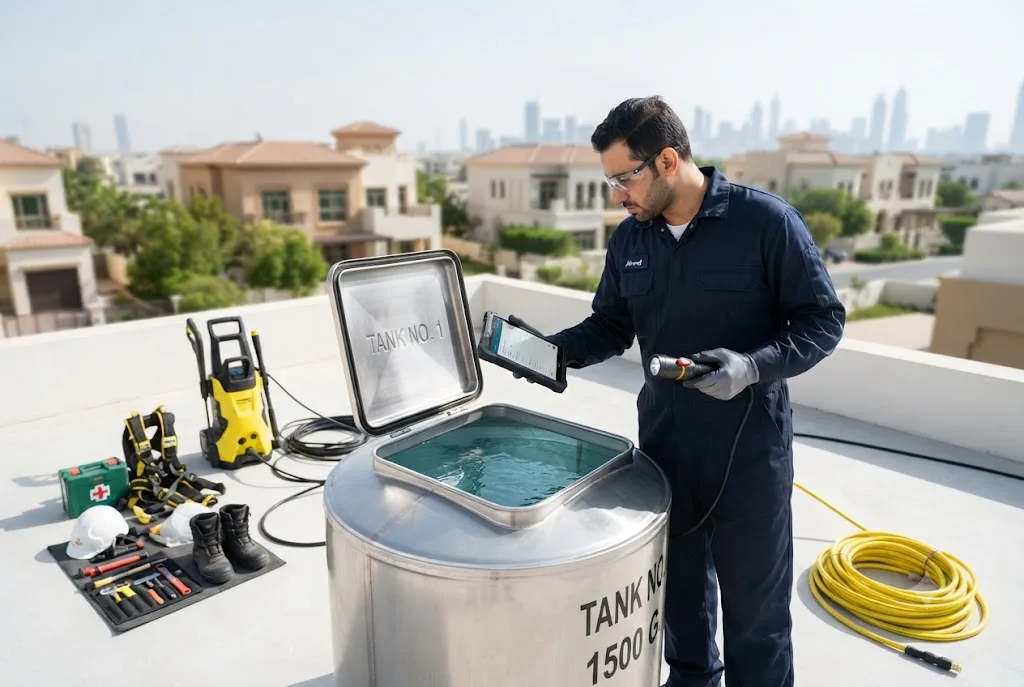
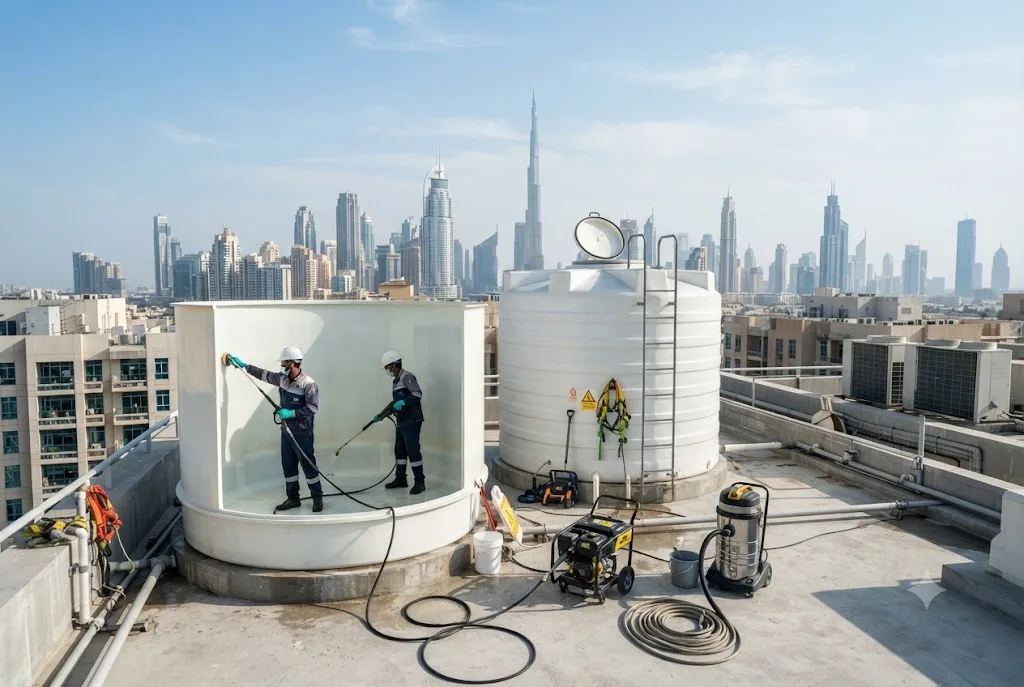
Tank cleaning equipment includes the tools, machines, protective gear, and testing instruments used to remove accumulated deposits and prepare a tank for safe reuse. The equipment may be simple for a small, accessible domestic tank or more specialized for a large commercial storage system.
Common equipment includes cleaning brushes, wet vacuums, sludge removal pumps, water extraction tools, suitable lighting, protective clothing, and equipment for inspecting the tank. Some tanks can be cleaned using tools operated entirely from outside. Others require specialist contractors, particularly when access is restricted or hazardous substances may be present.
For drinking water storage, every tool and material that contacts the tank’s interior should be suitable for potable-water applications. Equipment that introduces oil, chemical residue, rust, or other contaminants can undermine the entire cleaning process.
Essential Tank Cleaning Equipment for Water Tanks
The best equipment list begins with an assessment of the tank rather than purchasing every available tool. The following items cover common cleaning requirements, although not every tank needs every piece of equipment.
1. Tank Cleaning Brush
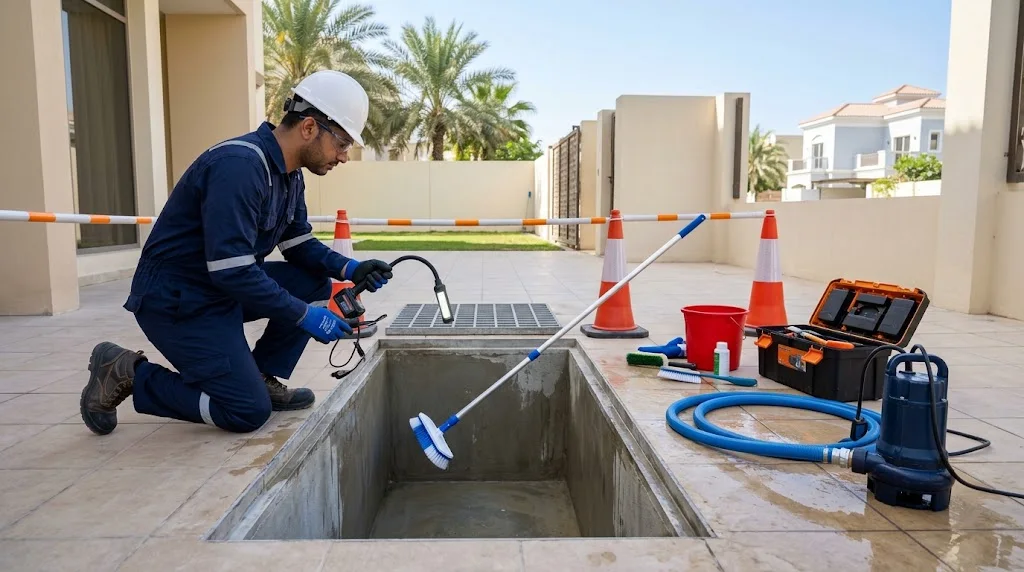
A tank cleaning brush helps loosen sediment, deposits, and surface buildup from accessible walls, floors, and corners. Long-handled brushes can improve reach and reduce the need to lean over an opening. Soft or medium-bristle brushes may be appropriate for certain tank surfaces, while more durable brushes may be needed for tougher deposits.
Always match the brush material and stiffness to the tank’s construction. An overly abrasive brush can scratch plastic, damage protective coatings, or compromise a lined surface. Use a dedicated, clean brush that is suitable for potable-water contact, and avoid brushes previously used with oils, fuels, or industrial chemicals.
2. Tank Cleaning Machine
A tank cleaning machine may use rotating spray heads, controlled water jets, mechanical brushes, or another cleaning mechanism to remove deposits. The appropriate system depends on the tank’s geometry, the type of contamination, and the manufacturer’s instructions.
Automated equipment can reduce manual handling and improve access to difficult surfaces. Nevertheless, higher pressure or greater mechanical force is not automatically better. Excessive pressure may damage tank surfaces, fittings, seals, or internal coatings. For domestic drinking water tanks, select equipment specifically suitable for the tank material and intended cleaning method.
3. Sludge Removal Pump and Wet Vacuum
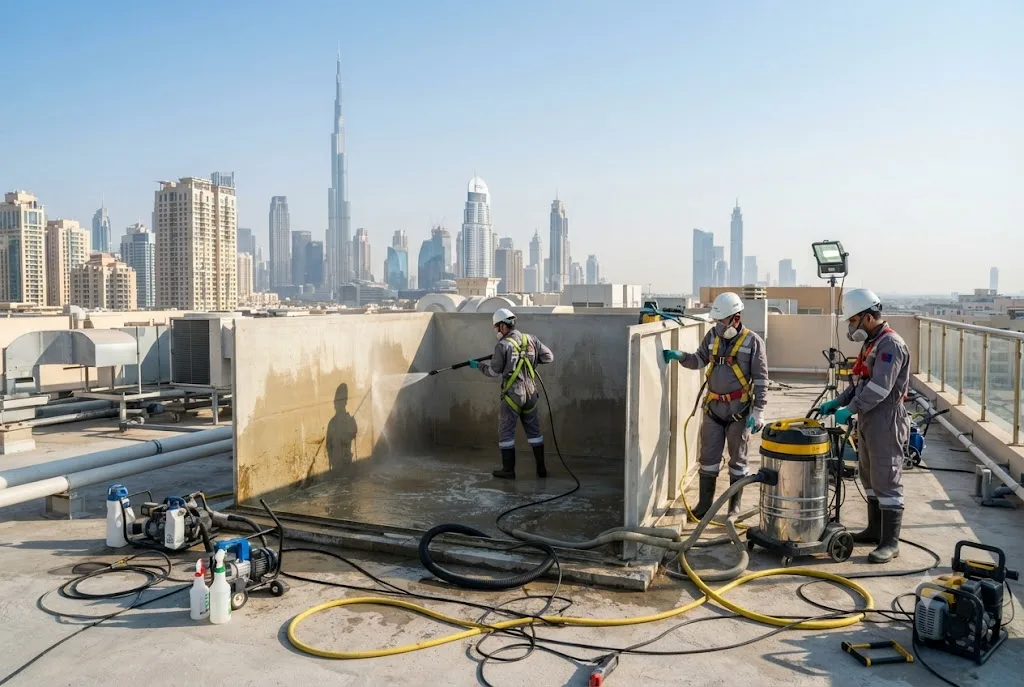
Accumulated sediment and standing water may require a suitable pump or wet vacuum. These tools help remove loosened deposits and reduce the amount of residue left at the bottom of the tank.
Check whether the equipment can handle the expected solids, liquid volume, and operating environment. Electrical equipment must be appropriate for wet conditions and the relevant electrical hazards. Fuel-powered equipment should not be operated where exhaust fumes can accumulate.
4. Water Hoses and Controlled Rinsing Equipment
Hoses, spray nozzles, and other rinsing tools help remove loosened dirt and cleaning residues. For drinking water tanks, use clean hoses and fittings that are suitable for potable-water contact. Keep hose ends away from contaminated floors, drains, and dirty water during the operation.
Rinsing should follow the cleaning product manufacturer’s directions and the applicable disinfection procedure. The goal is to remove residues without introducing fresh contamination or allowing dirty water to enter connected plumbing.
5. Inspection and Testing Tools
Inspection tools help workers assess the tank before and after cleaning. Depending on the job, these may include suitable waterproof lighting, inspection mirrors, cameras, measuring devices, and instruments required by the approved testing procedure.
Testing equipment should be selected according to the actual requirement. For example, a water-quality test may be appropriate after disinfection, but a single test cannot demonstrate that every possible contaminant is absent. Record inspection findings and test results where the site procedure requires them.
Personal Protective Equipment for Tank Cleaning
Personal protective equipment (PPE) reduces exposure to hazards but does not replace safer work methods or proper hazard controls. The equipment needed depends on the cleaning chemicals, contamination, access conditions, and surrounding environment.
- Protective gloves: Select gloves compatible with the cleaning chemicals and contaminants involved.
- Safety footwear: Use suitable slip-resistant footwear to reduce the risk of slipping on wet surfaces.
- Eye protection: Safety goggles or other suitable protection may be necessary where splashes or flying debris are possible.
- Protective clothing: Wear clothing appropriate for the water, cleaning agents, and contamination present.
- Respiratory protection: Use only when the risk assessment identifies a need and a suitable respiratory protection programme is in place.
- Head protection: Provide it where overhead structures or other impact hazards make it necessary.
Workers should receive appropriate training in the correct use, inspection, cleaning, and storage of their PPE. Respirators must not be treated as a substitute for atmospheric testing, ventilation, or a safe entry system where those controls are required.
Safety Tank Cleaning: Hazards to Identify Before Work
Safety tank cleaning starts before anyone opens the tank or begins removing water. A pre-work inspection should identify the hazards associated with the tank, its contents, connected systems, and the surrounding work area.
Electrical and Mechanical Hazards
Pumps, mixers, automatic valves, and other equipment can create electrical or mechanical risks. Before maintenance or cleaning, isolate relevant energy sources using the site’s approved lockout and isolation procedures. Do not assume that a switch being turned off makes equipment safe.
Slips, Falls, and Restricted Access
Wet floors, ladders, narrow openings, and elevated tanks can expose workers to falls and access-related injuries. Establish a stable working area, use suitable access equipment, and protect openings from unauthorized access. Never improvise a ladder or access platform to reach a tank.
Confined-Space Hazards
Some tanks meet the definition of a confined space and may present serious hazards, including oxygen deficiency, toxic atmospheres, engulfment, or restricted emergency access. A tank must not be entered simply because it has been drained or appears clean.
Where confined-space entry may be involved, a competent person must assess the space and determine the required controls. Depending on that assessment, these may include isolation, atmospheric testing, ventilation, an entry permit, a trained attendant, communication arrangements, and a suitable rescue plan. If safe entry cannot be established, use a method that avoids entry or engage qualified specialists.
The OSHA confined spaces standard provides a useful reference for understanding permit-required confined-space hazards. It is a US occupational safety standard, not a substitute for applicable UAE requirements or the property’s approved safety procedures.
How to Prepare a Risk Assessment for Water Tank Cleaning
A risk assessment for water tank cleaning identifies hazards, evaluates who may be harmed, and determines the controls needed before work starts. The assessment should be specific to the site and the actual cleaning method. A generic checklist alone cannot establish that a job is safe.
Step 1: Inspect the Tank and Work Area
Confirm the tank’s location, construction, access arrangements, contents, and condition. Identify connected pipes, pumps, electrical systems, nearby activities, and any signs of leakage, corrosion, structural damage, or unusual contamination.
Step 2: Identify the Hazards
Consider chemical exposure, biological contamination, manual handling, electrical equipment, slippery surfaces, falling objects, restricted access, and possible confined-space conditions. If the tank previously stored fuel, chemicals, or other hazardous materials, apply a separate specialist assessment appropriate to those substances.
Step 3: Define Control Measures
Specify the required isolation arrangements, cleaning equipment, PPE, access controls, ventilation, testing, supervision, and emergency procedures. Use the hierarchy of controls: eliminate hazards where possible, use safer alternatives, apply engineering controls, establish safe work procedures, and provide PPE for remaining risks.
Step 4: Assign Responsibilities
Identify who will supervise the job, operate the equipment, verify isolation, authorize entry where applicable, and respond to an emergency. Workers must understand the procedure and know when to stop work.
Step 5: Review the Assessment and Record Findings
Document the hazards, control measures, responsible persons, and relevant inspection results. Review the assessment if conditions change, unexpected contamination is discovered, or the planned work method is modified.
A water tank cleaning risk assessment should be completed by a competent person familiar with the actual site. UAE property managers and contractors should also check the relevant local authority, occupational safety, building, and facility requirements before starting the work.
Safe Tank Cleaning Procedure Using the Right Equipment
Although procedures differ by tank type, a controlled water tank cleaning job generally follows a planned sequence.
- Review the work plan: Confirm the tank’s purpose, cleaning requirements, equipment compatibility, and safety controls.
- Protect the water supply: Arrange the necessary shutdowns and isolation to prevent accidental contamination or unexpected water flow.
- Drain the tank safely: Remove stored water according to the approved site procedure without causing flooding or uncontrolled discharge.
- Remove sediment: Use a suitable pump, wet vacuum, or other approved method to remove loose deposits.
- Clean the surfaces: Use compatible brushes or mechanical equipment to remove remaining buildup without damaging the tank.
- Rinse and remove residues: Follow the specified cleaning method and product instructions.
- Disinfect where required: Use an appropriate product and follow the approved concentration, contact time, rinsing, and testing requirements.
- Inspect before refilling: Check the tank, fittings, covers, and surrounding area for cleanliness, damage, and unresolved issues.
- Restore the system: Refill and return the tank to service only when the required checks have been completed.
- Document the work: Record the cleaning date, findings, products used, relevant test results, and recommended follow-up actions.
For a more detailed overview, see the site’s water tank cleaning process in Dubai and water tank disinfection guidance. The exact procedure should always reflect the tank’s intended use and applicable requirements.
Choosing Equipment for Residential and Commercial Water Tanks
Residential tanks often require compact tools that can access corners and narrow openings without damaging the tank. Commercial properties may need higher-capacity pumps, mechanical cleaning systems, documented inspection procedures, and additional coordination with facility management.
For drinking water storage, prioritize hygiene, material compatibility, and the prevention of cross-contamination. For tanks with heavy deposits, damaged surfaces, or restricted access, professional assessment may be more appropriate than attempting to solve the problem with stronger chemicals or more aggressive equipment.
Before selecting a contractor, ask which equipment will be used, how the tank will be isolated, what safety controls apply, whether disinfection is included, and what documentation will be provided. The lowest quotation is not necessarily the best option if the scope excludes essential safety or hygiene measures.
You can also review the site’s guidance on DIY versus professional water tank cleaning to understand when specialist support may be appropriate.
What Is Included in a BP Tank Cleaning Guide?
The phrase BP tank cleaning guide can refer to company-specific procedures, an industry reference, or a guide for a particular tank-cleaning operation. It should not be treated as one universal procedure for every water tank.
If the work relates to a BP-operated site or an industrial contractor working under BP requirements, consult the applicable operator documentation, approved method statement, safety data sheets, and site-specific risk assessment. Confirm the current revision and the requirements that apply to the particular facility.
Do not apply an industrial fuel or process-tank cleaning procedure to a domestic drinking water tank. The contents, contamination hazards, cleaning products, equipment requirements, and return-to-service criteria can be fundamentally different.
Common Mistakes to Avoid When Using Tank Cleaning Equipment
- Using a brush or chemical that is incompatible with the tank’s material.
- Using high-pressure equipment without checking surface and fitting limitations.
- Entering a tank without a competent assessment and required entry controls.
- Operating electrical equipment in wet conditions without suitable protection.
- Mixing cleaning chemicals or ignoring manufacturer instructions.
- Using tools that have previously contacted fuel, oil, or industrial chemicals in a drinking water tank.
- Skipping rinsing, disinfection, inspection, or required water-quality checks.
- Refilling a tank before completing the required safety and hygiene checks.
- Failing to record the work, unexpected findings, and corrective actions.
Frequently Asked Questions About Tank Cleaning Equipment
What equipment is needed to clean a water tank?
Typical equipment includes a compatible tank cleaning brush, a suitable sludge removal pump or wet vacuum, clean rinsing hoses, inspection tools, and appropriate PPE. Additional equipment depends on tank size, access, contamination, and the cleaning method.
Is a tank cleaning machine better than manual cleaning?
Not in every situation. A machine may improve consistency and access in some tanks, while manual tools may be more suitable for smaller or accessible tanks. The safest effective method depends on the tank design, contamination, and equipment compatibility.
What should a water tank cleaning risk assessment include?
It should cover the tank’s condition, chemical and biological hazards, electrical and mechanical risks, slips and falls, access restrictions, potential confined-space hazards, control measures, worker responsibilities, and emergency arrangements.
Can I clean a water tank myself?
Some accessible domestic tanks may be suitable for carefully controlled cleaning without entry. However, tanks with restricted access, suspected hazardous contamination, structural problems, or confined-space risks require competent assessment and may need specialist contractors.
Does tank cleaning equipment need to be disinfected?
Equipment that contacts drinking water storage surfaces should be clean and suitable for the intended use. Where required, it should be cleaned or disinfected according to an appropriate procedure to prevent contamination. Follow the applicable product and site instructions.
Final Thoughts
Effective tank cleaning equipment supports better cleaning results, but the tools alone cannot guarantee safe water storage. Proper equipment selection, a site-specific risk assessment, suitable protective measures, controlled cleaning, and appropriate inspection are all essential parts of the process.
For UAE homes and commercial properties, choose methods that match the tank’s purpose, protect potable-water quality, and meet applicable local requirements. When a job involves hazardous contamination, difficult access, or potential confined-space entry, obtain a competent professional assessment before proceeding.