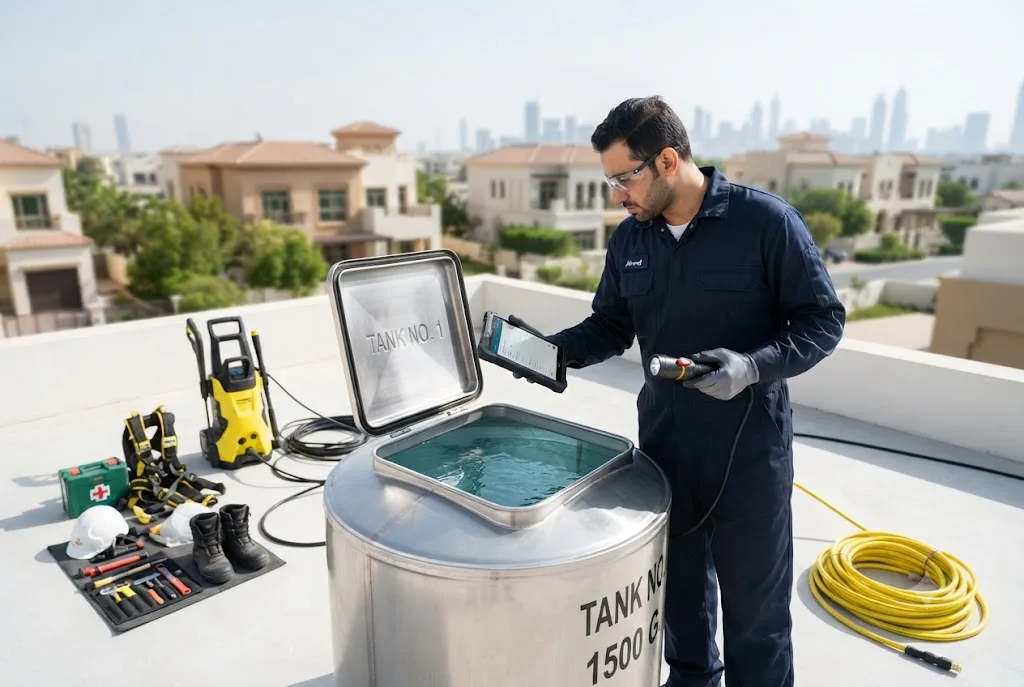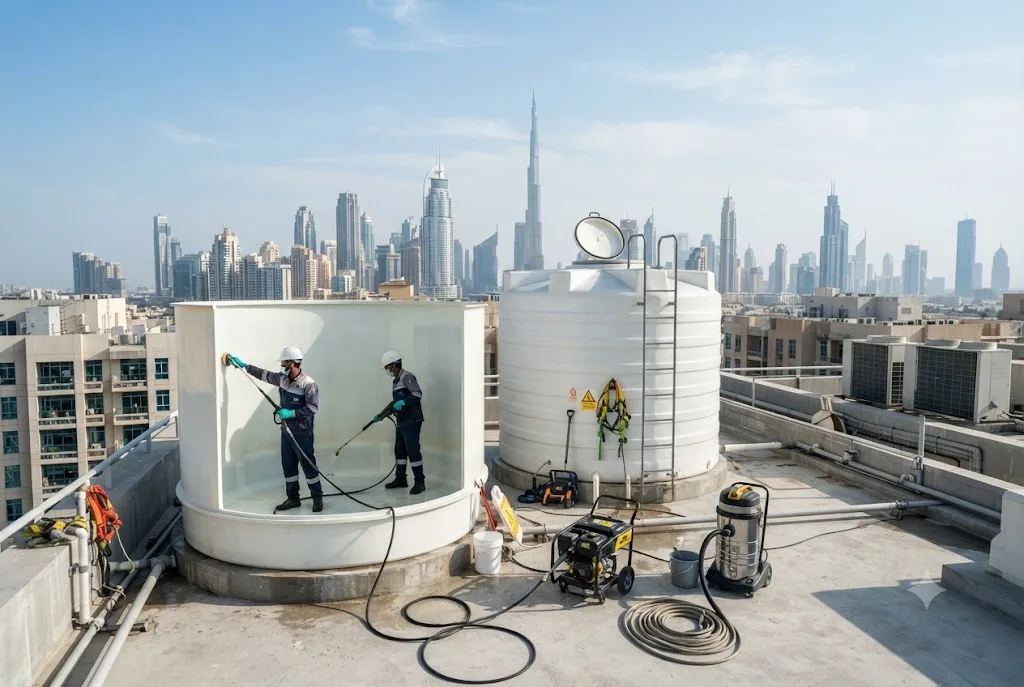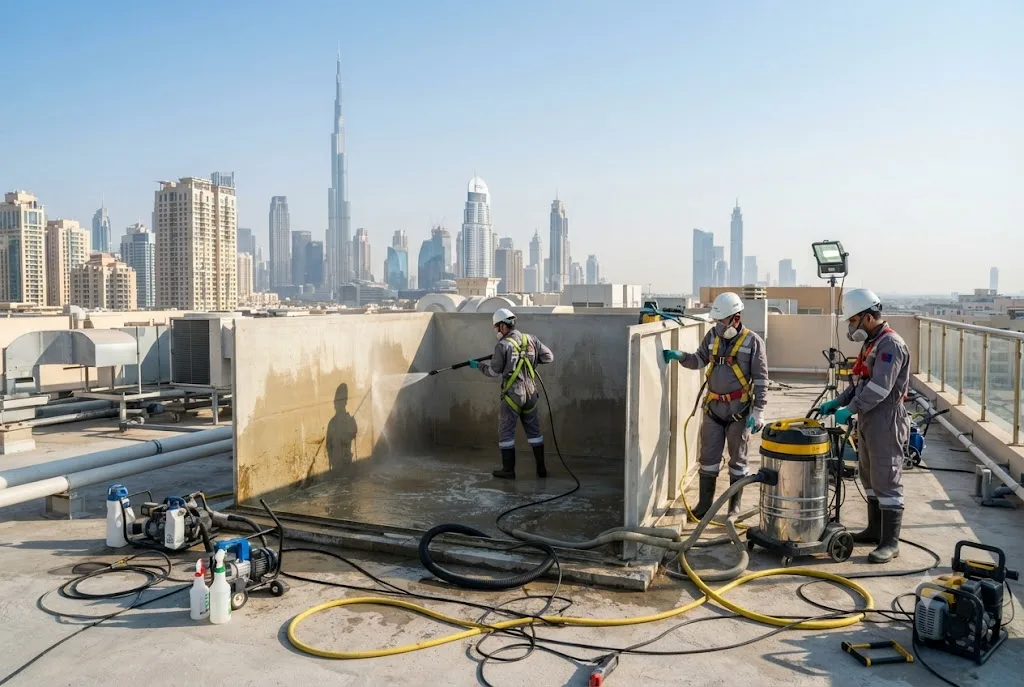
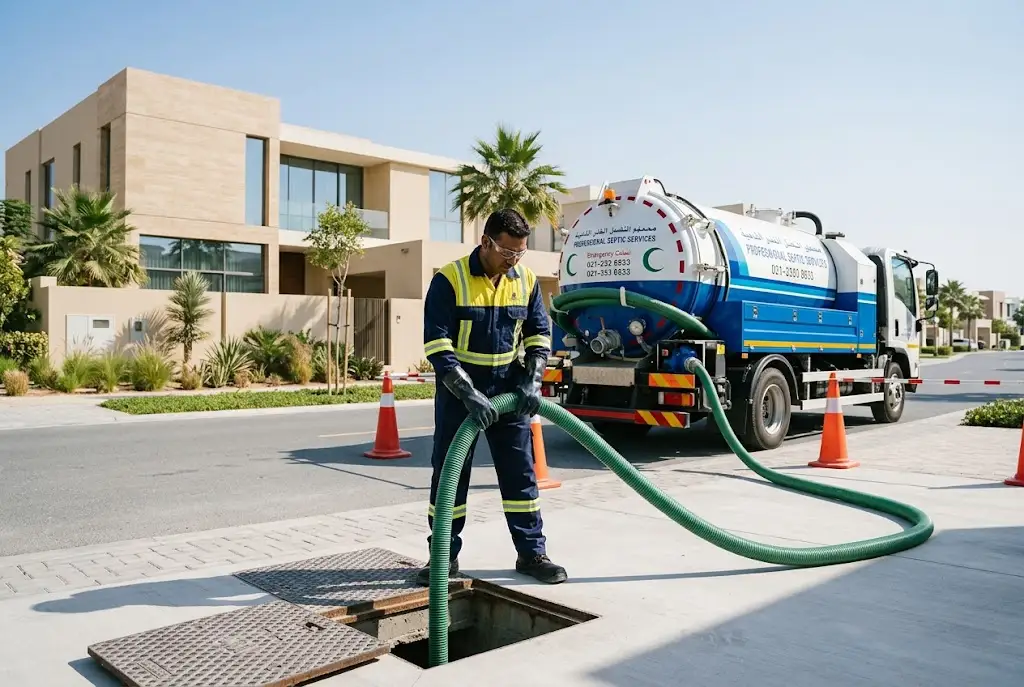
Septic tank cleaning is an important maintenance service for properties that rely on on-site wastewater treatment and storage systems rather than a direct connection to a municipal sewer network. These systems require proper inspection, removal of accumulated sludge and scum, and responsible handling of wastewater to help prevent backups, unpleasant odours, and environmental contamination. In the UAE, property owners should choose a cleaning method that matches their septic system, usage, and applicable local requirements.
Septic tank cleaning is different from cleaning a drinking water tank or simply pumping out a sewage holding tank. A septic system separates solids from wastewater and may include additional treatment and drainage components. Removing accumulated material at the appropriate time helps maintain its operation, but careless pumping, unsuitable chemicals, or neglected drainage components can create further problems. This guide explains septic tank cleaning methods, warning signs, maintenance schedules, safety precautions, costs, and how to select a suitable service provider.
What Is Septic Tank Cleaning?
Septic tank cleaning generally involves removing accumulated sludge and floating scum from a septic tank using suitable pumping equipment. A septic system receives wastewater from connected plumbing, allows solids to settle, and separates lighter materials from the liquid portion. Depending on the system design, the liquid then moves to a further treatment or disposal component.
Over time, solid material accumulates inside the tank. If it is not removed when required, solids may move into downstream components and interfere with their operation. Regular inspection and appropriate pumping help maintain the system’s capacity and identify problems before they become more serious.
However, septic tank cleaning does not automatically mean that every part of the system has been serviced. The tank, inlet and outlet fittings, access covers, filters, and downstream treatment or drainage components may need separate inspection. The required work depends on the installation and its condition.
Why Is Septic Tank Cleaning Important?
Preventing Wastewater Backups
Excessive accumulation of solids can contribute to septic system problems. If wastewater cannot move through the system as intended, occupants may notice slow drainage, recurring backups, or sewage emerging from unsuitable locations.
Prompt assessment helps establish whether pumping is required or whether the problem involves a blocked pipe, damaged fitting, overloaded system, or a downstream drainage issue.
Reducing the Risk of Overflow
A poorly maintained septic system may experience overflow or wastewater surfacing around the property. Such incidents can expose people to contaminated material and damage the surrounding area.
Scheduled inspections, appropriate pumping, and attention to unusual water levels can help identify developing problems. However, cleaning alone cannot correct an undersized system, excessive wastewater inflow, or a failed drainage component.
Protecting Soil and Groundwater
Septic systems depend on appropriate containment and wastewater treatment. Leaks, overflows, and failures in downstream components can allow contaminated wastewater to reach the surrounding soil or groundwater.
Responsible maintenance includes identifying visible damage, arranging necessary repairs, and ensuring that collected waste is transported to an appropriate authorized treatment or disposal facility. Property owners should follow the requirements applicable to their location in the UAE.
Extending the Useful Life of the System
Regular inspection and appropriate maintenance can help identify issues before they cause extensive damage. For example, a damaged cover, defective fitting, or unusual accumulation of solids may justify corrective action.
Maintenance cannot guarantee a particular lifespan, but it gives property owners a better opportunity to address developing problems and make informed decisions about repairs or system upgrades.
Signs Your Septic Tank May Need Cleaning
Some warning signs suggest that a septic tank needs inspection or pumping. Others may indicate a more serious system fault, so it is important not to assume that every problem can be solved by removing waste.
- Slow drainage: Several slow-draining fixtures may indicate a septic system problem, although local pipe blockages can produce similar symptoms.
- Recurring wastewater backups: Repeated backups may result from accumulated solids, blocked pipes, or a system that cannot handle the incoming flow.
- Persistent sewage odours: Unpleasant smells near the tank or drainage area may indicate a leak, defective seal, ventilation problem, or wastewater accumulation.
- Wet or unusually lush ground: Persistent wet patches or unusually vigorous vegetation near the drainage area can warrant inspection, especially when accompanied by odours.
- Visible leakage or overflow: Wastewater escaping from the tank or appearing at the surface requires prompt professional attention.
- Overdue maintenance: Previous inspection records, system guidance, or a professional assessment may indicate that pumping is due.
Keep people and pets away from sewage-contaminated areas. Never enter a septic tank or lean into an open access chamber to investigate a problem. These spaces can contain hazardous gases and oxygen-deficient atmospheres.
How to Clean a Septic Tank Safely
Septic tank cleaning should be carried out by a suitably qualified service provider using equipment and procedures appropriate to the installation. The following steps explain the general process rather than provide instructions for untrained people to open or enter a tank.
Step 1: Inspect the System
The service provider identifies the tank location, design, access points, approximate capacity, and maintenance history. The assessment should also consider the connected plumbing, inlet and outlet arrangements, visible damage, and any signs of overflow or drainage failure.
Property owners should explain previous problems and provide available records of earlier pumping or repairs. This information helps the contractor determine whether routine cleaning is sufficient or further inspection is needed.
Step 2: Establish Safety Controls
Before work starts, the contractor establishes appropriate access controls, protective measures, equipment arrangements, and emergency procedures. Hazards can include biological contamination, splashes, slippery surfaces, vehicle movements, and hazardous gases.
If entry into the tank is proposed, a competent person must determine whether confined-space requirements apply and establish the required controls. Emptying a tank does not make it safe to enter, and untrained workers should never attempt entry or an improvised rescue.
Step 3: Pump Out Accumulated Material
A suitable vacuum tanker or pumping system removes the accumulated sludge and scum. The equipment must be appropriate for the tank contents and the site’s access conditions.
The operator should manage hoses and connections carefully to prevent leaks and spills. The collected material must be contained and transported using an appropriate waste-handling arrangement.
Step 4: Inspect Relevant Components
Once the required pumping has been completed, the service provider can inspect accessible components as appropriate to the job. This may include the tank’s visible condition, covers, inlet and outlet fittings, and accessible filters.
Some systems require additional inspection of downstream treatment or drainage components. These checks should be agreed separately where they are not included in the cleaning quotation.
Step 5: Manage Waste Responsibly
Septic sludge and wastewater must be taken to an appropriate authorized treatment or disposal facility. They should never be released into stormwater drains, onto open ground, or into an unsuitable watercourse.
Ask the service provider how collected material will be transported and managed. For commercial properties, retain service records and any relevant disposal documentation provided under the applicable requirements.
Step 6: Record Findings and Plan Follow-Up
After the service, request a record of the work performed, the condition of accessible components, and any concerns requiring attention. If the contractor identifies a damaged fitting, recurring blockage, or possible drainage failure, arrange the appropriate follow-up inspection or repair.
Do not assume that pumping has resolved every underlying issue. A septic system may continue to malfunction if its downstream treatment or drainage components are damaged or overloaded.
How Often Should a Septic Tank Be Cleaned?
There is no single pumping interval that is appropriate for every septic tank. The required frequency depends on tank capacity, the number of occupants, wastewater volume, the amount of solids entering the system, the system’s design, and previous inspection findings.
Smaller tanks serving heavily occupied properties may accumulate solids differently from larger systems with lower usage. Wastewater from unsuitable discharges can also affect how the system operates.
Rather than relying only on a fixed calendar schedule, property owners should follow the system manufacturer’s guidance where available and arrange periodic inspections by a competent professional. Inspection findings can help determine when pumping is necessary.
For commercial properties, maintenance records should document previous service dates, observed conditions, recurring faults, and recommended follow-up work. If a tank repeatedly needs emergency pumping, investigate whether the system is correctly sized and functioning as intended.
Can Septic Tank Cleaning Powder Replace Professional Pumping?
Searches for septic tank cleaning powder often reflect an interest in products marketed for odour control, biological treatment, or septic system maintenance. However, these products should not be treated as a substitute for removing accumulated sludge when pumping is required.
Products sold for septic systems can differ in their ingredients, intended use, and evidence of effectiveness. Before using one, check the manufacturer’s instructions and confirm that the product is suitable for the particular system. Avoid adding unapproved chemicals, disinfectants, solvents, or other substances that may interfere with system operation.
Do not use a product simply because it claims to dissolve all accumulated waste or eliminate the need for maintenance. If the tank has recurring backups, visible overflow, or evidence of excessive solids, arrange a professional assessment rather than relying on powder or additives.
Septic Tank Cleaning Service Near Me: Choosing a Provider
When looking for a septic tank cleaning service or searching for septic tank cleaning services near me, start by identifying the type of system and the work required. A provider should have suitable equipment, relevant experience, and a clear plan for managing the collected wastewater.
Check Experience With Septic Systems
Ask whether the company regularly services septic tanks and whether its equipment can handle the expected sludge volume. Experience with ordinary sewage holding tanks does not automatically establish expertise in every type of septic treatment or drainage system.
Confirm Waste Disposal Arrangements
Ask where the collected waste will be taken and how the provider ensures that transport and disposal follow applicable requirements. A responsible contractor should be able to explain the waste-handling process clearly.
Request a Written Scope of Work
Confirm whether the quotation includes pumping, sludge removal, accessible component inspection, waste transport, and service documentation. Repairs, extensive cleaning, and downstream drainage inspections may be separate services.
Review Safety Procedures
Ask how the contractor manages biological contamination, access hazards, vehicle positioning, spills, and possible confined-space risks. The company should not suggest that a tank can be entered safely merely because its contents have been removed.
Compare Complete Quotations
Compare the tank capacity, estimated waste volume, service inclusions, access conditions, disposal arrangements, and possible additional charges. A lower initial quotation may not include every activity required to complete the work responsibly.
What Affects Septic Tank Cleaning Costs in the UAE?
Septic tank cleaning prices vary according to the installation and the required scope. Important cost factors include:
- Tank size: Capacity influences pumping time, equipment requirements, and waste transport.
- Accumulated sludge: The amount and condition of the material affect the work required.
- Access: Underground tanks, restricted access points, and difficult vehicle positioning can increase complexity.
- Service scope: Pumping alone differs from a service that also includes component inspection or additional cleaning.
- Waste transportation: Collection, transport, and authorized disposal contribute to the overall cost.
- Urgency: Emergency attendance may be priced differently from scheduled maintenance.
- Repairs and additional inspections: Defective components or drainage problems may require separate work.
For an accurate quotation, provide the property’s location, tank capacity if known, access details, current symptoms, and previous maintenance information. Ask the provider to identify exclusions and explain any circumstances that could increase the final price.
Septic Tank Cleaning Versus Sewage Tank Cleaning
Septic tank cleaning and sewage tank cleaning are related services, but the systems should not be treated as identical. A septic tank is part of an on-site wastewater treatment arrangement, whereas a sewage holding tank may primarily collect wastewater for later removal.
The difference matters because the tank’s design determines how it should be inspected, maintained, and returned to service. A septic system may also have downstream treatment or drainage components that require attention beyond pumping the tank itself.
If a property has a sewage holding tank rather than a septic system, the site’s sewage tank cleaning guide covers the related sanitation service. Confirm the type of installation before booking to avoid paying for an unsuitable service scope.
Septic Tank Cleaning Versus Drinking Water Tank Cleaning
Septic tank cleaning must never be confused with drinking water tank cleaning. Septic systems contain wastewater and accumulated solids, while potable-water tanks must be maintained to protect water hygiene and prevent contamination.
The cleaning tools, protective measures, products, and waste-handling procedures are different. Equipment that has contacted sewage should not be used in a drinking water tank unless an appropriate, validated decontamination process and suitability assessment establish that it is safe for that use.
For potable-water storage, refer to the site’s water tank cleaning guide for the UAE. For general tank-related service information, you can also consult tank cleaning services.
Frequently Asked Questions About Septic Tank Cleaning
How do I know if my septic tank needs pumping?
Inspection findings, accumulated sludge, recurring backups, or a maintenance assessment may indicate that pumping is required. Odours and slow drainage can also indicate other system faults, so a professional assessment is useful.
Can I clean a septic tank myself?
Septic tank cleaning involves contaminated waste and potentially hazardous gases. Opening or entering a tank without suitable training, equipment, and safety controls can be dangerous. Professional service is the safer option for pumping and handling accumulated sludge.
Does septic tank cleaning powder remove sludge?
Do not assume that a powder or additive will remove accumulated sludge or eliminate the need for pumping. Product suitability varies, and persistent system problems require assessment rather than reliance on chemical or biological additives.
What should a septic tank cleaning service include?
The agreed scope may include site assessment, pumping, sludge removal, waste transport, inspection of accessible components, and service records. Confirm which tasks are included before booking.
What should I do if my septic tank overflows?
Keep people and pets away from the affected area, avoid contact with wastewater, and arrange urgent professional assistance. Do not open or enter the tank. If the overflow threatens nearby drains, property, or the environment, follow the applicable local reporting and emergency procedures.
Final Thoughts
Septic tank cleaning helps maintain on-site wastewater systems by removing accumulated sludge and identifying developing problems. However, effective maintenance also requires appropriate inspection, safe waste handling, and attention to connected treatment and drainage components.
For properties in the UAE, choose a provider who understands septic systems, uses suitable equipment, follows appropriate safety procedures, and explains the complete service scope. Keep maintenance records, investigate recurring problems, and follow applicable local requirements to help protect occupants and the surrounding environment.