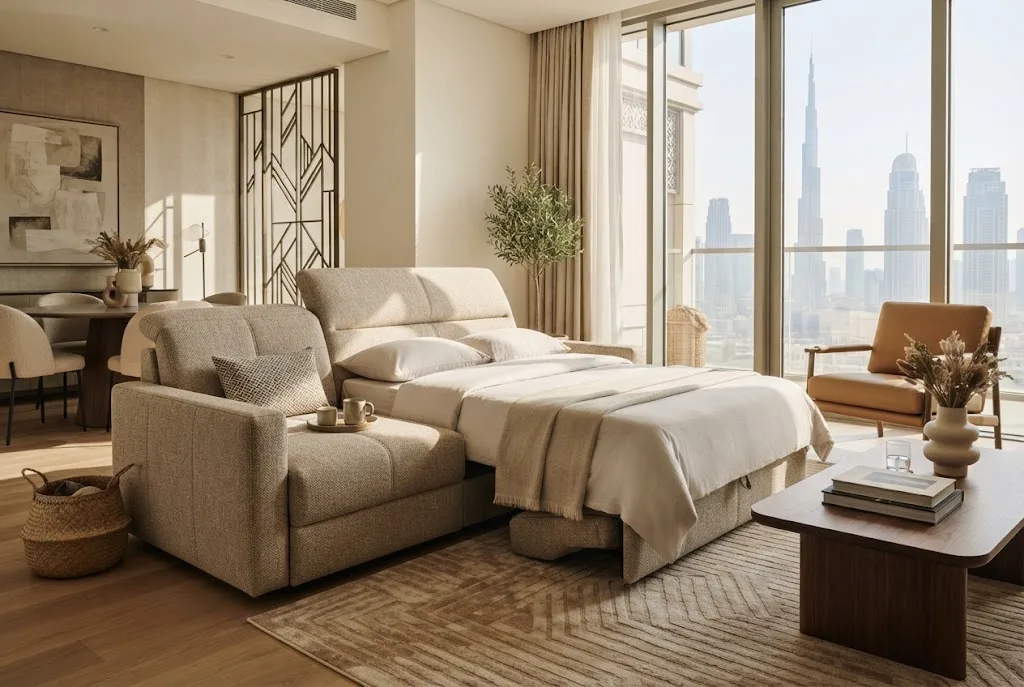
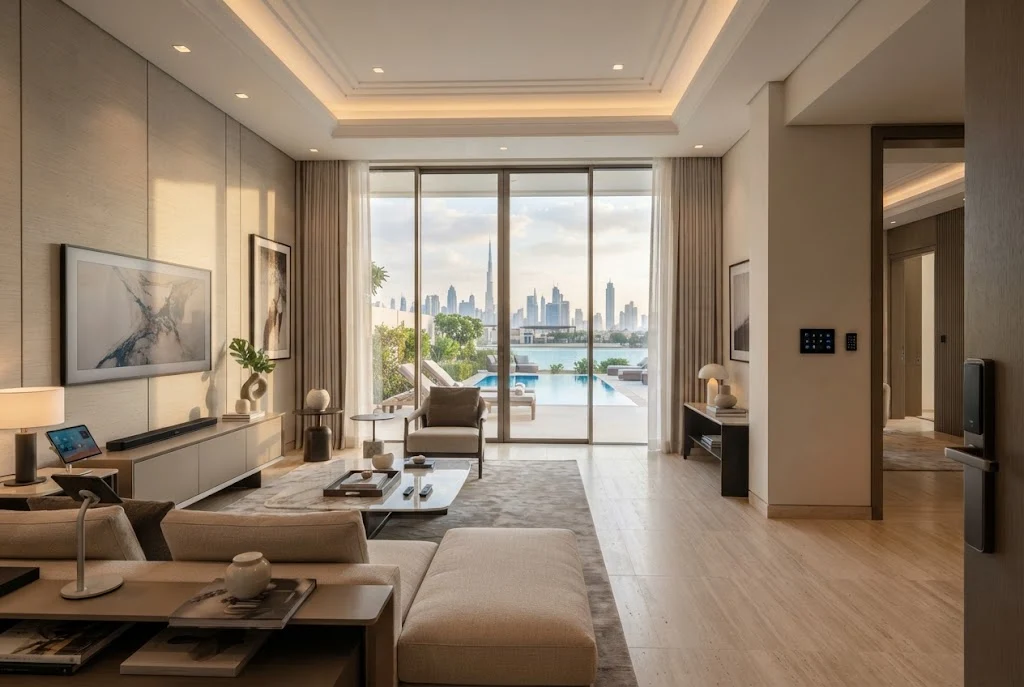
Dubai’s modern apartments, villas, and newly renovated properties can benefit from smart technology when the system is planned around the home’s actual needs. A successful installation is not simply about adding as many connected devices as possible. It is about creating a reliable system that improves convenience, security, energy management, and everyday comfort.
What Are Smart Home Solutions?
Smart home solutions combine connected devices, sensors, controllers, networks, and software to automate or remotely manage household functions. Depending on the system, homeowners may be able to control lights, doors, cameras, air conditioning, curtains, appliances, and other equipment from a centralized interface.
Some systems are relatively simple, such as smart bulbs controlled through a mobile application. More advanced installations can connect multiple home systems and create automated routines based on time, occupancy, temperature, security events, or user preferences.
For properties undergoing major upgrades, smart home renovation planning can help integrate technology into the wider design instead of adding devices as an afterthought.
Why Smart Homes Are Becoming Popular in Dubai
Smart technology can make everyday household management more convenient. A homeowner can potentially turn lights on or off remotely, check a security camera, adjust the temperature, or receive an alert when a connected sensor detects activity.
Automation can also reduce the number of repetitive tasks performed manually. For example, lights can be scheduled to turn on at a particular time, while security devices can follow predefined routines when residents leave the property.
However, the benefits depend heavily on installation quality, device compatibility, network reliability, and correct configuration.
Key Smart Home Solutions for Dubai Properties
Smart Lighting
Smart lighting is one of the easiest ways to introduce automation into a home. Connected bulbs, switches, dimmers, and lighting controllers can allow residents to adjust lighting remotely or create automated scenes.
For example, a homeowner could create a morning lighting routine, a movie-night scene, or an evening setting that turns selected lights on automatically.
Lighting upgrades should be planned alongside the home’s electrical infrastructure. Our guide to smart home electrical upgrades in the UAE covers broader electrical considerations.
Smart Security Systems
Security is another major area where connected technology can add functionality. Depending on the system, homeowners can use smart cameras, video doorbells, motion sensors, alarms, and access-control devices.
Some systems can send notifications to a smartphone when movement is detected or when a connected door sensor changes state. Cameras may also allow remote viewing through a secure application.
Security technology should complement rather than replace sensible physical security practices. Proper doors, locks, access controls, and routine maintenance remain important.
Smart Door Locks
Smart door locks can provide alternatives to traditional keys. Depending on the model, access may be managed using a PIN, smartphone, fingerprint, NFC device, or other authentication method.
Some systems can also create temporary access credentials for guests or service providers. Before installation, check whether the lock is compatible with the existing door and whether a backup access method is available.
For conventional lock-related requirements, homeowners can also explore door lock repair services in Dubai when a mechanical lock needs attention.
Smart Climate Control
Climate control is particularly relevant in Dubai, where air conditioning plays an important role in household comfort. Smart thermostats and connected AC controls can provide remote management, scheduling, and automation features.
Smart controls can be useful when residents want the home to reach a comfortable temperature before they arrive or when they want to adjust settings remotely.
Also, smart controls should not be confused with air-conditioning maintenance. Regular servicing remains important for system performance. Homeowners can also review air conditioning service options when an AC system requires professional attention.
Smart Curtains and Blinds
Motorized curtains and blinds can be integrated into a smart home system. Users may be able to open or close them through an application, remote control, voice command, or scheduled automation.
Automated window coverings can also be incorporated into broader routines, such as opening curtains in the morning or closing them during specific periods of the day.
Smart Appliances
Connected appliances can provide remote monitoring and automation features. Depending on the appliance and platform, users may receive notifications, monitor operating status, or control selected functions remotely.
Before purchasing multiple smart appliances, check whether they work with the same ecosystem. A fragmented setup can become difficult to manage if every device requires a separate application.
What Is Home Automation?
Home automation refers to using technology to perform household actions automatically according to predefined conditions. Instead of manually controlling each device, homeowners can create rules that connect different systems.
For example, an “Away” routine could turn off selected lights, adjust the air conditioning, lock compatible doors, and activate certain security devices. A “Night” routine could lower lighting levels, adjust the temperature, and secure selected access points.
The exact capabilities depend on the devices, software platform, network, and installation.
Smart Home Installation: What Should You Plan First?
A smart home should ideally be planned before purchasing devices. Starting with individual products without considering the overall system can lead to compatibility issues and unnecessary expenses.
1. Identify Your Main Objectives
Start by deciding what you want the system to accomplish. Some homeowners prioritize security, while others want lighting automation, climate control, entertainment, or energy management.
2. Review the Existing Electrical System
Older properties may require electrical improvements before certain smart devices can be installed. Wiring, switches, circuits, power requirements, and device compatibility should be evaluated.
For broader electrical requirements, resources such as home electrical safety tips in Dubai can help homeowners understand basic safety considerations.
3. Check Network Coverage
Many smart devices depend on a stable wireless or wired network. Large villas may have areas where Wi-Fi coverage is weaker, so network planning should be part of the installation process.
4. Choose a Compatible Ecosystem
Compatibility matters when multiple devices are involved. Before buying equipment, check which platforms, communication standards, applications, and voice assistants are supported.
5. Plan for Future Expansion
A good smart home system should allow additional devices to be added later. Homeowners may initially install smart lighting and security, then add climate control, automated curtains, sensors, or other systems in the future.
Wired vs. Wireless Smart Home Systems
Smart home systems can use wired connections, wireless communication, or a combination of both.
Wireless systems can be convenient for existing properties because they may require less physical alteration. They can also make it easier to add devices later.
Wired systems can offer advantages for certain larger or newly constructed properties where infrastructure can be planned from the beginning. The appropriate approach depends on the property, project scope, devices, budget, and desired level of integration.
Smart Home Solutions for Apartments
Apartments often benefit from smaller-scale smart installations. Smart lighting, locks, cameras, climate controls, and sensors can provide useful automation without requiring a complete building-wide system.
Space and building rules should be considered before installing equipment. Certain modifications may require landlord, building-management, or other approval.
If the apartment is already undergoing improvement work, combining technology upgrades with apartment renovation in Dubai can make installation and cable planning more efficient.
Smart Home Solutions for Villas
Villas generally offer more space for comprehensive automation. Homeowners can connect multiple zones, outdoor areas, entrances, lighting circuits, security devices, and climate-control systems.
A villa project may include separate automation scenes for bedrooms, living areas, kitchens, gardens, garages, entrances, and entertainment spaces.
When a villa is being extensively upgraded, villa renovation planning can provide an opportunity to integrate smart wiring, controls, and equipment locations into the overall design.
Smart Home Security and Physical Protection
Technology is only one part of residential security. Smart cameras, alarms, sensors, and connected locks can improve monitoring and access management, but physical doors and locks also need to remain in good condition.
Homeowners should address damaged locks, loose hardware, faulty doors, and other physical security weaknesses instead of relying entirely on connected devices.
For general home security planning, home safety tips can be incorporated into a broader household maintenance routine.
Maintenance Requirements for Smart Homes
Installing smart devices does not eliminate maintenance. Firmware, batteries, sensors, network equipment, power supplies, and physical components may require periodic attention.
Battery-powered sensors should be checked regularly. Connected devices should also be kept updated according to manufacturer guidance, while unused devices should be removed from the network when appropriate.
General property maintenance is equally important. A smart home still depends on functioning electrical, plumbing, cooling, doors, and structural systems. A wider home maintenance service plan in the UAE can help address these conventional requirements.
How Much Do Smart Home Solutions Cost in Dubai?
The cost of a smart home installation varies significantly. A basic setup involving a few smart bulbs, switches, sensors, or plugs can be relatively simple, while a whole-home automation system involving security, climate control, lighting, access control, networking, and centralized management can require a much larger investment.
The final cost can depend on:
- Number of rooms and devices.
- Type and quality of equipment.
- Wired or wireless architecture.
- Existing electrical infrastructure.
- Network requirements.
- Installation complexity.
- Level of automation and customization.
- Integration with existing appliances and systems.
Rather than choosing a system solely by initial price, homeowners should consider installation quality, compatibility, support, reliability, and future expansion.
Common Smart Home Installation Mistakes
Avoiding common planning mistakes can make a smart home more reliable and easier to manage.
- Buying incompatible devices: Not every smart device works with every ecosystem.
- Ignoring network requirements: Poor connectivity can make connected devices unreliable.
- Automating everything: Some functions are better left under manual control.
- Ignoring electrical requirements: Certain installations require appropriate wiring and compatible switches.
- Forgetting physical access: Smart locks and other devices still need practical backup options.
- Skipping maintenance: Batteries, firmware, sensors, and network equipment need periodic attention.
- Focusing only on gadgets: A successful smart home should solve real household problems rather than simply add technology.
How to Make a Smart Home More Practical
The most useful smart home is not necessarily the one with the largest number of devices. Start with the functions that provide genuine value for your household.
For example, a homeowner who frequently forgets to turn off lights may benefit from occupancy sensors and scheduled lighting. Someone concerned about access control may prioritize smart locks and door sensors. A household that spends significant time away from home may find remote security monitoring particularly useful.
Once the core system is stable, additional automation can be added gradually.
Final Thoughts on Smart Home Solutions Dubai
Smart home solutions Dubai homeowners choose can make a property more connected, convenient, and manageable when they are properly planned. Smart lighting, home automation, security systems, smart door locks, climate controls, sensors, and connected appliances can work together to create a more responsive home environment.
The best approach is to begin with household needs rather than individual gadgets. Evaluate the property’s electrical infrastructure, network coverage, available space, compatibility requirements, security priorities, and future expansion plans before selecting equipment.
Whether you live in an apartment or villa, smart technology can be introduced gradually or as part of a larger renovation. With careful planning and professional installation where required, a connected home can become a practical part of modern living in Dubai.