A water tank cleaning procedure PDF is a valuable reference for homeowners, facility managers, maintenance teams, and commercial property owners who want to understand how professional water tank cleaning is carried out. While every project may vary depending on the tank size and type, the core cleaning process follows a structured sequence to ensure safe, hygienic, and effective results.
In the UAE, where stored water is commonly used in residential and commercial buildings, following a systematic cleaning procedure helps maintain water quality, reduce contamination risks, and extend the lifespan of water storage tanks.
Why Follow a Standard Water Tank Cleaning Procedure?
A documented water tank cleaning procedure ensures that every stage of the cleaning process is completed correctly. Instead of simply washing the tank, professionals inspect, clean, disinfect, rinse, and verify the system before it is returned to service.
A standardized process helps:
- Improve drinking water hygiene
- Reduce bacteria and algae growth
- Remove sediment and sludge
- Protect water quality
- Maintain consistent cleaning standards
- Support preventive maintenance planning
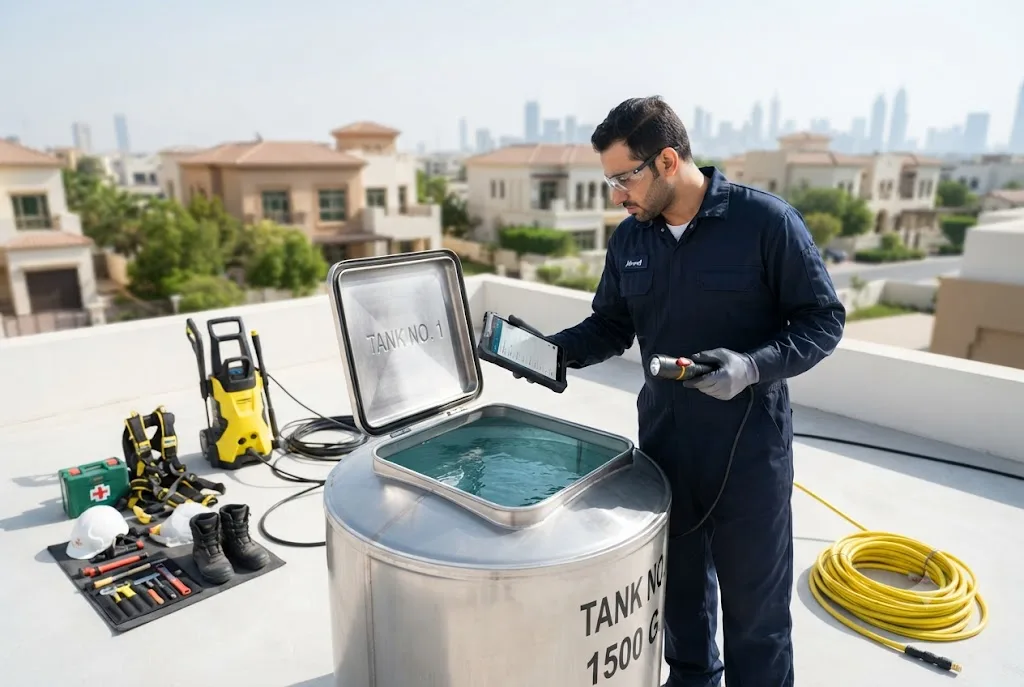
Step 1: Initial Inspection
The first stage of the water tank cleaning process is a detailed inspection.
Technicians typically examine:
- Tank structure
- Access points
- Water quality
- Sediment accumulation
- Algae growth
- Visible contamination
- Leaks or structural damage
The inspection determines the cleaning method and identifies any repairs that may be required.
Step 2: Isolate the Water Supply
Before cleaning begins, the water supply is isolated to prevent contamination of the building’s plumbing system.
Safety procedures may also include shutting down pumps and securing electrical equipment connected to the tank.
Step 3: Drain the Tank
The tank is emptied completely to expose internal surfaces for cleaning. Remaining water is disposed of safely according to local requirements.
Complete drainage allows technicians to access sediment that would otherwise remain at the bottom of the tank.
Step 4: Remove Sludge and Debris
One of the most important water tank cleaning methods involves manually removing accumulated sludge, dirt, rust particles, leaves, insects, and other debris.
This stage prepares the tank for thorough washing and disinfection.
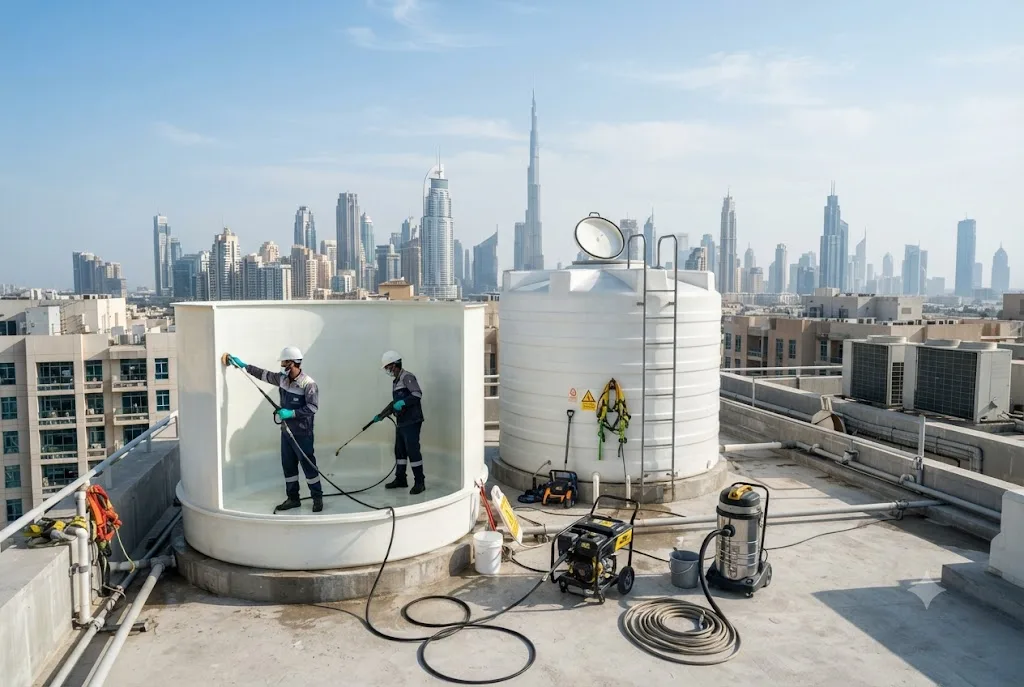
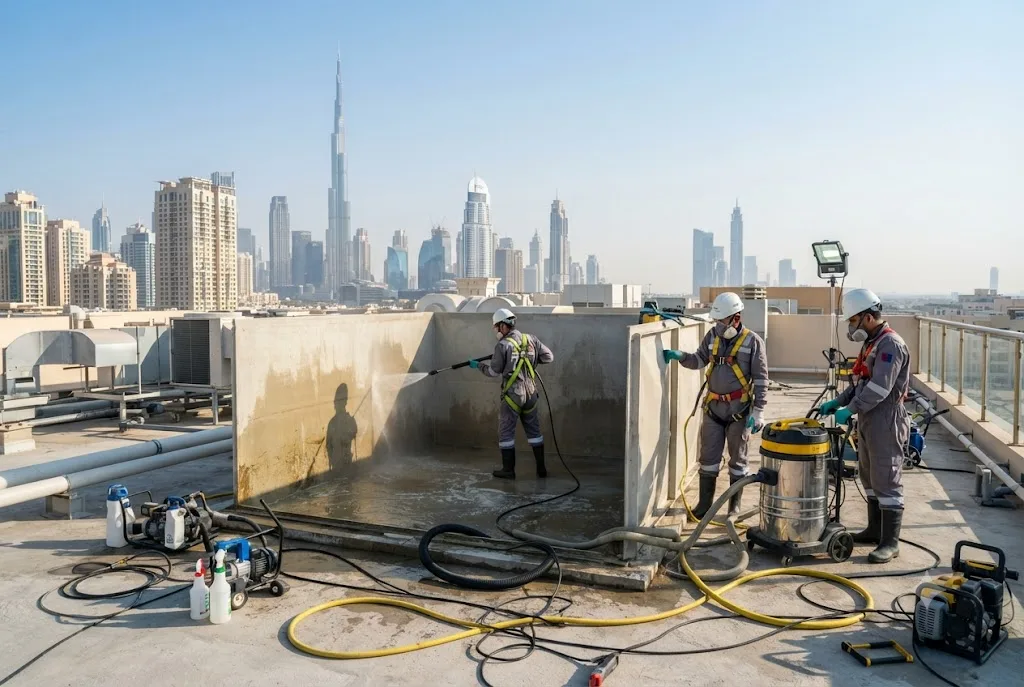
Step 5: Clean Internal Surfaces
Tank walls, floors, corners, ladders, and internal fittings are cleaned using professional equipment such as:
- Soft brushes
- High-pressure water systems
- Mechanical cleaning tools
- Specialized cleaning equipment for larger tanks
The cleaning method depends on the tank’s material, size, and condition.
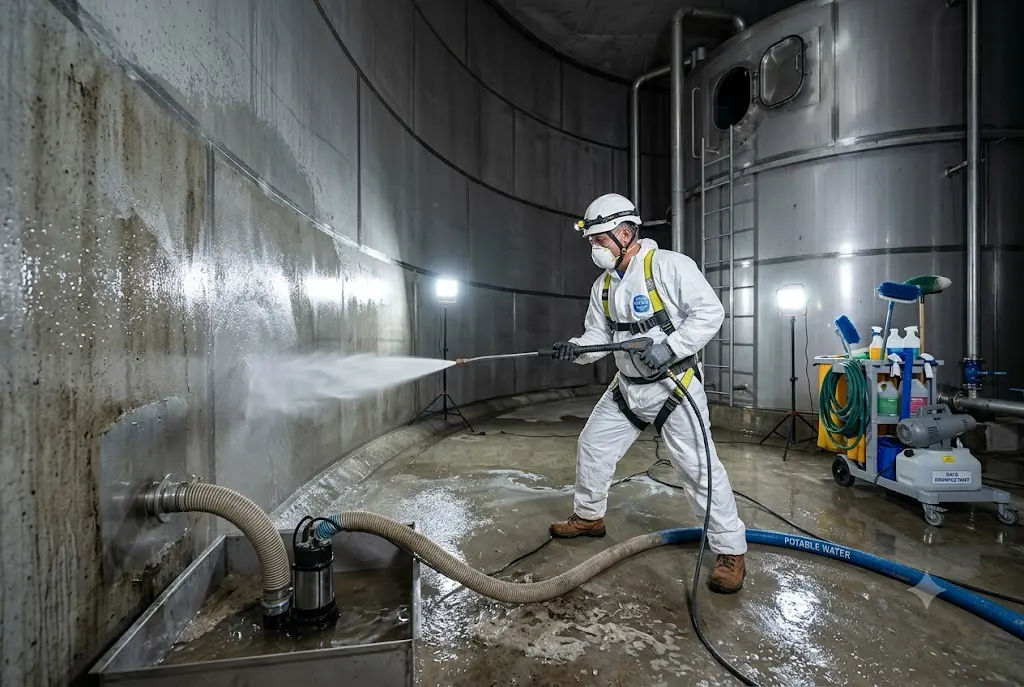
Step 6: Disinfection
After visible contaminants have been removed, approved disinfectants are applied to eliminate bacteria and microorganisms.
The disinfectant remains in contact with the tank surfaces for the recommended period before being rinsed away.
Only products suitable for potable water systems should be used during this stage.
Step 7: Final Rinse
Once disinfection is complete, the tank is thoroughly rinsed to remove any remaining cleaning solution or residue.
This step is essential for maintaining safe drinking water quality after the cleaning process.
Step 8: Final Inspection and Refill
Before returning the tank to service, technicians perform a final inspection to confirm:
- Clean internal surfaces
- No visible debris
- Proper operation of fittings
- Safe condition of the tank
- Successful completion of the cleaning procedure
The tank is then refilled and placed back into normal operation.
Common Water Tank Cleaning Methods
Several water tank cleaning methods are used depending on the property’s requirements.
Manual Cleaning
Suitable for smaller residential tanks where technicians can safely access the interior.
High-Pressure Cleaning
High-pressure water jets remove stubborn dirt, sediment, and biofilm without damaging the tank when used correctly.
Mechanical Cleaning
Mechanical equipment improves cleaning efficiency in larger commercial tanks.
Robotic Cleaning
Some facilities use robotic systems that clean tanks remotely while reducing confined-space entry requirements.
Learn more about these innovations in our guide to the self cleaning water tank.
How Often Should Water Tanks Be Cleaned?
Cleaning frequency depends on several factors, including:
- Tank size
- Water usage
- Water source
- Environmental conditions
- Building type
Many UAE property owners schedule professional cleaning approximately every six months, although maintenance intervals should always follow local authority recommendations and the property’s specific requirements.
Why Professional Cleaning Is Recommended
Although the cleaning procedure appears straightforward, professional technicians have the equipment, training, and experience to perform the work safely.
Professional services offer:
- Comprehensive inspections
- Safe disinfection procedures
- Correct cleaning chemicals
- Modern cleaning equipment
- Reduced contamination risks
- Reliable maintenance records
Related Water Tank Maintenance Resources
If you’re planning routine maintenance, our guide to water tank cleaning services explains what professional service providers include in a standard cleaning visit.
Understanding which water tank cleaning chemical is appropriate can also help you appreciate why trained professionals use approved disinfectants for potable water systems.
Before scheduling maintenance, you can organize inspections and recurring tasks with our practical water tank cleaning checklist.
Final Thoughts
A structured water tank cleaning procedure PDF serves as a practical reference for understanding professional maintenance practices. Following a standardized water tank cleaning procedure helps remove sediment, disinfect storage systems, and maintain clean water for homes and businesses.
Whether you’re reviewing different water tank cleaning methods or preparing for your next maintenance visit, professional cleaning remains the most effective way to protect water quality and extend the life of your storage tank.
For additional guidance on safe drinking water and water quality management, visit the World Health Organization (WHO).