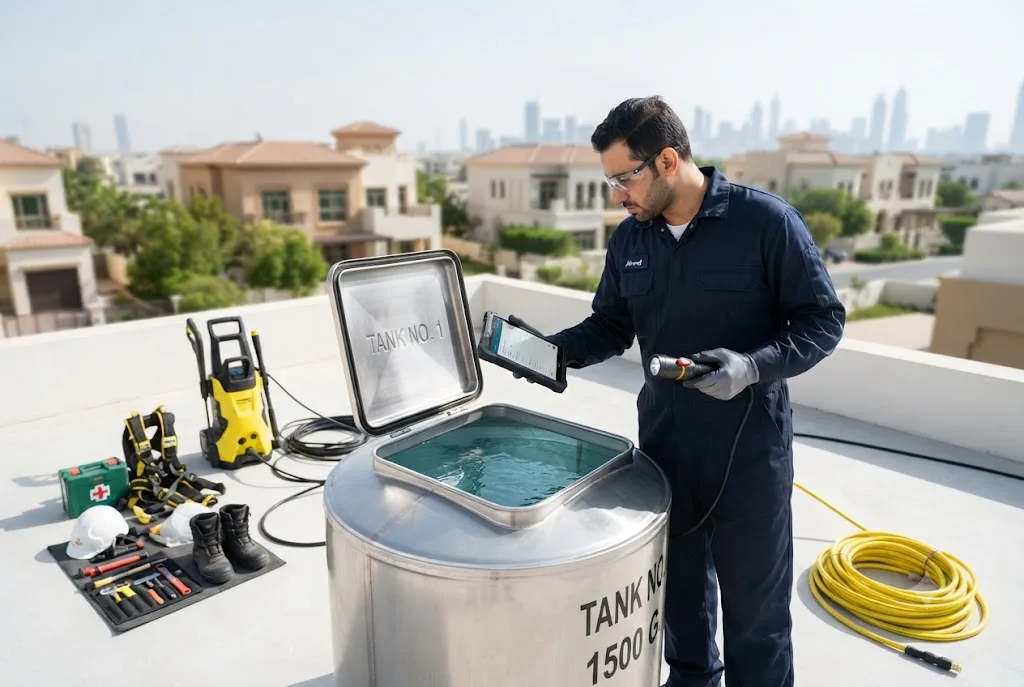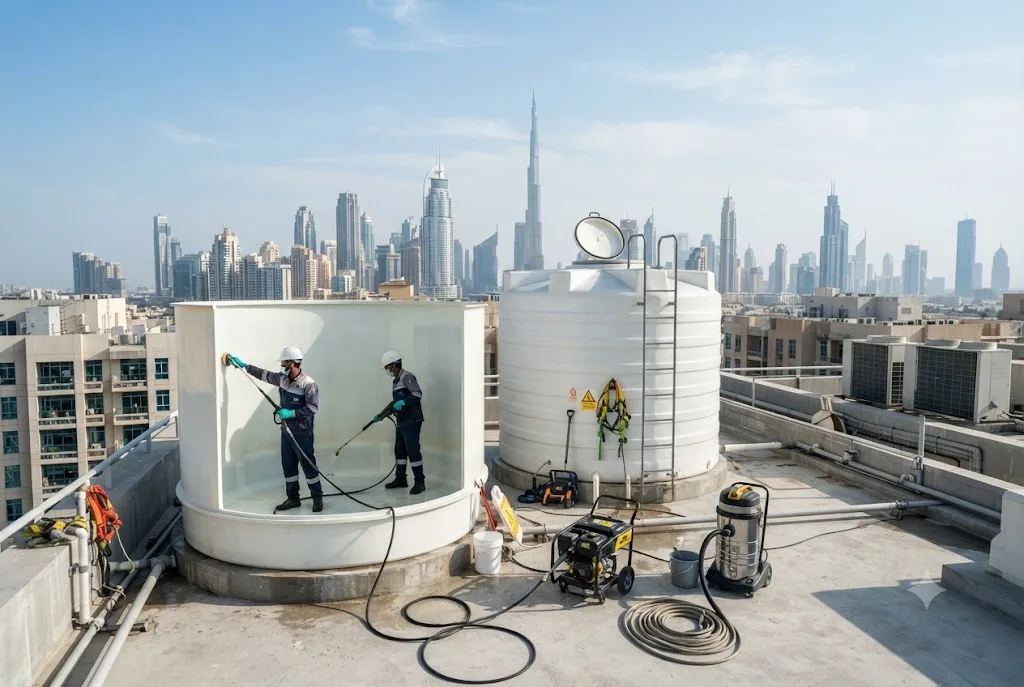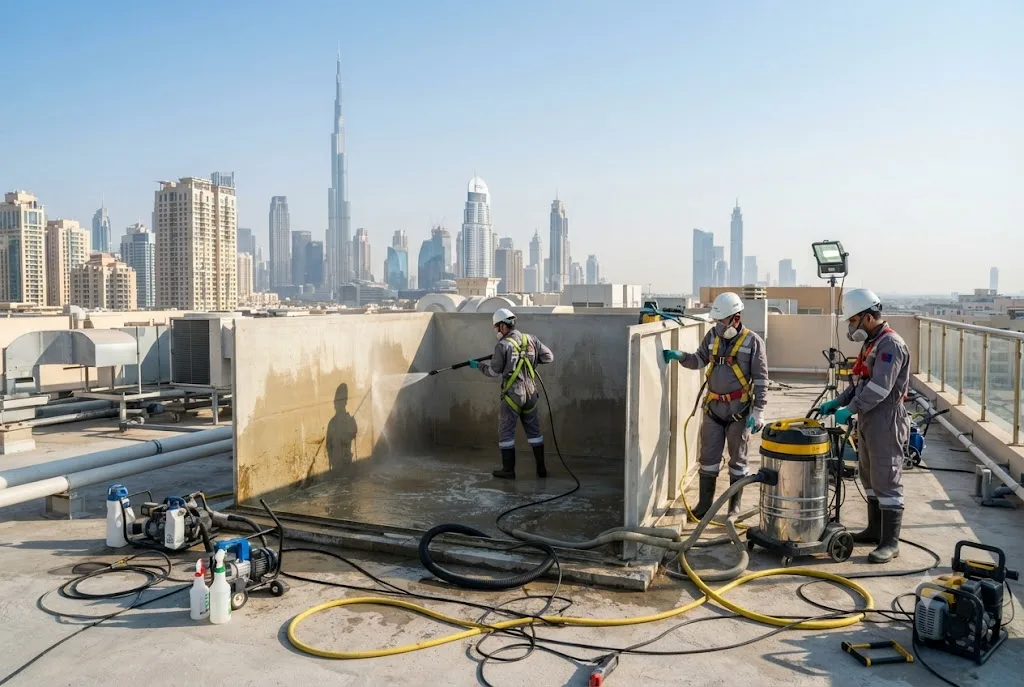
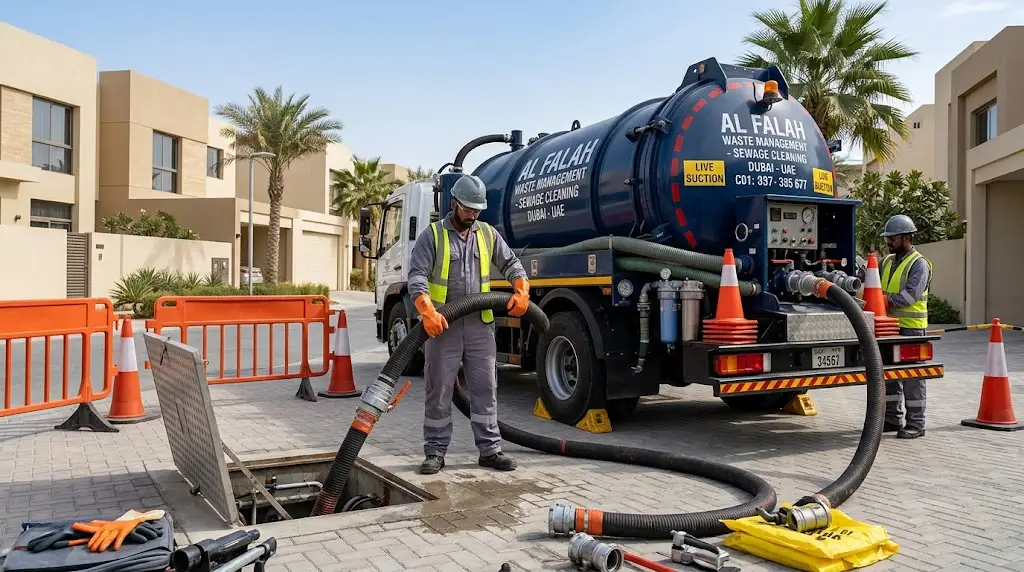
Sewage tank cleaning is an important sanitation service for properties and facilities that collect, store, or temporarily contain wastewater. Residential communities, commercial buildings, industrial sites, and properties with dedicated sewage holding systems may require professional cleaning to remove accumulated sludge, settled solids, and other waste. In the UAE, choosing the right cleaning method is essential for maintaining sanitary conditions, controlling unpleasant odours, and preventing wastewater from escaping into surrounding areas.
Unlike drinking water tank maintenance, sewage tank cleaning involves contaminated wastewater and potentially hazardous gases. The work requires appropriate pumping equipment, trained personnel, safe access arrangements, and an approved plan for transporting and disposing of the collected waste. This guide explains the cleaning process, common warning signs, safety considerations, and how to evaluate sewage tank cleaning services in Dubai, Sharjah, and other parts of the UAE.
What Is Sewage Tank Cleaning?
Sewage tank cleaning is the controlled removal of wastewater, sludge, settled solids, and other accumulated material from a tank that collects sewage. These systems may serve buildings or facilities that depend on holding tanks or other on-site wastewater arrangements.
As sewage accumulates, heavier solids can settle at the bottom while grease and other materials may collect in different parts of the system. Over time, these deposits can reduce available capacity and contribute to blockages, slow drainage, or unpleasant odours.
Professional cleaning generally involves assessing the tank, arranging safe access, removing the accumulated contents, collecting the waste for appropriate disposal, and checking the system for visible problems. The exact scope depends on the tank’s design, condition, wastewater characteristics, and applicable local requirements.
Why Is Regular Sewage Tank Cleaning Important?
Preventing Excessive Sludge Accumulation
Solids naturally accumulate in many sewage holding systems. If the tank is not serviced according to its operating requirements, the available storage capacity can decrease. This may increase the likelihood of overflow or cause the system to require more frequent emergency attention.
Scheduled inspections and cleaning help operators identify when accumulated material needs to be removed. The appropriate frequency depends on tank capacity, the volume of wastewater generated, the type of system, and previous inspection findings.
Reducing Unpleasant Odours
Sewage systems can produce unpleasant smells as organic material decomposes. Odours may become more noticeable when waste accumulates, ventilation is inadequate, covers or seals are damaged, or a connected drainage system develops a problem.
Cleaning can address accumulated waste, but it will not necessarily resolve every odour issue. If smells return quickly, the tank, covers, vents, pipework, and connected drainage system may need further inspection.
Helping Prevent Overflow and Drainage Problems
An overfilled or poorly maintained holding tank can contribute to wastewater backups and overflow. These incidents can disrupt normal building operations and create sanitation risks for occupants, workers, and nearby areas.
Cleaning should be accompanied by checks for damaged components, restricted pipes, excessive inflow, and other underlying problems. Where the issue originates in connected drainage, a separate drain cleaning service may be relevant.
Supporting Better Facility Maintenance
For property managers and business operators, documented sewage tank maintenance helps establish a clearer picture of the system’s condition. Service records can identify recurring problems, support maintenance planning, and help determine whether additional inspection or repairs are necessary.
Common Signs That a Sewage Tank Needs Cleaning
Not every warning sign means the tank itself requires immediate cleaning. Some symptoms may indicate a blocked pipe, damaged component, overloaded system, or another drainage problem. Nevertheless, the following signs justify prompt assessment.
- Persistent sewage odours: Strong or recurring smells around the tank or nearby drainage areas may indicate accumulated waste, a damaged seal, or a ventilation problem.
- Slow drainage: Several slow-draining fixtures may indicate a restriction or a problem with the wider wastewater system.
- Visible overflow: Sewage escaping from a tank or access point requires urgent attention and appropriate containment.
- Repeated backups: Recurring wastewater backups may point to insufficient capacity, blockages, or another system fault.
- Unusual wet patches: Persistent wet areas near a buried tank or wastewater line may indicate leakage or overflow.
- Maintenance records showing accumulated solids: Previous inspection findings may indicate that the planned cleaning interval has been reached.
Do not open a sewage tank to investigate an odour or suspected blockage. Hazardous gases can accumulate inside, and disturbing the contents may expose people to additional risks. Keep occupants away from affected areas and arrange a qualified assessment.
How Does Professional Sewage Tank Cleaning Work?
A professional cleaning job should follow a documented procedure appropriate to the tank and its surroundings. The stages below describe a general process; the actual method must be determined by competent personnel.
Step 1: Initial Site Assessment
The contractor identifies the tank location, approximate capacity, access points, operating condition, and type of wastewater involved. The assessment should also consider nearby buildings, vehicle access, underground services, potential exposure to sewage, and the location of suitable waste collection equipment.
Any history of overflow, unusual contamination, structural damage, or recurring blockages should be discussed before the work begins.
Step 2: Establishing Safety Controls
Before pumping starts, the work team establishes the necessary exclusion zone, access controls, protective measures, and emergency arrangements. The contractor must consider exposure to biological contaminants, splashes, slippery surfaces, moving equipment, and potentially hazardous atmospheres.
Where entry into the tank may be contemplated, a competent person must assess whether confined-space requirements apply and determine the necessary controls. Workers should not enter a sewage tank simply because it has been emptied or ventilated.
Step 3: Pumping Out Sewage and Wastewater
Suitable sewage pumping equipment removes the tank’s liquid contents and transfers them into an appropriate collection system or tanker. The equipment must be compatible with the waste and capable of handling the expected solids without creating unnecessary leakage or exposure.
Hoses and connections should be inspected, secured, and managed to reduce the risk of accidental discharge. The contractor should also have a clear procedure for responding to spills or equipment failure.
Step 4: Removing Accumulated Sludge
Once the liquid level has been reduced as required, the remaining sludge and settled solids can be removed using suitable equipment. The approach depends on the tank configuration and the consistency of the accumulated material.
Methods that avoid internal entry should be considered wherever practical. If deposits cannot be removed safely using external equipment, specialist planning and additional controls may be necessary.
Step 5: Cleaning and Inspecting the Tank
Where included in the service scope, the contractor cleans accessible internal surfaces using an appropriate method and checks for visible damage, excessive corrosion, defective covers, or other concerns. Cleaning agents and wash water must be selected and managed according to the system’s requirements.
Not every sewage tank needs the same level of washing or disinfection. The procedure should reflect the tank’s construction, intended use, contamination, and applicable requirements rather than applying a single method to every installation.
Step 6: Waste Transport and Disposal
Collected sewage, sludge, and wash water must be managed through an appropriate authorized disposal route. The contractor should explain how the waste will be contained, transported, and delivered to an accepted treatment or disposal facility.
Waste must not be discharged into stormwater drains, onto the ground, or into another unsuitable location. Property managers should confirm that waste-handling responsibilities and any required service documentation are clearly addressed in the agreement.
Step 7: Final Checks and Service Records
After cleaning, the contractor checks that access covers and other components are secured and that no obvious leakage or unresolved problem has been overlooked. Any defects requiring further work should be documented and communicated to the property owner or facility manager.
The service record should identify the work performed, any significant findings, and recommendations for follow-up maintenance. Cleaning should not be treated as proof that a damaged tank or defective drainage system has been repaired.
Sewage Tank Cleaning Safety Requirements
Sewage tank cleaning can expose workers to biological hazards, hazardous gases, oxygen-deficient atmospheres, and physical risks. Proper safety planning is therefore essential, particularly when the tank is underground or has restricted access.
Biological Contamination
Sewage may contain microorganisms and other contaminants that can cause illness. Workers should use appropriate protective clothing, gloves, eye and face protection, and hygiene procedures based on the task and exposure assessment.
Contaminated clothing and equipment must be handled carefully. Workers should follow appropriate handwashing, decontamination, and incident-reporting procedures, particularly if sewage contacts broken skin or the eyes.
Hazardous Gases and Confined Spaces
Sewage tanks can contain hazardous atmospheres, including oxygen-deficient conditions and gases such as hydrogen sulfide or methane. These hazards cannot be reliably assessed by smell or by looking into the tank.
Where confined-space controls apply, the required precautions may include isolation, atmospheric testing, ventilation, a formal entry permit, communication systems, an attendant, and a suitable rescue plan. Atmospheric conditions may need to be monitored throughout the work.
Workers must never enter a tank for an improvised rescue. Emergency response should be planned in advance and carried out by appropriately trained personnel with suitable equipment.
Protecting Nearby Occupants and the Environment
Work areas should be controlled to prevent unauthorized access and reduce exposure to splashes, spills, and contaminated surfaces. The contractor should plan for safe vehicle positioning, secure hose connections, spill containment, and proper waste transfer.
Property managers should also consider how the work could affect nearby residents, businesses, pedestrians, and normal building operations.
The OSHA confined spaces standard is a useful reference for understanding permit-required confined-space hazards. It is a US standard, not a replacement for applicable UAE occupational safety requirements or local authority procedures.
Sewage Tank Cleaning Dubai: What Should Property Owners Consider?
When arranging sewage tank cleaning in Dubai, property owners should confirm the exact location and type of system, the nature of the problem, and whether the service provider can reach the tank safely. Underground holding tanks, restricted service areas, and properties with limited tanker access may require additional coordination.
Ask the contractor to explain the proposed pumping method, safety arrangements, waste transportation, and the steps involved in completing the work. If the problem includes sewage entering the building or affecting occupied areas, explain the urgency when requesting assistance.
Property owners should also clarify whether the quotation covers only pumping and sludge removal or includes cleaning, inspection, and reporting. These are not necessarily the same service.
Sewage Tank Cleaning Sharjah: Planning a Safe Service
For sewage tank cleaning in Sharjah, the same basic principles apply: assess the system, use suitable equipment, protect workers and occupants, and manage wastewater through an appropriate disposal route.
Before hiring a contractor, confirm service coverage, access requirements, the scope of work, and any local permissions or disposal arrangements that apply to the property. If the tank is part of a commercial or industrial facility, coordinate the work with the responsible maintenance or facilities team.
Do not assume that a provider serving residential properties is automatically equipped to manage every industrial or high-risk wastewater system. The contractor’s experience and equipment should match the actual job.
How to Choose Sewage Tank Cleaning Services in the UAE
Choosing a service provider requires more than comparing the lowest price. The contractor should be able to explain how the work will be performed, how risks will be controlled, and how the collected waste will be managed.
Check Relevant Experience and Equipment
Ask whether the company has experience with the same type of sewage tank and whether its pumps, hoses, tankers, and other equipment are suitable for the expected waste. Confirm that the team understands the additional risks associated with underground tanks and restricted access.
Confirm Waste Handling Arrangements
Ask where collected sewage and sludge will be taken and whether the proposed transport and disposal arrangements meet applicable requirements. Avoid providers who cannot explain how they will prevent uncontrolled discharge or manage an accidental spill.
Request a Clear Written Quotation
The quotation should specify the tank or system being serviced, the pumping and cleaning activities included, the handling of sludge, any inspection work, and potential additional charges. It should also clarify whether emergency attendance, repeat visits, or repairs are included.
Review Safety Procedures
For work involving significant exposure risks, ask about the site-specific risk assessment, worker training, PPE, equipment inspection, and emergency response arrangements. If confined-space entry is proposed, request an explanation of the applicable entry controls and rescue provisions.
What Affects Sewage Tank Cleaning Costs?
Sewage tank cleaning prices vary according to the site and the amount of work required. Important factors include:
- Tank capacity: Larger tanks may require more pumping time, equipment capacity, and waste transport.
- Waste volume: The quantity of sewage and accumulated sludge affects the time and resources needed.
- Access conditions: Underground tanks, narrow access points, and difficult vehicle positioning can increase operational complexity.
- Waste characteristics: Thick sludge or unusual contamination may require specialized handling.
- Service scope: Pumping alone differs from a package that includes internal cleaning, inspection, and reporting.
- Urgency: Emergency attendance may have different scheduling and pricing requirements from planned maintenance.
- Transport and disposal: Collection, transport, and authorized disposal arrangements can contribute to the overall quotation.
To obtain a useful estimate, provide the contractor with the tank’s approximate capacity, location, access details, current condition, and reason for service. Request a written quotation that clearly states what is included and what could result in additional charges.
How Often Should a Sewage Tank Be Cleaned?
There is no universal cleaning interval suitable for every sewage tank. The required frequency depends on the tank’s capacity, wastewater volume, system design, accumulated solids, inspection findings, and applicable operating requirements.
A facility generating large quantities of wastewater may require a different maintenance schedule from a small property with a lower usage level. Repeated overflow, odours, or backups may indicate that the existing schedule or system design needs review.
Property owners should maintain service records and arrange inspections based on the system’s operating conditions. If problems recur shortly after cleaning, investigate the underlying cause rather than relying only on more frequent pumping.
Sewage Tank Cleaning vs. Septic Tank Cleaning
Sewage tank cleaning and septic tank cleaning are related but not interchangeable descriptions. A sewage holding tank may collect wastewater for later removal, while a septic system uses a specific arrangement for wastewater treatment and solids separation.
The equipment, maintenance needs, waste characteristics, and service procedures depend on the actual system. Property owners should identify the installation correctly before requesting a quotation.
Neither service should be confused with drinking water tank cleaning. Potable-water storage requires different hygiene controls and suitable materials. The site’s water tank cleaning guide for the UAE addresses that separate maintenance requirement.
Frequently Asked Questions About Sewage Tank Cleaning
What do sewage tank cleaning services include?
Depending on the agreement, services may include site assessment, sewage pumping, sludge removal, accessible surface cleaning, inspection, waste transport, and disposal. Confirm the precise scope before booking.
How do I know whether my sewage tank needs cleaning?
Recurring overflow, reduced available capacity, persistent odours, and maintenance records showing accumulated solids may indicate that service is needed. Similar symptoms can also result from pipe blockages or defective components, so an assessment is important.
Is sewage tank cleaning safe to do yourself?
Opening or entering a sewage tank can expose people to hazardous gases, biological contamination, and serious physical risks. Professional assessment and suitable equipment are advisable, and untrained individuals should not enter a tank or attempt an improvised rescue.
Can sewage tank cleaning remove bad smells permanently?
Cleaning may reduce odours caused by accumulated waste, but it cannot guarantee a permanent solution. Damaged seals, poor ventilation, blocked pipes, or other system faults may need separate attention.
What should I ask a sewage cleaning company before hiring it?
Ask about relevant experience, equipment, safety controls, waste disposal arrangements, the exact scope of work, service documentation, and additional charges. For high-risk jobs, also confirm the proposed risk assessment and emergency procedures.
Final Thoughts
Sewage tank cleaning helps maintain wastewater storage systems by removing accumulated sewage, sludge, and other deposits. However, effective service requires more than pumping out the contents. Safe work planning, suitable equipment, protection against hazardous atmospheres, responsible waste handling, and final checks all matter.
For properties in Dubai, Sharjah, and elsewhere in the UAE, choose a contractor whose experience matches the system and whose procedures address the actual site risks. Keep maintenance records, investigate recurring problems, and follow the applicable local requirements to support safer, more reliable wastewater management.